

The "Big Three" of the North Sea
Three ports historically define the Western European container map, forming the so-called "Hamburg-Le Havre range."
1. Port of Rotterdam (Netherlands) – The Absolute Leader
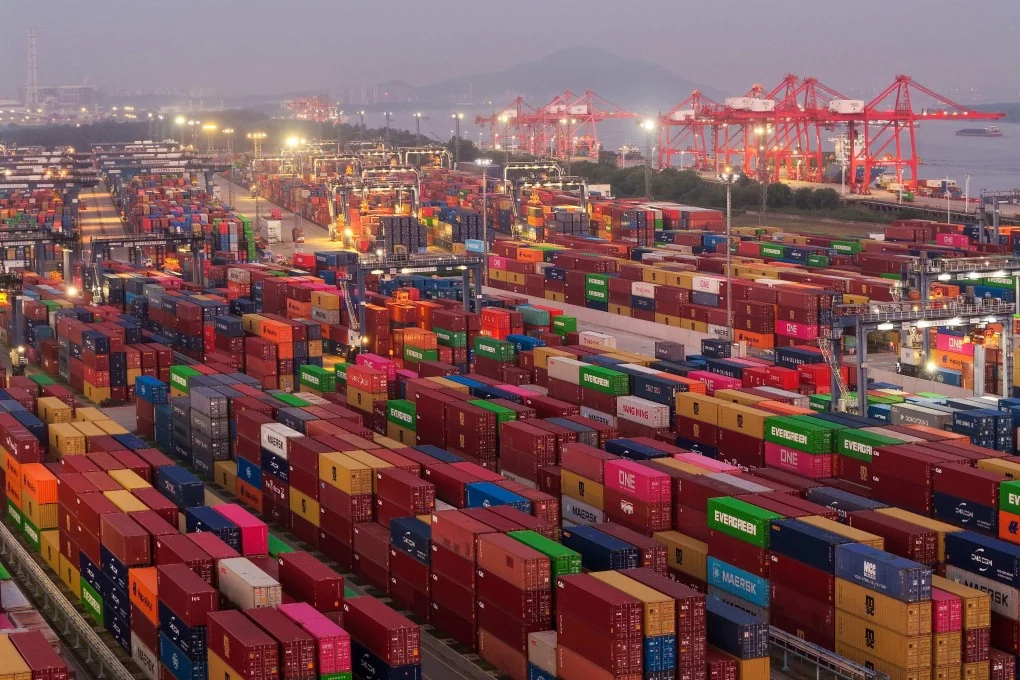
Status: Europe's largest container port, handling approximately 15 million TEUs annually.
Infrastructure: The crown jewel is Maasvlakte 2, an artificially created island with deep-water berths (up to 20 meters) and fully automated terminals (e.g., APM Terminals and Rotterdam World Gateway - RWG).
Features: Rotterdam serves as the primary gateway for cargo bound for Germany, Switzerland, and Central Europe. The port actively implements digital solutions via the Portbase system and leads Europe in the adoption of Onshore Power Supply (OPS).
Hinterland: Connected to inland regions via the Rhine River, the Betuweroute freight railway, and an extensive autobahn network.
2. Port of Antwerp-Bruges (Belgium) – The Largest Chemical and Container Cluster
Status: Following the 2022 merger of the ports of Antwerp and Bruges, the unified Port of Antwerp-Bruges was formed, with a combined container throughput of approximately 14 million TEUs.
Infrastructure: Antwerp is home to PSA Antwerp, one of Europe's most modern automated terminals. The port has direct access to the River Scheldt, allowing it to accommodate Ultra Large Container Vessels (ULCVs).
Features: Antwerp-Bruges combines container logistics with Europe's largest chemical cluster, making it a key hub for tank containers and specialized cargo.
Hinterland: An extensive barge network on the Scheldt, Meuse, and Rhine rivers, as well as high-speed rail lines to Germany, France, and Italy.
3. Port of Hamburg (Germany) – The Gateway to the German Economy
Status: Europe's third-largest container port, with a throughput of around 8–9 million TEUs annually.
Infrastructure: Four major container terminals (HHLA and Eurogate) located along the River Elbe.
Features: Hamburg maintains the closest ties to Central and Eastern Europe. However, its main challenge is the limited depth of the Elbe. The long-awaited channel deepening project to 15.1 meters has allowed the port to accommodate vessels with a capacity of 20,000+ TEUs, but only during high tide.
Hinterland: A network of railways, inland waterways (the Elbe and the Kiel Canal), and autobahns connecting the port to Germany's industrial regions, as well as the Czech Republic, Austria, and Poland.
Regional Hubs and Specialized Ports
Beyond the "Big Three," the region features several important ports playing a key role in regional logistics.
Bremerhaven (Germany): Located at the mouth of the Weser River. Historically specialized in automotive transport (one of the world's largest ports for car import/export), it also boasts a powerful container terminal. It serves as an alternative to Hamburg during periods of high congestion.
Le Havre (France): France's main container port, located on the English Channel. It handles around 3 million TEUs annually and serves as the primary gateway for cargo bound for the Paris region and Southern France. The port features deep-water terminals (Port 2000) and direct access to the Atlantic Ocean.
Zeebrugge (Belgium): Specializes in short-sea shipping, Ro-Ro cargo, and automotive logistics. It plays a vital role in connecting the UK with continental Europe.
Dunkirk (France): A developing hub in Northern France that is becoming an alternative to the congested ports of Rotterdam and Antwerp for certain types of cargo.
Inland Logistics: The Rhine as Europe's Main Artery
The uniqueness of Western European container logistics lies in its highly developed inland waterway network. The Rhine River is the "liquid autobahn," carrying millions of TEUs annually by barge from Rotterdam and Antwerp deep into the continent:
Duisburg: The world's largest inland container port.
Cologne, Düsseldorf, Mannheim, Basel: Key inland hubs.
However, in recent years, climate change has created serious challenges: extremely low water levels in the Rhine (particularly in 2018 and 2022) paralyzed navigation, forcing logistics companies to switch to more expensive rail and road transport.
Key Development Trends
1. Automation and Digitalization
Rotterdam and Antwerp are pioneers in automated terminals. Robotic cranes (Ship-to-Shore [STS] and Rail-Mounted Gantry [RMG]), Automated Guided Vehicles (AGVs), and AI-based management systems allow vessels to be handled with minimal human intervention, enhancing safety and efficiency.
2. Green Transformation
Western European ports are under strict pressure from the European Green Deal:
Onshore Power Supply (OPS): By 2030, all major EU ports must provide grid connections for berthed vessels.
Alternative Fuel Bunkering: Rotterdam and Antwerp are actively developing infrastructure for LNG, green methanol, and ammonia.
Emission Zones: The introduction of Low Emission Zones (LEZ) in and around ports.
3. Diversification of Cargo Flows
Amid geopolitical shifts and the restructuring of global supply chains, Western European ports are actively developing ties with India, Southeast Asia, and Latin America to reduce dependence on a single trade direction.
4. Development of Multimodal Corridors
Projects like the Rhine-Alpine Corridor and the North Sea-Baltic Corridor, under the Trans-European Transport Network (TEN-T), are strengthening the connection between ports and inland regions via railways and inland waterways.
Practical Takeaway
Western Europe remains the gold standard of container logistics. The choice of a specific port depends on the final destination:
For Central and Eastern Europe: Hamburg and Bremerhaven.
For Germany, Switzerland, and Austria: Rotterdam, with onward delivery via the Rhine or rail.
For France and Southern Europe: Le Havre and Antwerp-Bruges.
For Scandinavian and UK markets: Zeebrugge and regional feeder ports.
When planning shipments, it is critical to consider port environmental requirements, potential climate constraints on inland waterways, and the congestion levels of rail corridors.
*The information on this page does not constitute a public offer.
*MyContainers is a partner of MyWay.