



Shipping containers are originally designed as airtight structures to protect cargo from moisture, precipitation, and the external environment. However, for certain categories of goods (coffee beans, cocoa beans, nuts, certain chemical products, or moisture-emitting equipment), air circulation is critical.
In this article, we will explore whether it is possible to install ventilation in a standard shipping container, how this affects its certification, and under what conditions such a container will be cleared for freight transport.
Can You Install Ventilation in a Shipping Container?
Yes, ventilation can be installed, but the approach depends on the type of container and the purpose of the modification:
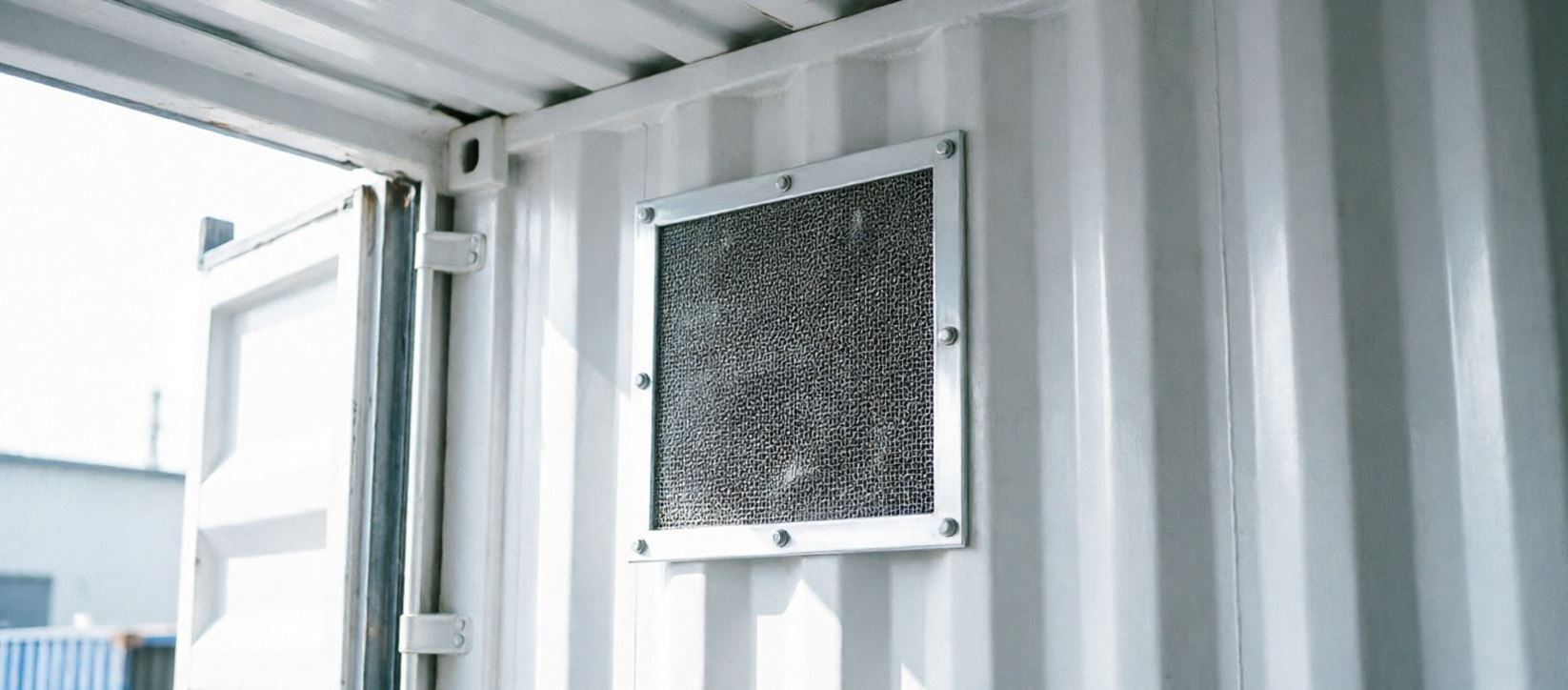
Specialized Ventilated Containers: Factory-made models (often called "coffee containers") exist that are initially equipped with a passive ventilation system. Special louvers or valves are installed in their side walls and doors, ensuring air circulation while protecting the cargo from rain and seawater.
Modification of a Standard Dry Van Container: An owner can independently install ventilation grilles or deflectors. However, this process involves drilling or cutting holes in the corrugated steel cladding, which directly affects the structural integrity and weather-tightness of the unit.
Forced Ventilation: Installing fans or climate control systems is only feasible in specialized refrigerated containers, where it is provided for by the design and managed by a microprocessor. In standard containers, installing such systems requires serious interference with the electrical network and frame, which is highly discouraged without factory approval.
How Ventilation Installation Affects Certification (CSC and RMRS)
This is the most critical aspect of modification. A shipping container is subject to international regulation, and its safety is confirmed by the CSC (Convention for Safe Containers) plate and, in Russia, by the standards of the Russian Maritime Register of Shipping (RMRS).
Invalidation of the Current Certificate: Any structural change to the container (cutting holes for ventilation, welding new elements) automatically invalidates the existing CSC certificate and the Cargo Worthy (CW) endorsement. The container no longer matches the condition in which it was originally approved.
Need for Re-inspection: To legalize the modification, the owner must contact an authorized classification society (e.g., RMRS, Bureau Veritas, DNV, or Lloyd's Register). The inspector must assess:
Whether the load-bearing elements of the frame have been weakened.
Whether weather-tightness is maintained around the ventilation openings.
The quality of weld seams and anti-corrosion treatment at the modification sites.
Documentation Update: After a successful inspection, the organization issues a new inspection report and allows the data on the CSC plate to be updated (or issues an addendum to it), confirming that the modified container is safe for operation.
Will Such a Container Be Cleared for Freight Transport?
Yes, it will, but only under strict conditions:
Presence of Up-to-Date Documents: The container must have a valid CSC certificate (or RMRS act) that accounts for the modifications made. Without this, a shipping line, railway operator, or terminal will refuse to accept the unit, as it will be considered technically unsound or uncertified.
Compliance with IICL or CW Standards: If the container is leased or used for international transport, it must meet the criteria of the Institute of International Container Lessors (IICL) or at least Cargo Worthy (CW) standards. Homemade, poorly executed holes showing signs of corrosion will be grounds for a usage ban.
Cargo Protection: Ventilation openings must be equipped with rodent and insect screens, as well as hoods to prevent precipitation from entering. Otherwise, the cargo may be damaged, leading to insurance claims against the container owner.
Important: If ventilation is installed in a "DIY" manner without the knowledge of a classification society, the container is only permitted for use as a stationary warehouse on private property, not for transportation on public roads, railways, or by sea.
Practical Conclusion
If your cargo requires ventilation, the safest and most economically viable path is to rent or purchase a specialized, factory-made ventilated container. However, if you own a fleet of standard containers and plan to modify them, be sure to include the re-inspection procedure by RMRS or another authorized body in your budget and timeline. Ignoring this requirement will lead to a ban on using the unit in logistics chains and result in financial losses.
*The information on this page does not constitute a public offer.
*MyContainers is a partner of MyWay.