



The International Convention for Safe Containers (CSC) is a key document regulating safety requirements for freight containers in international transport. Without a valid CSC plate and corresponding certificate, a container will not be approved for international sea, rail, or road transport, nor will it be permitted to be lifted by cranes.
In this article, we have broken down a detailed checklist of inspection requirements, current prices, and a list of organizations authorized to conduct inspections in Russia.
Checklist of Container Requirements for CSC Inspection
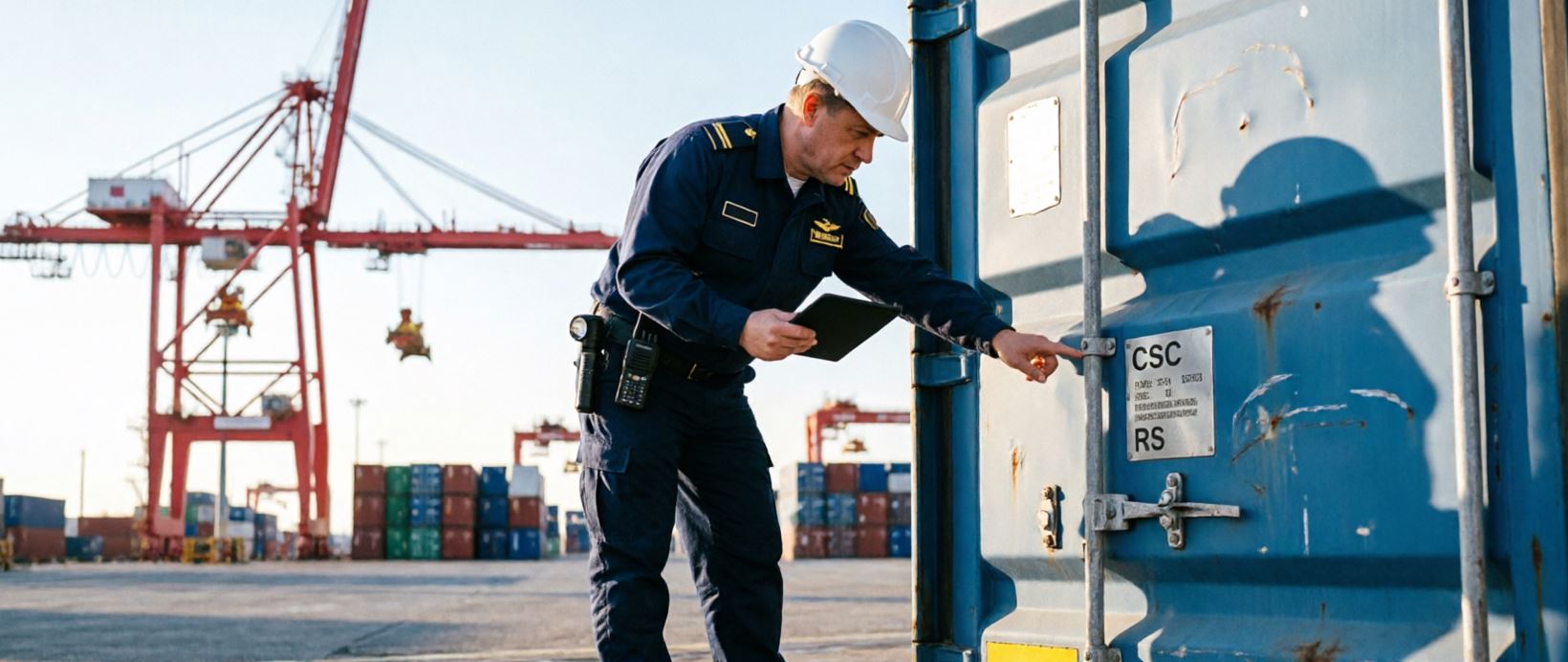
An inspector checks the container for compliance with strict criteria of structural integrity and safety. The main inspection points include:
CSC Plate:
Must be securely attached to the left door (usually in the upper corner).
Information must be legible: container number, date of manufacture, maximum gross weight, and date of the next inspection.
Any structural modifications to the container require re-approval and updating of the data on the plate.
Corner Fittings and Frame:
No cracks, deep corrosion, or deformations in the corner castings used for lifting and securing the container.
Lower and upper frame rails must be straight, without critical damage affecting load-bearing capacity.
Walls and Roof:
Minor dents are permissible, provided they do not compromise weathertightness or structural integrity.
No through-holes, metal delamination, or extensive corrosion reducing wall thickness below permissible limits.
Flooring:
The floor must be even, without sagging, rot, or severe damage.
Fasteners (nails, bolts) must not protrude above the floor surface to avoid damaging cargo or handling equipment.
Doors and Seals:
Doors must open and close to 270 degrees without sticking.
Locking bars and hinges must be intact and fully functional.
Rubber seals around the door perimeter must ensure complete light-tightness and moisture protection (a light-tightness test is often conducted during the inspection).
Where to Get Inspected and Obtain a CSC Certificate
In Russia, technical supervision of container manufacturing and operation is carried out by the Russian Maritime Register of Shipping (RMRS).
You can obtain or renew a certificate through:
RMRS offices directly (Moscow, St. Petersburg, Vladivostok, Novorossiysk, and other port cities).
Accredited inspection and surveyor companies acting on behalf of classification societies (RMRS or international ones like Bureau Veritas or DNV, if required by foreign shipping lines).
Specialized service companies offering certification services, including for tank containers and specialized equipment.
Important: For new containers, initial CSC certification is usually included in the purchase price and is issued by the manufacturer, valid for 5 years from the date of manufacture.
Cost of CSC Inspection and Certification
The cost of services depends on the container type, the region where the inspection is conducted, and the urgency. The current price range for 2025–2026 in Russia is as follows:
Obtaining a new CSC certificate: from 12,000 rubles.
Renewal of an existing certificate after inspection: from 8,000 rubles.
Urgent processing (within 2–3 business days): from 18,000 rubles.
Tank container certification: significantly higher (from 25,000 – 40,000 rubles and more), as it includes inspection of not only the frame but also the tank, valves, and safety systems under RMRS supervision.
Prices may vary depending on the need for an inspector to travel to a remote depot or port.
Renewal Systems: PES and ACEP
Container owners can choose one of two systems to keep their certificate up to date:
PES (Periodic Examination Scheme): The container must undergo a full inspection at least once every 30 months after the initial 5 years from the date of manufacture. The new next inspection date is stamped on the CSC plate.
ACEP (Approved Continuous Examination Programme): A continuous inspection program approved by the competent authority. Inspections are conducted regularly (e.g., upon each return to the depot or before each loading), eliminating the need to strictly adhere to the 30-month cycle and stamp new dates on the plate.
Practical Takeaway
Regular maintenance and timely CSC inspection are not just bureaucratic requirements; they are a way to avoid cargo delays at the port, fines, and refusal of acceptance by the shipping line. Implementing an ACEP program for large fleets significantly optimizes inspection logistics and reduces the risk of sudden equipment withdrawal from circulation.
*The information on this page does not constitute a public offer.
*MyContainers is a partner of MyWay.