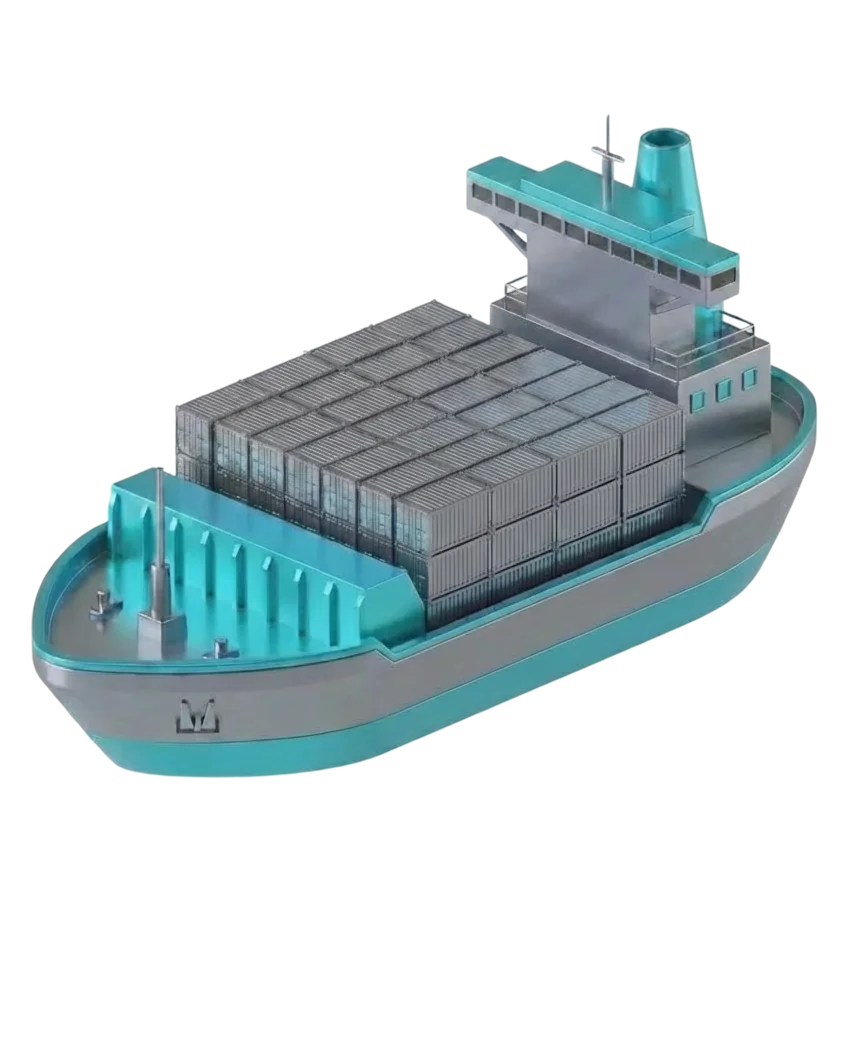





Building a permanent warehouse is time-consuming, expensive, and requires a massive amount of approvals. This is why businesses are increasingly choosing an alternative: modular warehouses made from shipping containers. A steel box made of Corten steel, built to withstand harsh ocean storms, perfectly handles the role of a secure, mobile, and cost-effective on-ground storage facility.
Container warehouses are used by logistics companies, construction crews, farmers, car dealerships (for spare parts storage), and retailers. But how do you choose the right container for storage so that the cargo doesn't get ruined and the doors don't jam after a month? Let's break down all the technical and legal nuances.
1. Which Size and Type of Container to Choose for a Warehouse?
The choice depends on exactly what you plan to store and what equipment you will be using.
20-foot Standard (20ft DC / DV):
Area: ~14 sq.m. (holds 11 Euro pallets).
Best for: Storing tools, archives, seasonal goods, personal belongings, and crew equipment. Ideal for tight spaces.
40-foot Standard (40ft DC):
Area: ~28 sq.m. (holds 25 Euro pallets).
Best for: A classic goods warehouse. However, its internal height (2.39 m) limits the ability to use multi-tier racking systems.
40-foot High Cube (40ft HC):
Area: ~28 sq.m., but the height is 2.69 m.
Best for: The best choice for a warehouse. The extra volume allows you to install full-sized racking, use stacking, and drive inside with a pallet jack or small forklift without ducking.
Open Side (OS) — Side-Loading Container:
These containers have doors that open along the entire long side.
Best for: Storing long items (pipes, lumber, metal profiles) and for warehouses that require quick loading/unloading by forklifts from the side, without needing to enter through a narrow end opening.
Reefer Container:
Best for: If you need a stationary cold storage warehouse for food, flowers, pharmaceuticals, or wine. It connects to an external 380V power grid and operates as an industrial cold room.
2. Condition Classification: What Are You Paying For?
Buying a brand-new, factory-fresh container just to use it as a warehouse on a construction site is economically unviable. The secondary market has a clear grading system for used containers:
One Way / New: The container has made a single trip from China with cargo. Perfect geometry, clean floor, fresh paint, no rust. Suitable for warehouses on the premises of premium facilities, showrooms, or for storing sensitive electronics.
Cargo Worthy (CW): 8–15 years old. Has external dents, surface rust, and possible signs of repair. But the main thing is: the geometry is intact, doors open and close easily, the floor is solid, and the roof and walls have no through-holes. The optimal price/quality choice for most warehouses.
Wind & Water Tight (WWT): Heavily worn container. The floor may have stains or patches, there is noticeable corrosion, and the doors may require effort to close. But it is sealed—rain and snow will not get inside. Suitable for storing building materials, tires, machinery, and sand.
As-Is: A container with holes, broken locks, or compromised geometry (doors won't close). Suitable only as a source of spare parts or for a major conversion (e.g., into a shed with cut-out windows) where airtightness is not important.
3. The Main Problem of a Container Warehouse — Condensation
The steel body perfectly protects against thieves and rain, but it has high thermal conductivity. Due to daily temperature fluctuations (the metal heats up during the day and cools down at night), the moisture contained in the air inside condenses on the ceiling and drips onto the cargo (often called "container rain"). This is destructive to cardboard, electronics, metal (rust), and food products.
How to protect a warehouse from condensation:
Passive ventilation: Installing ventilation deflectors (turbo vents) on the roof or in the top corrugations to extract moist air.
Desiccants: Hanging special industrial bags with silica gel or calcium chloride inside (each can absorb up to 2-3 liters of water).
Anti-condensation coating: Spraying a special compound on the inside of the ceiling or gluing foil-backed foam insulation to prevent warm air from contacting the cold metal.
Insulation: If the warehouse will be heated or you are storing sensitive goods, the container is lined from the inside with sandwich panels, mineral wool, or sprayed with polyurethane foam (PUR foam).
4. Foundation and Installation: Is Concreting Necessary?
One of the main advantages of a container warehouse is that it does not need a capital foundation. The container's structure rests on 4 corner points (bottom corner castings). The bottom and walls do not touch the ground.
What you can place a container on:
Concrete blocks or road slabs: The most common and cheapest option.
Railway sleepers: Excellent at distributing the load and do not rot for decades.
Screw piles: Ideal for uneven terrain and swampy soils.
Gravel pad: Acceptable for lightweight 20-foot containers.
Crucial rule: The base must be strictly horizontal. If you place a container on sloping ground, its metal frame will eventually "twist" diagonally. The result: the doors will stop closing, and the locks will break under stress.
5. Legal Advantages (Permanent vs. Non-Permanent Structure)
From a legal standpoint, a shipping container is movable property (transport equipment / inventory), not real estate. This gives businesses colossal advantages:
No building permit required: You can place a container on your own or leased land (even on residential or agricultural land, provided it does not violate local landscaping rules) without bureaucracy.
No property tax: The container is not registered on the cadastral registry as a building.
Mobility: If the land lease expires or the business relocates, you simply call a crane truck, pick up your warehouse along with all its contents, and move it to a new location.
Fast commissioning: The warehouse is ready to operate on the same day the crane lowers it onto the site.
6. Security and Break-in Protection
A shipping container is a safe by default. Doors made of 2mm steel with heavy-duty locking rods cannot be breached with hand tools. However, to increase warehouse security, it is recommended to:
Install a Lockbox: A steel shroud that encloses the padlock from the outside, making it impossible to cut with bolt cutters.
Use high-security padlocks: Such as Abloy or Mul-T-Lock.
Welded hinges: If the container is in an unpopulated area, it is recommended to weld steel plates to the door hinges so intruders cannot cut the doors off with an angle grinder.
GSM alarm system: Installing an autonomous door-opening sensor that sends an SMS to the owner.
*The information on this page does not constitute a public offer.
*My Containers is a partner of My Way.