
Step-by-Step Guide to Rust Removal
Quality treatment requires a systematic approach. Simply painting over rust will only provide a temporary visual effect, under which corrosion will continue to destroy the metal.
Step 1: Assessment and Preparation
Thoroughly inspect the container. Pay special attention to corner fittings, lower and upper frame rails, weld seams, and areas around door hinges.
Completely empty the container of any cargo.
Use personal protective equipment (PPE): a respirator, safety goggles, heavy-duty gloves, and workwear.
Step 2: Mechanical Cleaning
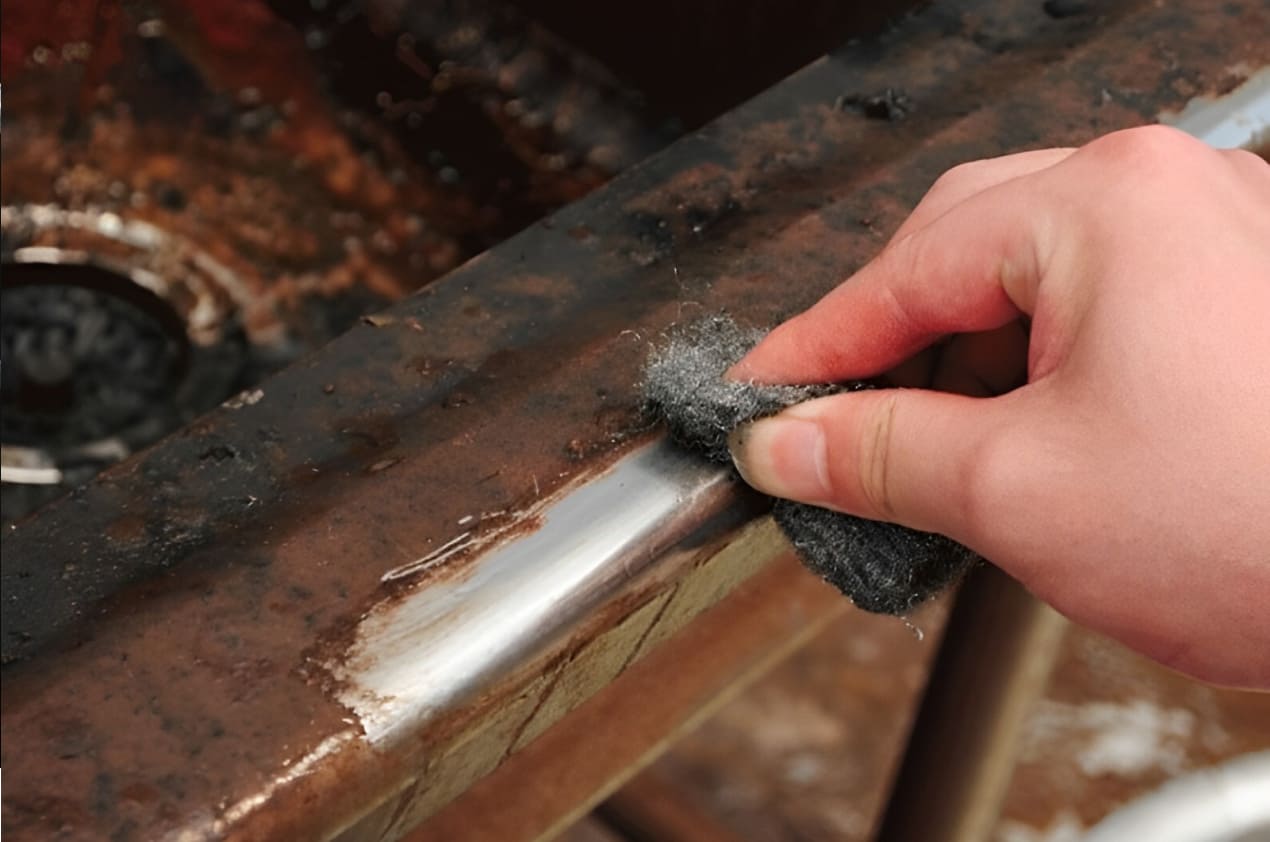
This is the most labor-intensive but critically important stage. It is necessary to remove all loose rust and peeling old paint down to solid metal.
For light damage: Use wire brushes (manual or drill/angle grinder attachments).
For moderate to severe corrosion: Use an angle grinder with flap discs or wire cup brushes.
The ideal option: Sandblasting. It completely cleans the surface to a Sa 2½ standard, guaranteeing maximum adhesion for new coatings. However, this requires specialized equipment.
Step 3: Degreasing and Chemical Treatment
After mechanical cleaning, remove dust and degrease the surface with a solvent (acetone, white spirit, or specialized degreasers).
Apply a rust converter. This is a chemical compound (often based on phosphoric acid or tannins) that reacts with iron oxide, turning it into a stable, insoluble compound (a black or dark gray film) that stops further corrosion.
Allow the converter to dry according to the manufacturer's instructions (usually 2 to 24 hours).
Step 4: Priming
The primer creates a barrier between the metal and the topcoat, providing additional protection.
The best choice for containers is a zinc-rich primer (the "cold galvanizing" effect). Zinc acts as a sacrificial anode: even if the coating is scratched, the zinc will oxidize first, protecting the steel.
Apply the primer with a brush, roller, or airless sprayer in 1–2 coats, carefully painting over weld seams and corners.
Step 5: Topcoating (Finishing Paint)
For the top layer, use paints resistant to UV rays, temperature fluctuations, and moisture:
Polyurethane or epoxy enamels: Offer the highest wear resistance and durability (service life of 10–15 years).
Specialized coatings for Corten steel: If you want to maintain the container's original industrial look, there are clear or semi-transparent sealers that stabilize the patina and prevent further degradation.
Apply the paint in 2 coats, allowing the previous coat to dry completely.
Best Materials for Container Treatment
Rust converters: Tsinkar, Kudo, Rust-Oleum Rust Reformer.
Primers: Dali Zinc-Filled Primer, Hammerite Special Metals Primer, zinc sprays (e.g., Würth).
Topcoats: 3-in-1 rust-inhibiting paint-enamels (for budget repairs), two-component polyurethane enamels (Tikkurila Temacoat, Hempadur) for professional and long-lasting protection.
Prevention: How to Prevent Rust Formation
Elevate on supports: Never place a container directly on the ground. Use concrete blocks, railroad ties, or specialized stands to ensure air circulation underneath and avoid contact with ground moisture.
Roof cleaning: Regularly remove leaves, branches, and dirt from the roof. Stagnant water and organic matter accelerate the degradation of the protective layer.
Timely scratch repair: Any deep scratch incurred during loading or transport should be immediately cleaned, primed, and touched up, without waiting for rust spots to appear.
Regular inspection: Conduct a visual audit of the container's condition at least once a year, paying special attention to areas around door seals and drainage channels.
Practical Takeaway
Fighting rust on a shipping container is an investment in its longevity. Skimping on the mechanical cleaning stage or using cheap household paint will inevitably lead to recurring corrosion within 1–2 seasons. The proper combination of "mechanical cleaning + rust converter + zinc primer + polyurethane enamel" can provide protection for up to a decade, preserving the container's watertightness and market value.