



Sea container manufacturing is a high-tech industry dominated by a few major players, primarily from China. Understanding who manufactures these containers helps logistics companies and cargo owners evaluate equipment quality, durability, and compliance with international standards.
In this article, we will examine the main sea container manufacturers in the world, explore the state of manufacturing in Russia, and find out how containers from different factories differ.
Global Leaders: World Manufacturers of Sea Containers
The container manufacturing market has historically been concentrated in Asia, where China accounts for over 95% of global capacity. This is due to the availability of raw materials, a developed industrial base, and large-scale manufacturing capabilities.
CIMC Group (China International Marine Containers)
CIMC is the undisputed leader of the global industry, holding the top position in container production volume since 1996. The company manufactures a full range of equipment:
Standard dry cargo containers (20 and 40 feet)
Refrigerated containers
Tank containers
Specialized containers (Open Top, Flat Rack, Open Side)
Modular buildings and containers for energy equipment
CIMC is distinguished by the highest level of automation, proprietary material developments, and a global network of service centers. Containers from this company can be found in practically every shipping line in the world.
Singamas Container Holdings
The second-largest company in the industry, based in Hong Kong. Singamas produces a wide range of containers, including:
Standard and High Cube containers
Refrigerated containers
Tank containers
Platforms and specialized equipment
The company is known for its flexibility in manufacturing custom solutions and its active presence in the container leasing market.
CXIC Group (Changzhou Xinhuachang International Containers)
The third major Chinese manufacturer, actively increasing its market share. CXIC specializes in:
Mass-market standard containers
Refrigerated containers
Hazardous materials containers
The company is known for competitive pricing while maintaining compliance with international quality standards.
Other Notable Players
Nantong Tank Container – specializes in tank containers for transporting liquids and gases
Dong Fang International – manufactures specialized and custom containers
W&K Containers – a European manufacturer focusing on custom solutions
Sea Container Manufacturers in Russia
Russian sea container manufacturing has its own specifics. Full-scale serial production of standard containers in Russia is limited for several reasons: higher production costs compared to China, smaller volumes of domestic demand, and dependence on imported components (fittings, corner castings).
Existing Russian Manufacturers
Lesard
Lesard is one of the few Russian manufacturers producing sea containers certified by the Russian Maritime Register of Shipping (RMRS). Its production is focused on:
Specialized containers for Russian climatic conditions
Modular solutions based on containers
Containers for domestic transportation and specific cargo
Metal Structures Plants
Some Russian metalworking enterprises produce containers in small batches or to order, but these are predominantly:
Railway containers (which differ from sea containers in design)
Containers for domestic transportation
Specialized modules
Features of the Russian Market
Import dependence: The vast majority of sea containers in Russia are imported, predominantly manufactured in China.
Localization: Russian companies are more often engaged in the repair, modernization, and retrofitting of containers rather than manufacturing them from scratch.
Specialization: Russian production focuses on custom solutions, modular buildings, and containers for specific industries (oil and gas, construction).
How Sea Containers Differ by Manufacturer
Although all containers must comply with international ISO standards, there are significant differences between the products of different factories.
Materials and Metal Quality
Major manufacturers (CIMC, Singamas): Use high-quality COR-TEN steel, providing increased resistance to corrosion in marine environments.
Budget manufacturers: May use standard steel with additional anti-corrosion coating, which reduces the cost but shortens the service life.
Design Features
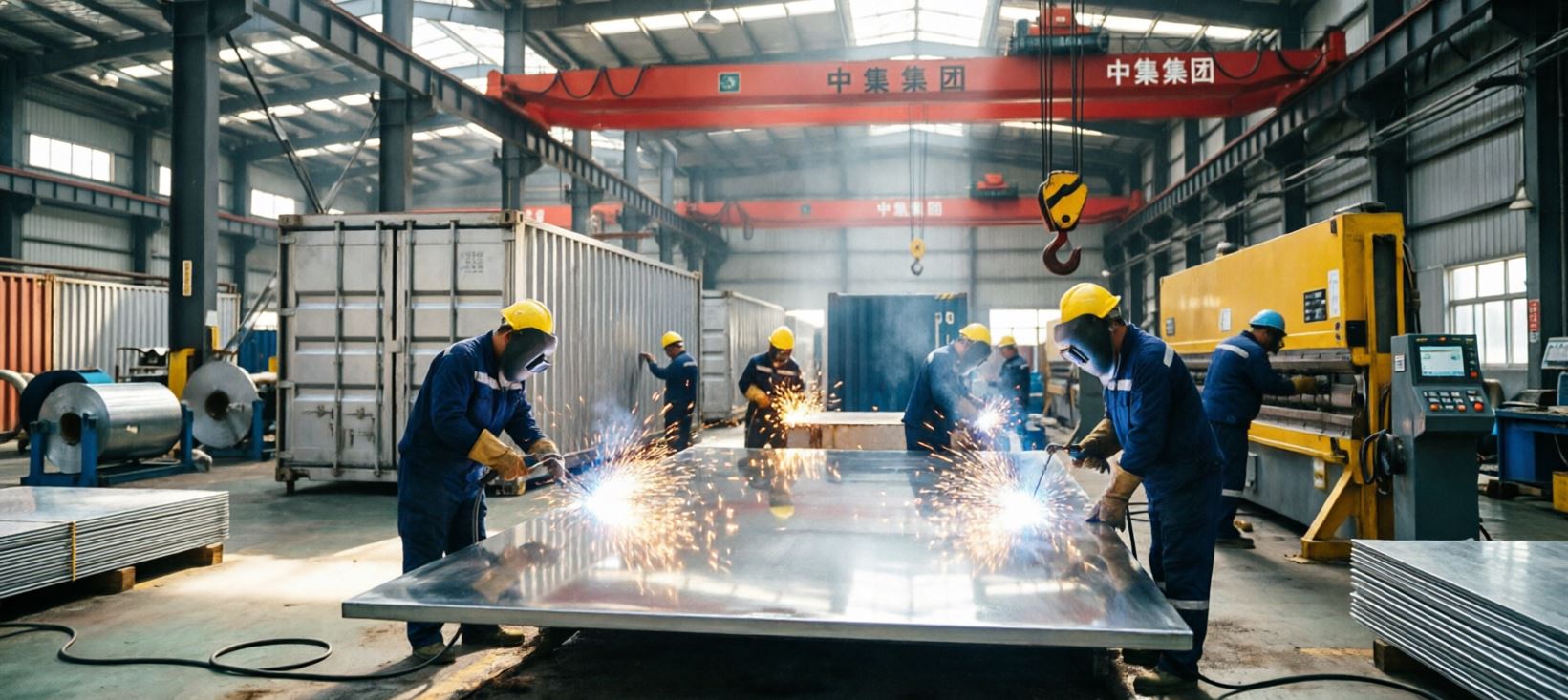
Weld seams: Welding quality directly affects watertightness and durability. Leading manufacturers use robotic welding with quality control.
Corner fittings: The precision of fitting manufacturing is critical for safe lifting and securing. A size variation of even 1-2 mm can cause operational problems.
Flooring: Options include tropical hardwood (bamboo, apitong), composite materials, or steel. Major manufacturers more often use certified impregnated wood.
Certification and Quality Control
International certification: All major manufacturers are certified to the CSC standard and receive approval from classification societies (Bureau Veritas, DNV, Lloyd's Register).
ACEP program: Leading manufacturers include their containers in the Approved Continuous Examination Program, which simplifies their operation.
Control at all stages: Large factories have a multi-stage quality control system from raw material acceptance to the final inspection of the finished product.
Specialization and Customization
CIMC: The widest possible range, including the most complex specialized solutions.
Singamas: Focus on flexibility and the ability to quickly adapt to customer requirements.
CXIC: Focus on the mass market segment with an optimal price/quality ratio.
Russian manufacturers: Specialization in non-standard sizes, climatic versions, and modular solutions.
Color Scheme and Marking
Containers from different manufacturers have distinctive coloring and markings, allowing the manufacturer to be identified even after years of operation. However, when sold for leasing or resale, containers are often repainted in the corporate colors of shipping lines.
Practical Conclusion: How to Choose a Container
When choosing a container, you should consider:
Type of cargo: For perishable goods, the quality of refrigeration equipment is critical; for heavy cargo, the strength of the frame is key.
Transportation route: For long sea routes, containers with increased corrosion resistance are preferable.
Budget: CIMC and Singamas containers cost more but provide greater durability and reliability.
Service availability: Major manufacturers have a developed network of service centers worldwide, which simplifies repair and maintenance.
*The information on this page does not constitute a public offer.
*MyContainers is a partner of MyWay.