



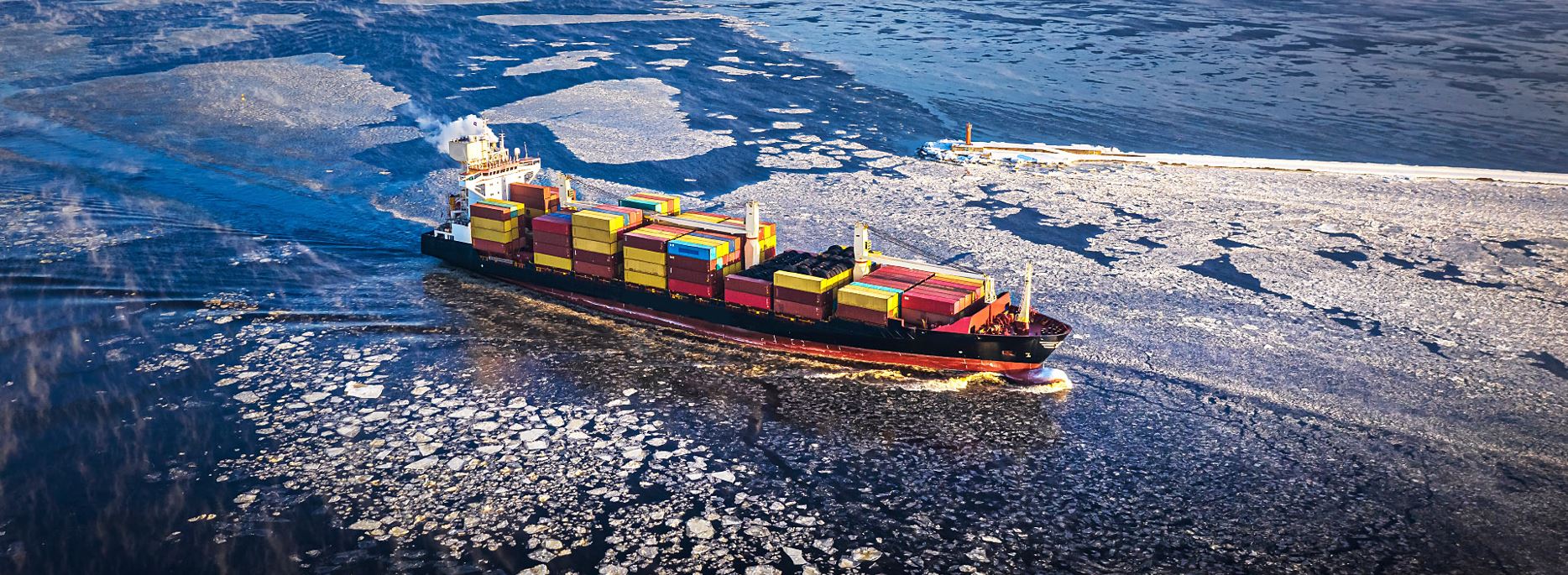
The Northern Sea Route (NSR) is making a qualitative leap: transitioning from experimental and one-off voyages to the status of a fully-fledged, regular logistics corridor. For the first time in history, the Chinese shipping company Sea Legend has organized weekly container sailings from China to Northern Europe through Russia's Arctic waters.
This step marks a new era in global supply chains, offering shippers a viable alternative to traditional routes. In this article, we will break down the details of this historic launch, the route's geography, and its significance for international trade.
Details of the Historic Route
The new service paves a direct path from the manufacturing hubs of Eastern China straight into the heart of European logistics, bypassing traditional southern corridors.
Point of Origin: Port of Ningbo (China) – one of the busiest and most technologically advanced ports in the world.
Transit Segment: The waters of the Northern Sea Route along Russia's northern coast.
European Ports of Call:
Felixstowe (United Kingdom)
Rotterdam (Netherlands)
Hamburg (Germany)
Gdynia (Poland)
End of Season: The current seasonal navigation program is scheduled to conclude on October 27 with the vessel's arrival in the UK, after which the route will be closed until the next favorable ice season.
Strategic Significance: Why It Matters
The launch of a regular weekly service is not just logistics news; it is a game-changer in international trade.
Alternative to the Suez Canal: The NSR route allows shippers to avoid geopolitical risks, piracy, and unpredictable delays in the Red Sea and the Suez Canal.
Reduced Transit Time: The distance from East Asia to Northern Europe via the Arctic is approximately 30–40% shorter than via the Suez Canal. This cuts transit time by 10–15 days, which is critical for goods with short life cycles or high added value.
Proof of Concept: The weekly frequency of sailings proves that the infrastructure (including Russia's nuclear icebreaker fleet) and logistics processes are sufficiently refined to maintain a regular schedule, rather than just supporting one-off expeditions.
Logistics Challenges and Specifics of the Arctic Route
Despite the advantages, shipping via the NSR imposes specific requirements on all participants in the process:
Strict Seasonality: The navigation window for civilian container ships is limited to the period from July to October–November, when ice conditions are most favorable.
Vessel Requirements: Container ships must have an appropriate ice class and be escorted by Rosatom nuclear icebreakers on the most challenging segments.
Container Specifics: The cargo must withstand extreme temperature fluctuations (from +30°C at the port of origin to -40°C in the Arctic). Frost-resistant door seals and protection against condensation ("container rain") are critically important.
Practical Takeaway
The regular Sea Legend service via the Northern Sea Route opens a new, faster, and geographically safer corridor between Asia and Europe for businesses. For Russian and international companies, this is an opportunity to diversify logistics risks and optimize delivery times. However, planning such shipments requires advance preparation: slots must be booked several months before the start of the navigation window, with strict adherence to packaging and container type requirements.
*Information on this page does not constitute a public offer.
*MyContainers is a partner of MyWay.