


Refrigerated Containers Overview: How to Choose, Key Differences, and Leasing Terms
Transporting perishable goods, pharmaceuticals, or chemicals requires flawless adherence to temperature regimes. A mistake in choosing the right equipment or assessing its technical condition can lead to the loss of the entire cargo and millions in damages.
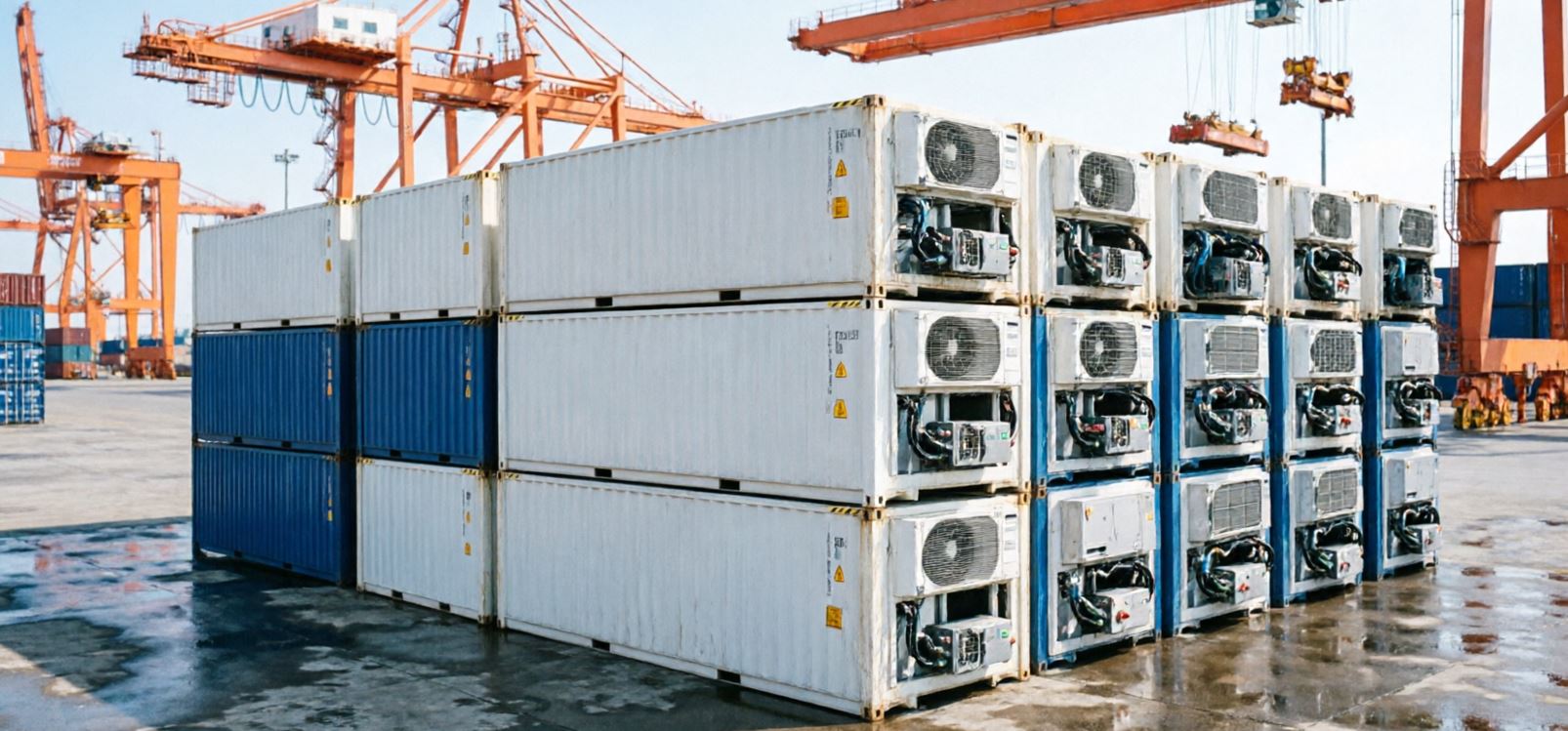
A refrigerated container (or "reefer" in industry jargon) is not just a "refrigerator on wheels." It is a highly technological, insulated chamber with its own climate control unit. Since 2020, MyContainers has been supplying and leasing verified refrigerated equipment worldwide. In this guide, we will break down how to choose the perfect reefer for your specific needs.
1. Main Types and Dimensions of Refrigerated Containers
The market offers two main standard sizes. The choice between them depends on the cargo volume and logistics requirements.
Feature | 20' RF (20-Foot Reefer) | 40' RH / HC RF (40-Foot High Cube Reefer) |
External Dimensions (L×W×H) | 6.06 × 2.44 × 2.59 m | 12.03 × 2.44 × 2.90 m |
Internal Volume | ~28.4 m³ | ~67.0 m³ |
Max Payload | ~27,800 kg | ~29,600 kg |
Temperature Range | -30°C to +30°C | -30°C to +30°C |
Design Features | Compact; ideal for heavy cargo (frozen meat, fish) | Increased height and volume; ideal for bulky cargo and pallets (fruits, vegetables) |
Floor Type | T-bar aluminum floor for bottom air circulation | T-bar aluminum floor |
Important: The abbreviation RH (Reefer High Cube) or HR is used specifically for 40-foot high-cube refrigerated containers to distinguish them from standard dry HC containers.
2. Advanced Technologies: How Modern Reefers Differ
Not all refrigerated containers are created equal. For specific cargo types, standard cooling is simply not enough. MyContainers provides equipment with advanced optional features:
Standard Cooling/Heating: Maintains a set temperature and humidity level. Ideal for frozen meat, fish, and ice cream.
Fresh Air Ventilation: Allows you to regulate the intake of fresh air (in cubic meters per hour) to remove ethylene and CO₂. This is critical for fresh fruits and vegetables (bananas, citrus, avocados) so they can "breathe" and avoid overripening in transit.
Controlled Atmosphere (CA): The gold standard. This system automatically adjusts oxygen (O₂) and carbon dioxide (CO₂) levels inside the chamber, slowing down the ripening process. It allows fruits to be shipped by sea instead of using expensive air freight.
Modified Atmosphere (MA): A simplified version of CA, where the gas environment is created once during loading (often used in conjunction with MA liners/bags inside the boxes).
3. How to Choose a Refrigerated Container for Your Cargo
Cargo Type | Recommended Container | Temperature Regime | Key Requirement |
Frozen meat, fish, ice cream | 20' RF or 40' RH | -18°C to -25°C | Airtightness, temperature stability, functioning compressor |
Fresh fruits and vegetables | 40' RH | +2°C to +13°C | Fresh Air Ventilation or CA capability |
Pharmaceuticals, vaccines | 20' RF or 40' RH (with calibration) | +2°C to +8°C | Valid sensor calibration certificate, PTI protocol |
Chocolate, cosmetics, wine | 40' RH | +12°C to +18°C | Stable temperature without sharp fluctuations, moisture protection |
Chemicals | 20' RF or 40' RH | Depends on MSDS | Special chamber cleaning, no residual odors from previous cargo |
4. The Critical Importance of PTI Inspection (Pre-Trip Inspection)
Buying or leasing a reefer "blind" is unacceptable. A PTI inspection is a mandatory pre-trip technical check that MyContainers conducts before every equipment release.
What is included in our PTI checklist:
Visual Inspection: Checking the integrity of the insulation, door seals (gaskets), and the T-bar floor.
Unit Check: Starting the compressor, checking oil and refrigerant levels.
Load Test: Verifying the unit's ability to reach and maintain the set temperature (Pull-down test).
Calibration: Comparing temperature sensor readings against reference instruments.
Documentation: Issuing a PTI certificate and, if required, a calibration report.
Without a successful PTI, we do not allow the container to be shipped.
5. MyContainers Services for Reefer Fleets
We cover the full cycle of temperature-controlled equipment needs:
Sales: Containers in IICL and CW (Cargo Worthy) condition with a full set of documents.
Leasing (Trip Lease and One-Way Lease): Competitive rates for reefers with delivery from China, Europe, or inland depots in Russia.
Genset Provision: For road and rail transport, we lease diesel generator sets to ensure autonomous power supply for the reefer.
Secure Storage: Storing your reefer fleet at guarded facilities with the option to plug into the power grid for periodic startup and checks.
*The information on this page does not constitute a public offer.
*MyContainers is a partner of MyWay.