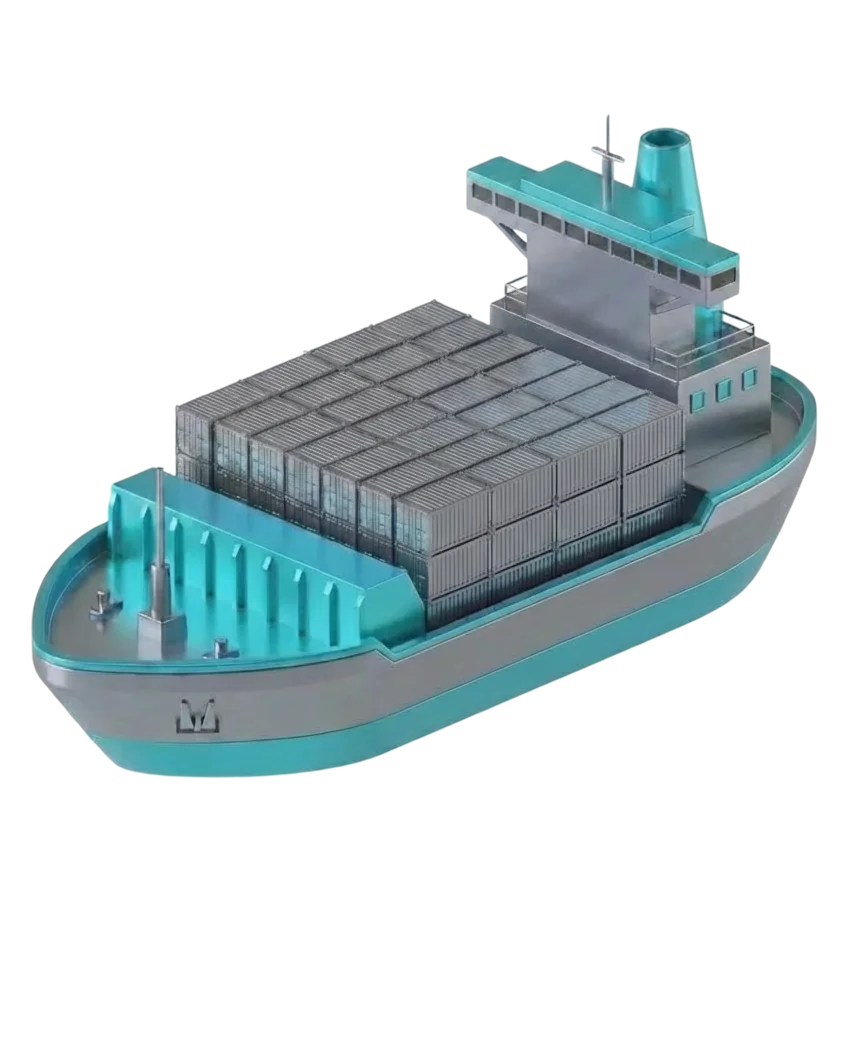





In the shipping container market, the term "One-Way" (or "Single Trip") is frequently used. To a layperson, this might sound like "disposable packaging," raising doubts about its reliability. In reality, it is one of the most attractive options on the market in terms of price-to-quality ratio.
In this article, we will explore in detail what a One-Way container is, why it exists, its actual condition, and who benefits most from purchasing one.
What is a One-Way Container?
A "One-Way" (literally "one way") or "Single Trip" container is a brand-new shipping container that has made only one journey from the manufacturing plant (typically in China) to a destination port in another country.
After unloading the import cargo, the shipping line does not send this container back to Asia empty. Instead, they sell it to local buyers at a reduced price. Thus, the container makes only "one trip" as maritime transport and then remains in the buyer's country.
The Economics: Why Are They Sold at a Discount?
Global trade has a structural imbalance: a massive flow of goods moves from Asia to Europe, America, and other regions, while containers often return half-empty.
For a shipping line (e.g., Maersk, MSC, CMA CGM), transporting an empty container back to China represents a pure loss (freight, port fees, logistics). It is much more profitable to sell this new container at the port of arrival at a price that covers at least a portion of the return costs. The buyer gets a practically new unit at a 30–50% discount from the factory price, while the shipping line avoids the expenses of equipment repositioning.
Condition and Characteristics of a One-Way Container
Despite the name "single trip," such containers are in a condition that is as close to perfect as possible:
Age: 0 to 12 months from the date of manufacture.
Appearance: Original factory paint coating. There may only be minor cosmetic scuffs or micro-scratches from port cranes during loading/unloading, but no dents, chips, or rust.
Flooring: Absolutely new wooden (usually bamboo or apitong) or composite flooring without holes, cracks, oil stains, or foreign odors.
Weather-tightness: Door rubber seals are fresh and elastic, doors close tightly, and no light penetrates inside.
Documentation: An original, clean, and legible CSC plate is present on the doors. Since the container is new, there are still 4–5 years left before the first mandatory 5-year inspection is due.
Advantages and Disadvantages
Advantages:
Competitive price: Significantly cheaper than ordering custom manufacturing at a factory in China.
Excellent condition: No risks associated with buying a used container (hidden corrosion, chemical odors, holes in the floor).
Immediate availability: No need to wait 2–3 months for a factory to manufacture and deliver a batch. The containers are already at the port and ready for shipment.
Full maritime certification: Suitable for any international transportation without restrictions.
Disadvantages:
Limited color choice: You buy what belongs to the shipping line (e.g., dark blue Maersk, yellow MSC, red Hapag-Lloyd). Repainting is possible but adds to the project cost.
Pickup location: Typically, such containers are sold on a pickup (FCA/EXW) basis from major seaports or inland terminals. Inland delivery is paid separately.
Lack of "turnkey" warranty: They are sold "as is" (as they are at the time of inspection), although their condition rarely causes complaints.
Who Benefits from Buying a One-Way Container?
For modifications: This is the perfect "blank canvas" for conversion into site offices, modular offices, shops, cafes, or country homes. No need to spend money and time on rust removal or floor replacement.
For storing valuable cargo: Archival documents, electronics, clothing, food products. The absence of odors and perfect weather-tightness guarantee the safety of the property.
For domestic logistics operations: Companies that need reliable containers for rail or road transport within the country but do not plan to export them abroad.
For construction: As a secure and weather-tight storage unit for tools and materials on a construction site.
Practical Conclusion
A One-Way (Single Trip) container is the "golden mean" of the market. It relieves the buyer of the risks associated with worn-out used equipment (Cargo Worthy or As-Is categories) while costing significantly less than a factory order. When purchasing, always require photos of the specific container (including the floor, inside of the doors, and the CSC plate) before making payment.
*The information on this page does not constitute a public offer.
*MyContainers is a partner of MyWay.