



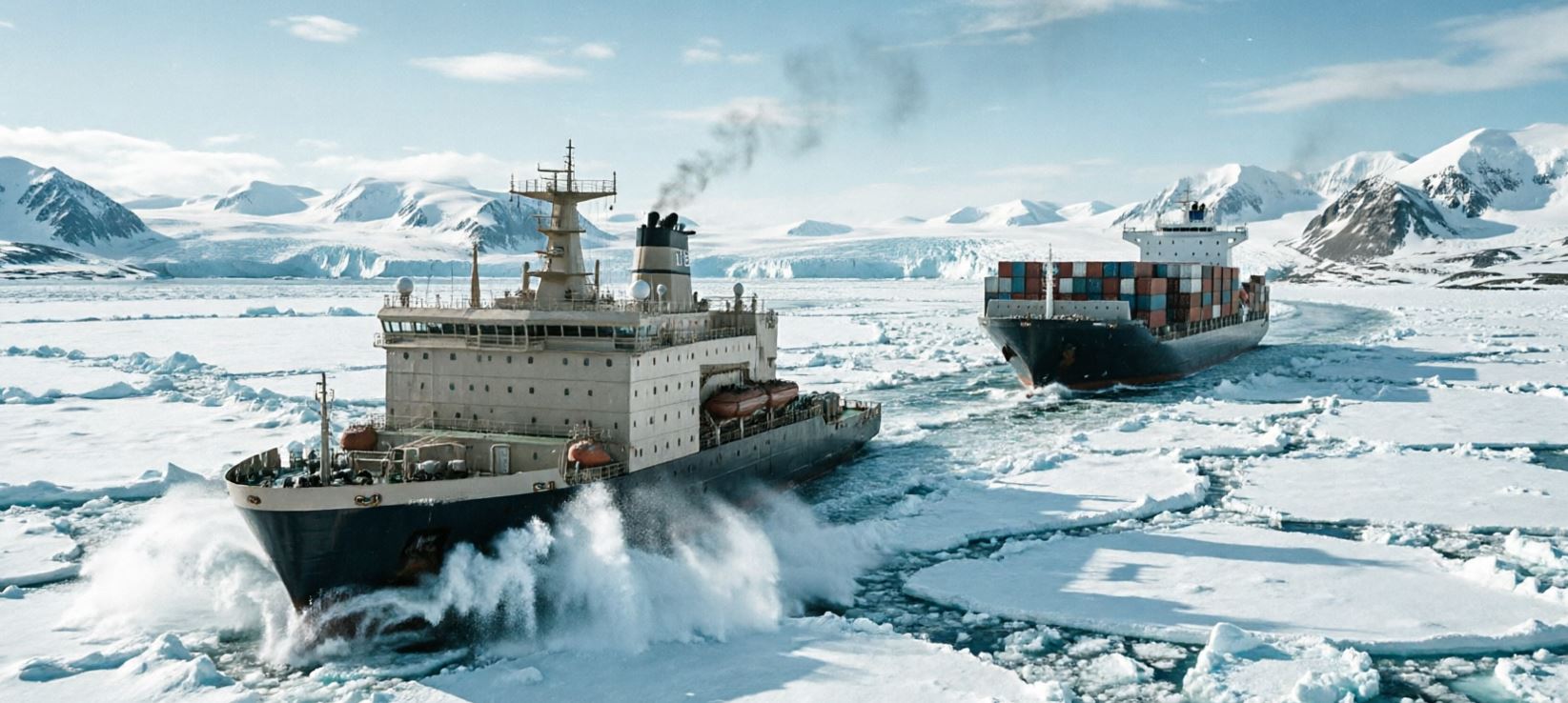
In 2026, container shipping via the Northern Sea Route (NSR) transitioned from experimental projects to regular commercial operation. Chinese shipping companies have officially launched the first regular container routes through the Russian Arctic, marking a significant milestone in the transformation of global supply chains.
In this article, we will break down exactly how this route works, which companies use it, what its key advantages are, and what special requirements are imposed on containers when sailing in Arctic latitudes.
Who Uses the NSR for Container Shipping in 2026 and How
The initiators of regular transportation were Chinese logistics operators seeking to diversify cargo delivery routes to Europe and Russia.
Sea Legend Shipping launched the first regular voyage from China to Europe via the NSR in August 2026.
Another major player, New New Shipping Line, has also expanded its presence by directing its container ships to the port of Murmansk.
According to experts, in 2026, Chinese shipping companies planned to carry out up to 64 voyages along the Northern Sea Route, including transit shipments.
Shipments between the ports of China and Russia already make up a significant share of the NSR cargo flow, and this figure continues to grow thanks to bilateral agreements and the development of port infrastructure.
Route Characteristics and Logistics
Navigation window: Due to complex ice conditions, regular navigation for container ships (even with icebreaker escort) traditionally lasts from July to October.
Key ports: Cargo from Chinese ports (e.g., Ningbo-Zhoushan or Shanghai) travels through the Bering Strait, along the northern coast of Russia, calling at the ports of Murmansk or Sabetta, and then transiting to Northern European ports.
Distance reduction: The route from East Asia to Europe via the NSR is approximately 30–40% shorter than the traditional route through the Suez Canal, reducing transit time by 10–15 days.
Route Advantages
Delivery speed: A significant reduction in transit time makes the NSR attractive for time-sensitive cargo that does not require expensive air freight.
Geopolitical security: The route passes through controlled waters, avoiding risks associated with piracy in the Gulf of Aden or blockages in the Suez Canal.
Development of Russian infrastructure: The growth in cargo flow stimulates the modernization of Arctic ports and the icebreaker fleet, creating new jobs and logistics hubs in northern Russia.
Challenges and Limitations
Despite the breakthrough, the NSR remains an additional and limited tool in global logistics for now.
High cost: Hiring icebreaker escorts and using ice-class vessels (Arc7 and above) significantly increases freight rates.
Seasonality: Year-round navigation for civilian container ships remains difficult, although Russia's nuclear icebreaker fleet is gradually expanding these capabilities.
Infrastructure limitations: In the event of an unexpected breakdown or accident in Arctic latitudes, opportunities for emergency repair and evacuation are extremely limited compared to traditional sea routes.
Special Requirements for Containers on the Northern Sea Route
Operation in extremely low temperatures imposes specific requirements on the containers:
Frost resistance of materials: Standard steel becomes brittle at temperatures below -40°C. For the NSR, containers made of steel with increased low-temperature impact toughness, or those with additional insulating panels, are preferred.
Seal protection: Rubber door seals on a standard container can harden and lose their tightness in the cold, leading to snow and moisture getting inside. The use of frost-resistant seals (e.g., made of silicone or special rubber) is required.
The "container rain" problem: Sharp temperature drops when moving from warm Asian ports to Arctic latitudes cause severe moisture condensation inside the container. To protect the cargo (especially electronics, paper, or food), it is necessary to use desiccants (silica gel) or ventilated/insulated models.
Specifics of reefer containers: Reefer containers must be equipped with systems capable of maintaining the set temperature both at +30°C (during the loading stage in China) and at -50°C (outdoors in the Arctic), with reliable protection of the unit against icing.
Practical Conclusion
The launch of regular container voyages from China via the NSR in 2026 has proven the viability of this direction. For Russian importers and exporters, this opens up new, faster logistics opportunities. However, planning such shipments requires careful consideration of seasonality, choosing the right type of container, and working with experienced operators that have permits for Arctic transportation.
*The information on this page does not constitute a public offer.
*MyContainers is a partner of MyWay.