


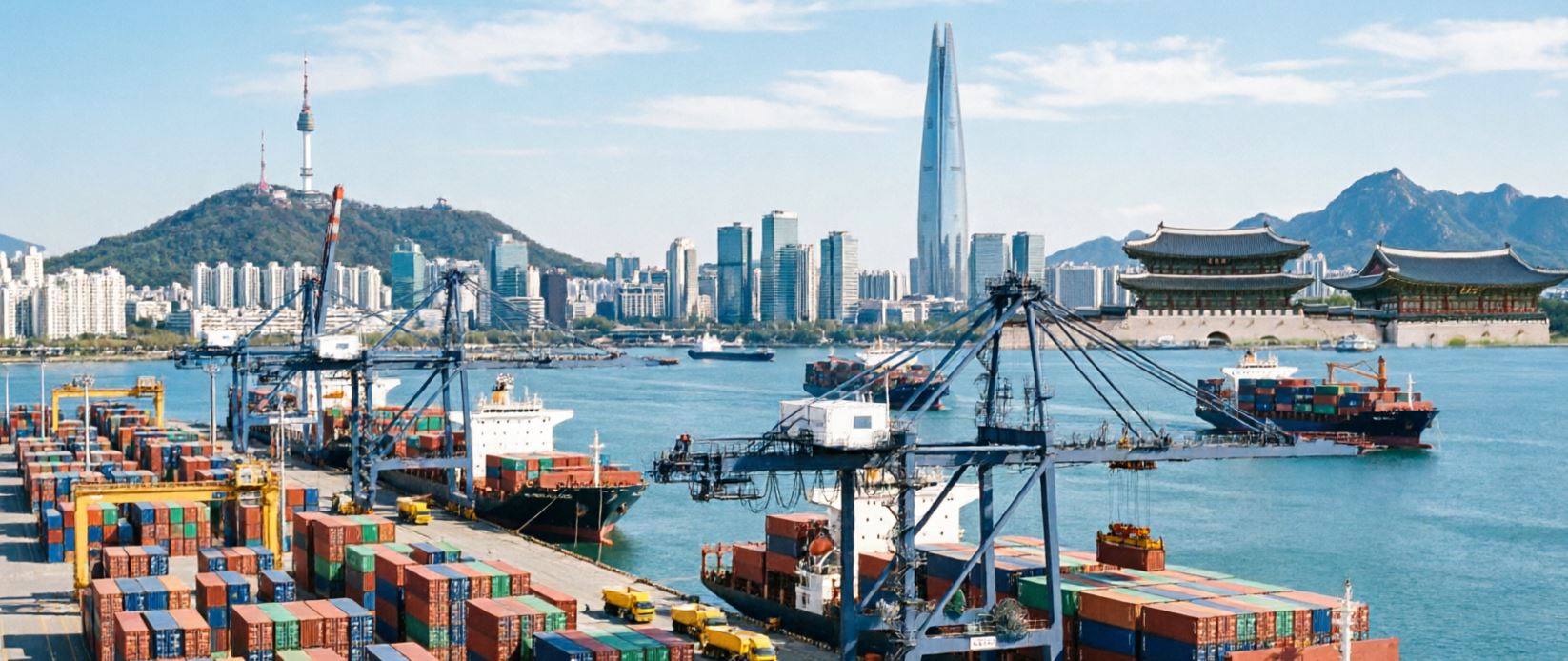
The Republic of Korea holds a leading position in global maritime logistics, serving as a key transit and transshipment hub between China, Japan, Southeast Asia, and the markets of Europe and North America. A high level of technological development, deep-water berths, and efficient customs administration make South Korean ports highly attractive for building complex supply chains.
In this article, we will examine the country's main container terminals, the structure of trade flows, and the innovative solutions transforming regional logistics.
Key Ports and Container Terminals in South Korea
Port of Busan
Busan is the country's largest port and ranks among the top 10 busiest container ports in the world. It handles the vast majority of transit cargo passing through the Korea Strait.
Busan New Port: A modern, automated terminal capable of accommodating Ultra Large Container Vessels (ULCVs).
Technologies: The port is actively implementing artificial intelligence systems to manage equipment movement and is testing vertical container storage solutions to optimize land use.
Specialization: Deep-water transshipment, transit cargo, and refrigerated shipping.
Port of Incheon
Located near the capital, Seoul, it serves as the main maritime gateway for the densely populated metropolitan region.
Characteristics: The port specializes in feeder services from China and Japan, as well as serving the domestic market.
Infrastructure: Terminals are equipped for rapid container processing, which is critical for delivering consumer goods and electronics directly to end consumers.
Port of Gwangyang
The country's second-largest container port, located on the southern coast.
Advantages: Features some of the deepest natural harbors, allowing it to serve large-tonnage vessels without tidal restrictions.
Specialization: Originally built for steel and heavy industry exports, it is now actively expanding its capacity to handle standard containerized cargo, relieving pressure on the Port of Busan.
Port of Ulsan
The largest industrial port, focused on petrochemicals and automobile manufacturing. In recent years, South Korean authorities have been considering Ulsan and Busan as potential key Arctic logistics hubs for working with new trade routes.
Container Cargo Turnover Structure: Exports and Imports
Key Export Goods
South Korea exports high value-added products that require reliable and fast logistics:
Semiconductors and electronics.
Automobiles and auto components.
Petrochemical products and plastics.
Machinery and steel.
Key Import Goods
The import basket consists of raw materials and goods necessary for industry and domestic consumption:
Energy resources (liquefied natural gas, oil, coal).
Industrial raw materials (ore, chemicals).
Agricultural products and foodstuffs.
Consumer goods and clothing.
Infrastructure Trends and Innovations (2025–2026)
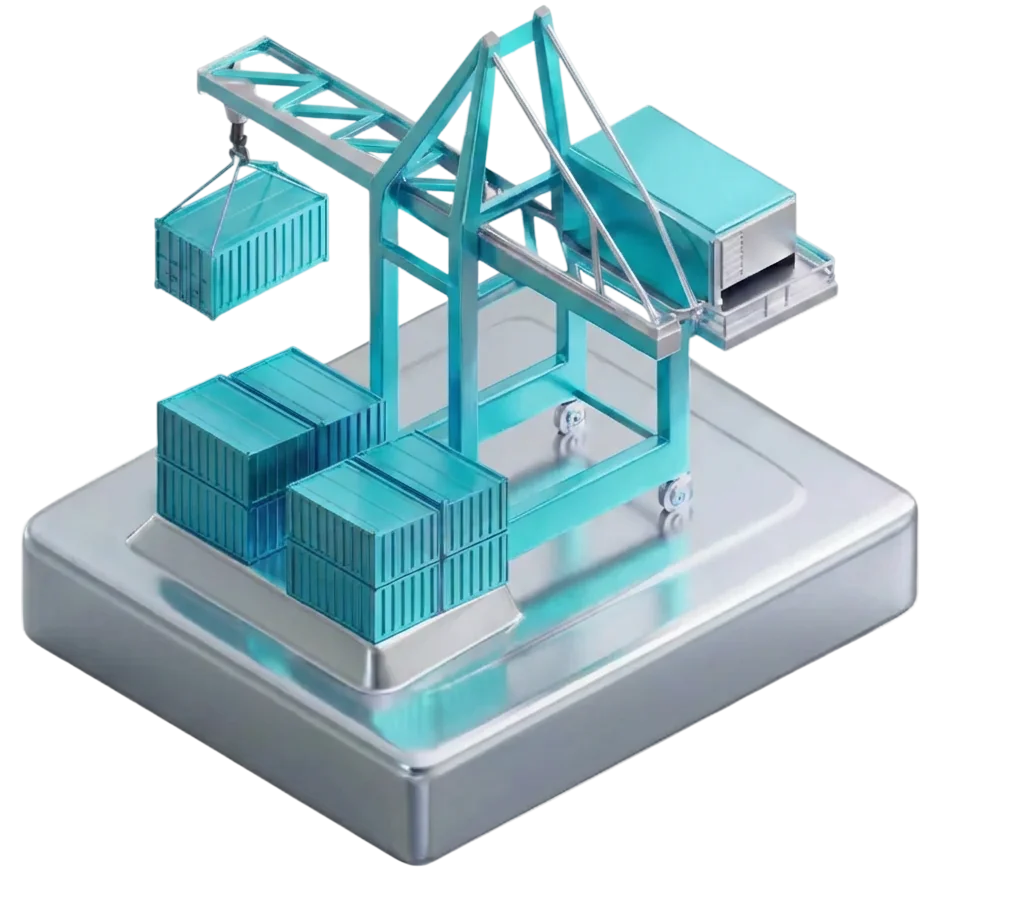
Total Automation: South Korean ports continue large-scale digitalization. Automated cranes, Automated Guided Vehicles (AGVs), and AI-based management systems are being introduced, minimizing the human factor and accelerating vessel handling.
Vertical Container Warehouses: Due to a lack of available land in port areas, multi-level (vertical) container storage systems are being tested and implemented. This significantly increases terminal capacity without expanding the coastline.
Development of the Northern Sea Route (NSR): South Korea is actively exploring the possibility of shifting part of its cargo flows to the Northern Sea Route. Strategies are being developed to integrate the ports of Busan and Ulsan into Arctic trade, which could reduce delivery times to Europe by 10–15 days compared to the traditional route via the Suez Canal.
Investments in Overseas Hubs: To diversify risks, the South Korean government plans to invest at least $3.5 billion in the development of overseas logistics hubs by 2030, strengthening its global supply chains.
Practical Takeaway: What Does This Mean for Your Business?
High predictability: Strict service standards and automation guarantee minimal risk of delays during cargo transshipment.
Flexible multimodal solutions: Excellent integration of marine terminals with rail and road networks allows for rapid cargo delivery to any point in the country or further overland to China and Russia.
New routes: Growing interest in the NSR opens up opportunities for Russian importers and exporters to collaborate with Korean logistics companies within pilot Arctic projects.
*The information on this page does not constitute a public offer.
*MyContainers is a partner of MyWay.