


The Republic of South Africa (RSA) has historically served as the primary maritime gateway to the African continent. Its ports handle a significant portion of the foreign trade cargo turnover not only for the country itself but also for landlocked nations in the region, such as Botswana, Zimbabwe, and Zambia. Understanding the specifics of the local port infrastructure is critical for building reliable supply chains.
In this article, we will examine the country's key container terminals, the structure of trade flows, and current logistics development trends for 2025–2026.
Key Ports and Container Terminals in South Africa
The country's port infrastructure is managed by the state-owned corporation Transnet, specifically through its divisions: Transnet National Ports Authority (TNPA) and Transnet Port Terminals (TPT).
Port of Durban
The largest and busiest container port not only in South Africa but in all of Africa. It handles over 60% of the country's total containerized cargo.
Infrastructure: The main facility is the Durban Container Terminal Pier 2, which is receiving substantial investment (approximately 11 billion rand) to modernize equipment and increase throughput capacity.
Specialization: Universal container shipping, refrigerated cargo, automobiles, and general cargo.
Challenges: The port regularly faces logistical bottlenecks due to high congestion and issues with the connecting rail infrastructure, requiring careful delivery timeline planning.
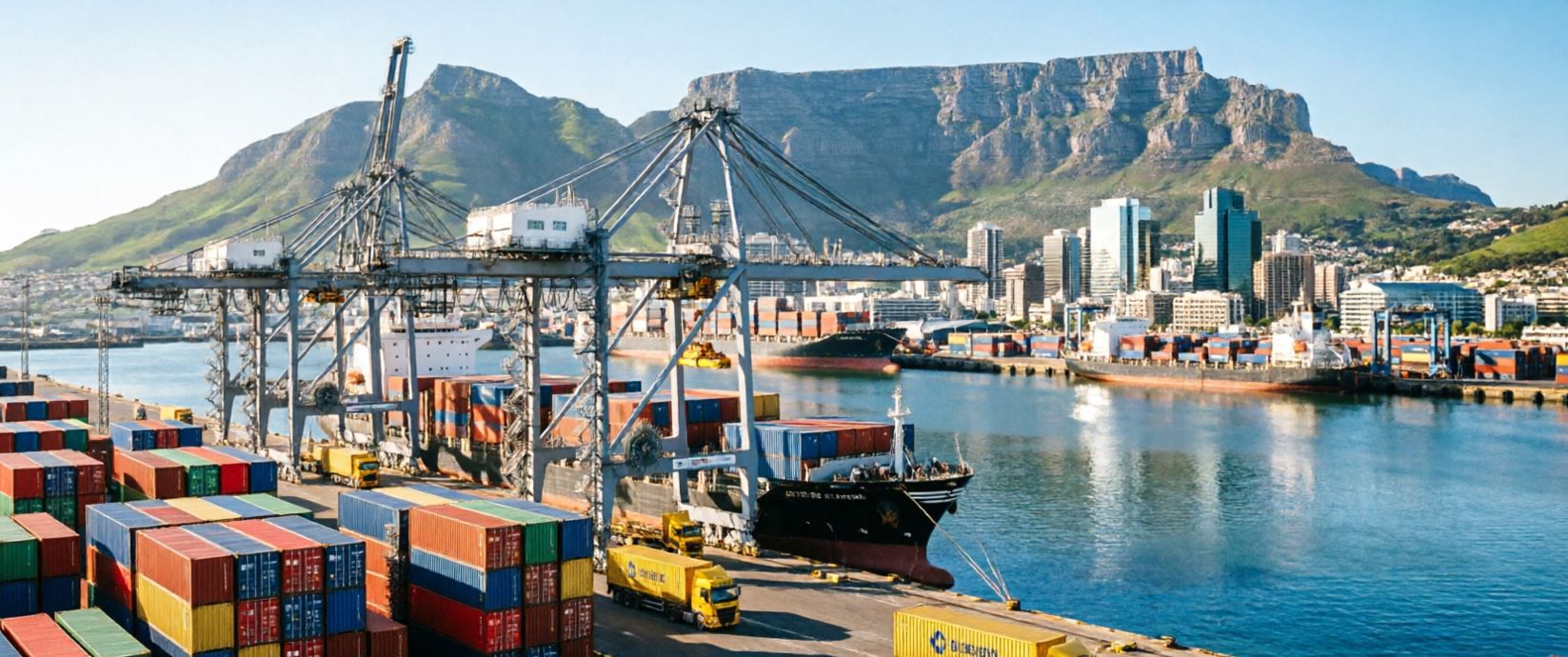
Port of Cape Town
Strategically located in Table Bay at the intersection of major global shipping routes.
Infrastructure: A modern container terminal focused on rapid vessel handling.
Specialization: A key hub for exporting agricultural products (citrus, grapes, apples) from the Western Cape, as well as serving cruise and supply vessels.
Challenges: In recent years, the terminal has experienced difficulties with crane availability, which periodically leads to vessel handling delays, especially during the peak fruit export season.
Port of Ngqura / Coega and Port Elizabeth (Gqeberha)
Located in the Eastern Cape province, these ports are viewed as a strategic alternative to the congested ports of Durban and Cape Town.
Infrastructure: Ngqura is a modern deep-water port capable of accommodating the world's largest container ships without tidal restrictions.
Specialization: Transit cargo, automobiles, and a growing segment of containerized freight. The port is actively developing as part of the Coega Industrial Development Zone (IDZ).
Export and Import Structure
Key Export Goods
South Africa's exports are heavily oriented toward raw materials and agriculture, creating specific demand for certain container types:
Agricultural products: Citrus, grapes, apples, and nuts (requiring significant volumes of refrigerated containers).
Industrial goods: Automobiles, auto components, and ferrous metallurgy products.
Mineral resources: Non-ferrous metal ores and mineral raw materials (mostly shipped in bulk, but some processed products move in containers).
Key Import Goods
The import basket meets the needs of industry and the domestic market:
Machinery and equipment: Industrial equipment, machine tools, electronics, and household appliances.
Chemicals and plastics: Pharmaceuticals, fertilizers, and polymer materials.
Consumer goods: Clothing, textiles, and fast-moving consumer goods (FMCG), predominantly from Asia.
Energy resources: Petroleum products and liquefied natural gas (LNG), prompting the construction of new specialized terminals, such as an LNG terminal in partnership with Royal Vopak.
Infrastructure Trends and Challenges (2025–2026)
Attracting Private Capital: To improve efficiency, the state-owned company Transnet is actively implementing a Private Sector Participation (PSP) policy. Tenders have been announced for long-term (up to 25 years) concession agreements to manage multi-purpose and container terminals, notably in the Port of Durban.
Restoration of Rail Corridors: Transnet is executing programs to restore and secure strategically important rail lines connecting ports to inland regions, aiming to reduce reliance on road transport and alleviate port congestion.
Green Logistics: South Africa is moving toward an eco-friendly logistics ecosystem, including the electrification of port equipment and energy consumption optimization at terminals.
Route Diversification: Amid global supply chain disruptions, logistics companies are increasingly viewing the Port of Ngqura as a reliable alternative for transshipping cargo destined for the interior of the African continent.
Practical Takeaway: What Does This Mean for Your Business?
Timeline Planning: When working with the ports of Durban or Cape Town, it is necessary to build in additional buffer days (especially during the fruit export season from November to May) to avoid downtime and demurrage charges.
Port of Destination Selection: For cargo heading to central or northern regions of South Africa and neighboring countries, Durban remains optimal. For cargo destined for the Western Cape, using Cape Town is more logistically and economically advantageous.
Equipment Control: Due to high demand for refrigerated containers in the export direction, equipment booking should be done as far in advance as possible.
*The information on this page does not constitute a public offer.
*MyContainers is a partner of MyWay.