



Introduction: The Problem Solved by the INSTC "North-South"
Modern global logistics has faced unprecedented challenges. The traditional container delivery route from Asia to Europe and Russia via the Suez Canal, which historically took 30–45 days, has become highly vulnerable to serious risks. Geopolitical instability in the Middle East, rising insurance rates, vessel capacity shortages, and sanctions have led to a 10–80% increase in delivery times and costs, depending on the destination.
For Russian businesses and EAEU countries, a critical question arose: how to ensure predictable, safe, and cost-effective cargo delivery? The answer has been the rapid growth in popularity of the International North-South Transport Corridor (INSTC). This is not just an alternative, but a strategic artery that is already redistributing cargo flows and offering real savings in time and budget.
What is the INSTC "North-South" and Its Geography
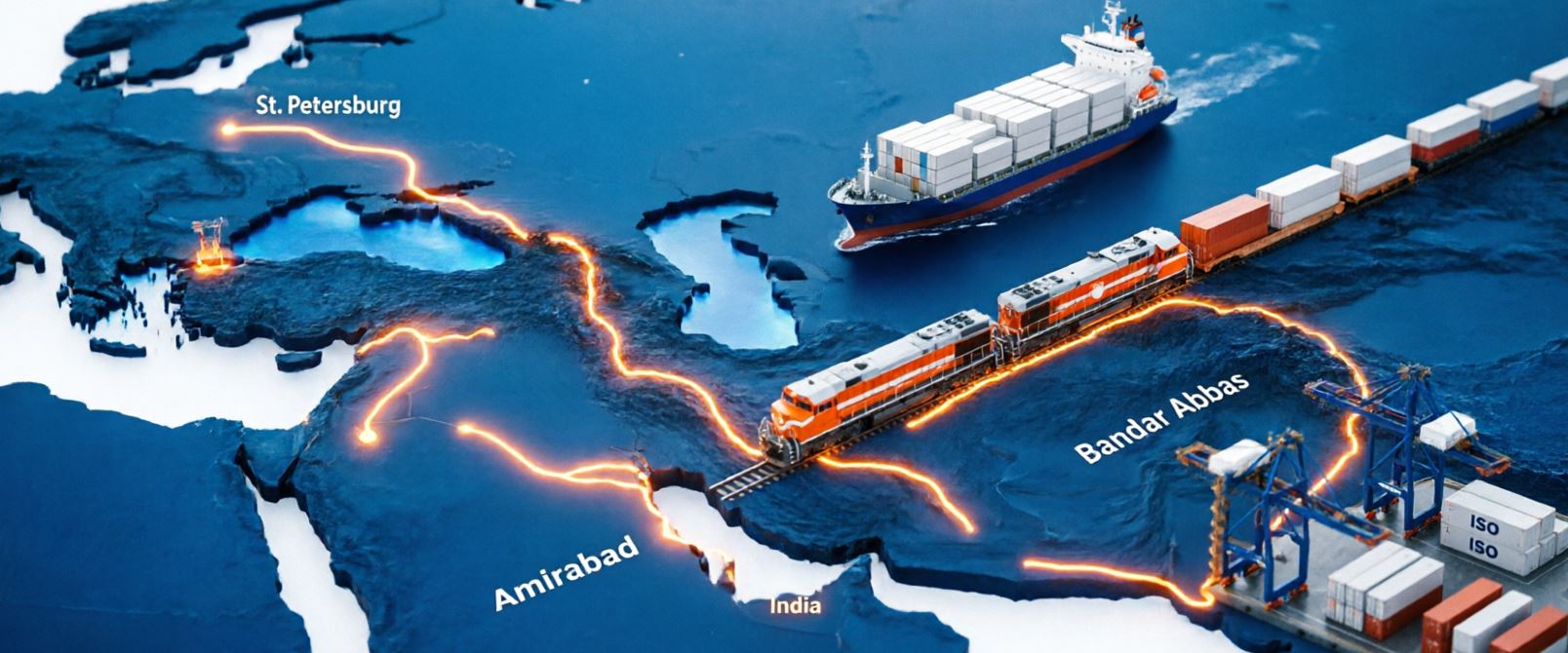
The INSTC is a multimodal route approximately 7,200 km long, connecting India, Iran, the Caspian region countries, Russia, and further into Europe. The corridor includes sea, rail, and road segments, making it a highly flexible logistics tool.
For container shipping between Russia and Iran, two branches are most relevant:
Trans-Caspian (Central) Route: Rail from central Russia to the ports of Astrakhan, Makhachkala, or Olya → sea crossing across the Caspian Sea to northern Iranian ports (Amirabad, Anzali) → further by rail or road to Bandar Abbas and Persian Gulf ports.
Eastern Route: Via Kazakhstan and Turkmenistan, exiting at the Iranian border (Sarakhs or Incheh Borun rail crossings).
The Role of Iran and Key Ports: Where Containers Go
Iran is the geographical and logistical "heart" of the corridor. Understanding the specifics of its ports is critical for planning shipments.
1. Bandar Abbas
Iran's largest seaport in the Persian Gulf. It serves as the country's main gateway for maritime trade. In 2024, its container throughput reached approximately 2.39 million TEU, accounting for about 80% of Iran's total container volume. Large ocean-going vessels from India, the UAE, and China arrive here. For Russian exporters and importers, this is a key hub for transshipping cargo bound for South Asian or Persian Gulf countries.
2. Amirabad and Anzali
These are Iran's northern ports (NIP – Northern Iranian Ports), located on the Caspian Sea. They play a crucial role in connecting with Russian ports.
Amirabad boasts the most modern infrastructure for transshipping containers and bulk cargo. Over the last reporting period, the port's cargo turnover grew by 7%, indicating rising demand for this route.
Anzali has historically specialized in Ro-Ro and breakbulk cargo, but it also actively receives container lines from Astrakhan and Makhachkala.
It is precisely through the "Astrakhan/Makhachkala – Amirabad/Anzali" link that the fastest multimodal delivery is achieved, bypassing long overland segments.
Characteristics and Advantages for Container Shipping
Why do logistics professionals choose the INSTC "North-South" for containerized cargo (20DC, 40HC, reefers)?
Reduced Transit Times: Transit via the INSTC can reduce travel time between Russia and South Asian countries by 10–50% compared to traditional routes. If delivery via the Suez Canal takes 30–45 days, the "North-South" corridor cuts this down to 20–25 days.
Cost Reduction: According to logistics experts, using this corridor allows Russian businesses to save up to 30% on cargo delivery to India and Persian Gulf countries.
Current Statistics and Prospects (2024–2026)
The development dynamics of the corridor confirm its high demand:
According to statistics for the first 9 months of 2025, approximately 12 million tons of cargo were transported via the INSTC by rail and sea.
To eliminate "bottlenecks" on the Caspian section, the Astrakhan Southern Shipbuilding Center is actively producing "river-sea" class vessels specifically designed for INSTC needs.
Long-term forecasts, supported by the Eurasian Development Bank (EDB), estimate the corridor's throughput capacity will grow to 25 million tons by 2030.
Practical Tips: How to Avoid Problems When Shipping
Choosing the Right Container Type: For multimodal transport involving multiple transshipments (rail → port → vessel → port → rail), it is highly recommended to use IICL or CW class containers. They guarantee better watertightness and cargo safety during frequent crane operations.
Documentation: Clarify Iranian customs requirements for labeling and accompanying documents in advance. Errors in the invoice or certificate of origin can lead to the container being delayed at the port of Amirabad for weeks.
Insurance: Ensure your insurance policy covers multimodal transport, including the Caspian Sea crossing segment, as this is considered a non-standard risk under some basic policies.
Conclusion
The INSTC "North-South" has ceased to be just a theoretical project and has become a working, competitive logistics tool. For companies seeking an alternative to congested traditional routes, the "Russia – Caspian – Iran" link offers an optimal balance of speed, cost, and reliability.
Planning to ship a container via the INSTC "North-South"?
We provide reliable sea containers (20DC, 40HC, reefers) of IICL and CW classes, fully ready for complex multimodal routes. Contact us for a cost calculation and equipment selection. Our containers are already actively participating in INSTC cargo logistics.
*The information on this page does not constitute a public offer.
*MyContainers is a partner of MyWay.