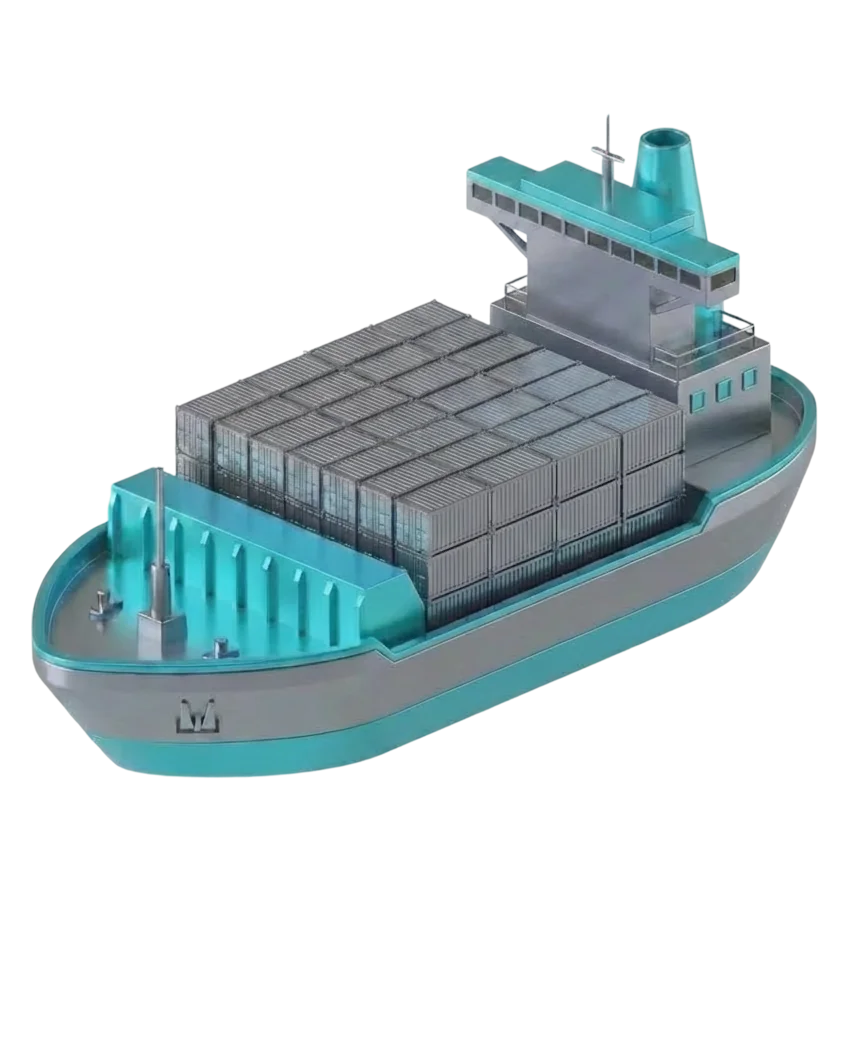

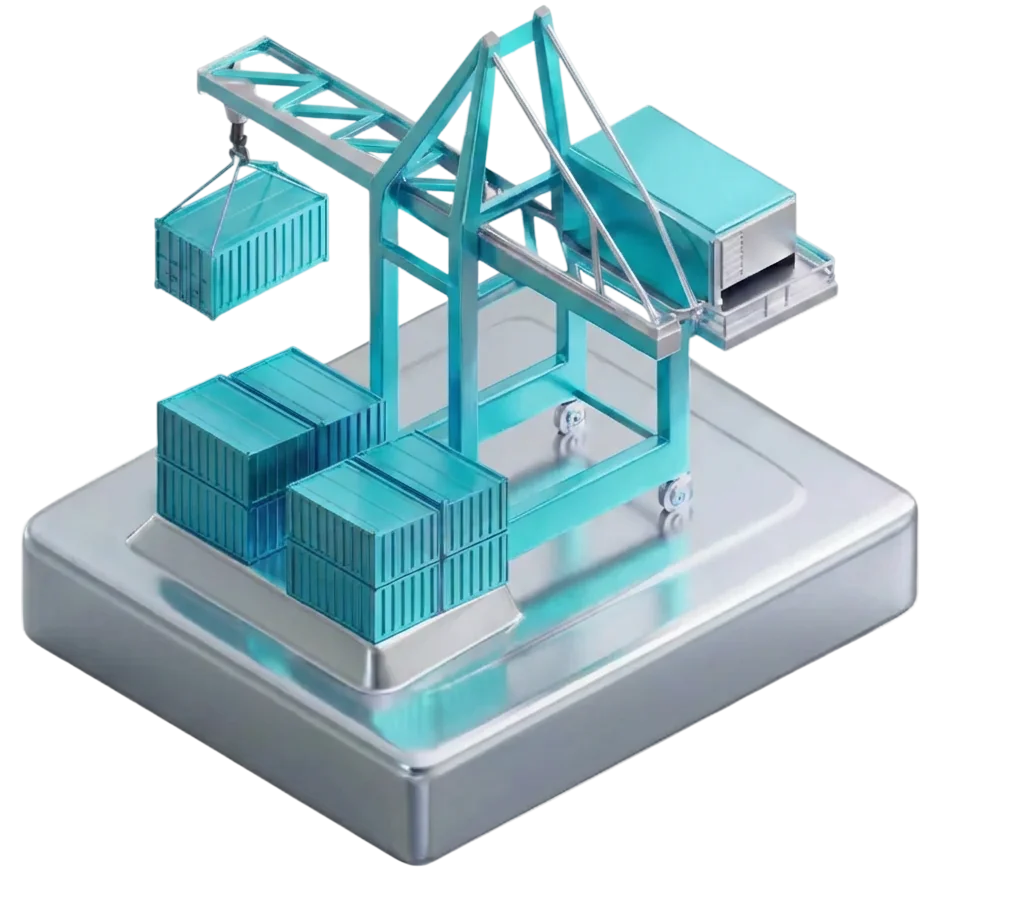




Exactly 70 years ago, on April 26, 1956, the aging tanker Ideal X set sail from the port of Newark, New Jersey, bound for Houston. Stacked on its deck were 58 metal boxes. At the time, people thought it was just a quirky experiment. Yet, this very voyage sparked one of the greatest economic revolutions of the last century.
Today, these exact boxes carry over 90% of all global goods. Without them, there would be no globalization, and no smartphones in our pockets. Let’s dive into how a former truck driver turned the global economy upside down and why we are still playing by his rules today.
Before 1956, Ports Were Hell
To truly appreciate the brilliance of the idea, you have to picture how ships were loaded in the mid-20th century. It was backbreaking manual labor. Sacks, barrels, bales—dockers hauled it all on their backs. Loading a single ship could drag on for a week.
But the biggest problem wasn't even the speed. In ports like New York or London, up to 20% of the cargo was simply stolen. Dockers were paid pennies and took "payment in kind"—silk, coffee, whiskey. Insurers factored these losses into their rates, making it practically pointless to ship many goods across the ocean: it was cheaper to just make the exact same thing on the next street.
Plus, a ship in port wasn't making money. It just sat there, waiting to be loaded to the brim. And as we know, money is made on the move.
The Trucker Who Got Tired of Waiting
Malcolm McLean wasn't an engineer or a scientist. He started out driving a truck in North Carolina, and by the 1950s, he had built a massive transportation company, McLean Trucking.
His "eureka" moment actually came back in 1937. Standing at the port of Hoboken, watching loaders haul boxes for hours, McLean thought, "What if, instead of unloading the goods, we just put the entire trailer straight onto the ship?" That idea gnawed at him for nearly 20 years.
In 1955, he sold his business for $25 million (a fortune back then) and bought a shipping company. His competitors thought he had lost his mind. But McLean grasped one simple truth: you shouldn't be moving the goods themselves, but the containers they sit in.
The Voyage That Started It All
The idea was test-run on the retrofitted tanker Ideal X. Its deck was reinforced and loaded with 58 containers (not yet standardized, measuring 35 feet each).
The results shocked the industry. Where loading a ton of cargo used to cost $5.86, it now cost just 16 cents. A 36-fold difference.
Naturally, the dockers' unions howled. Containerization was taking away their jobs. Port authorities didn't want to spend money on new cranes. But you can't argue with math.
Why Exactly 20 and 40 Feet? (Spoiler: It’s Not Perfect)
At first, every carrier was building their own boxes. Chaos ensued: containers from one line wouldn't fit on the cranes of another.
The Vietnam War finally put an end to this. The US military urgently needed to supply its troops on the other side of the world quickly and cheaply, and the mess of box sizes was costing millions. The Pentagon demanded order.
In 1961, the ISO standard was approved: 20 and 40 feet long, 8 feet wide, with standardized corner castings. Funny enough, these dimensions weren't chosen because they were mathematically ideal (40 feet doesn't convert neatly into meters or yards). As Ken Bond, one of the standard's creators, joked: "We just picked the numbers everyone could agree on." And it worked.
How a Metal Box Made Distance Less Important
Standardization set the flywheel in motion that we now call globalization.
Cost. The price of shipping a ton of cargo plummeted 20-fold. Today, shipping a TV from Shanghai to Rotterdam by sea is cheaper than trucking it from Rotterdam to Berlin.
Speed. A ship that took a week to load by hand can now be unloaded in a single day.
Security. A container is sealed at the factory and only opened at the buyer's destination. Port theft plummeted from 20% to virtually zero.
Geopolitics. It created the model of "produce where it's cheap, sell where it's expensive." Factories moved to Asia, sparking an economic miracle in China and deindustrialization in the West.
Your iPhone is designed in California, its chips are made in Taiwan, the screen in South Korea, and it’s all assembled in India. Without cheap container shipping, this kind of assembly would be impossible.
The Death of Old Ports and McLean’s Paradox
The container redrew the map of the world. Rotterdam, Shanghai, Singapore, and Dubai grew into megacities precisely because they became container hubs. Meanwhile, old ports like London, New York, and Liverpool fell into decline. Their narrow docks physically couldn't accommodate the new giant cranes and ships.
As for Malcolm McLean himself? He died in 2001, and therein lies the ultimate paradox. His company (which became Sea-Land, later acquired by Maersk) changed the world, but McLean himself didn't become the richest man on the planet. His competitors, port operators, and retailers ended up making more money off his idea.
Though, to be fair, in 2006 the International Maritime Organization officially recognized containerization as one of humanity's greatest achievements.
The Bottom Line?
Today, giants sailing the seas can carry 24,000 containers each. The boxes are learning to "talk" thanks to IoT trackers, and logisticians are battling to reduce the carbon footprint and reroute supply chains.
But the core essence remains exactly the same as it was 70 years ago on the deck of the Ideal X. McLean didn't invent anything high-tech. He simply realized that the biggest problem in logistics isn't movement—it's idle time. And he figured out how to eliminate it.
Next time you see one of those standard steel boxes on the highway or at a terminal, remember: it’s not just a piece of metal. It’s the invisible framework that holds up our entire modern life.
*The information on this page does not constitute a public offer.
*MyContainers is a partner of MyWay.