


Marine Container Stock: What It Is and How It Differs from a Container Terminal
In logistics terminology, the terms "container terminal" and "stock" (or "container depot") frequently appear. Although marine containers are physically present in both locations, their purpose, tariffs, and operating rules differ drastically.
Understanding this difference helps cargo owners, freight forwarders, and shipping lines optimize logistics budgets, avoid demurrage penalties, and speed up cargo handling. MyContainers has prepared a detailed guide to dot all the i's.
1. What is Container Stock (Container Depot)?
Stock (from the English "stock" – reserve, warehouse) or a container depot is a specialized, fenced area designed for the medium- to long-term storage, maintenance, and preparation of marine containers.
Depots are often owned by leasing companies, major operators, or partners like MyContainers. They are located both in port zones and deep inland (inland depots), near railway hubs or major industrial centers.
Main functions of a depot:
Long-term storage of empty or loaded containers.
Maintenance and repair (M&R).
Pre-Trip Inspection (PTI) of reefer containers.
Washing and disinfection of equipment.
Sale and leasing of containers (release directly from the depot).
2. What is a Container Terminal?
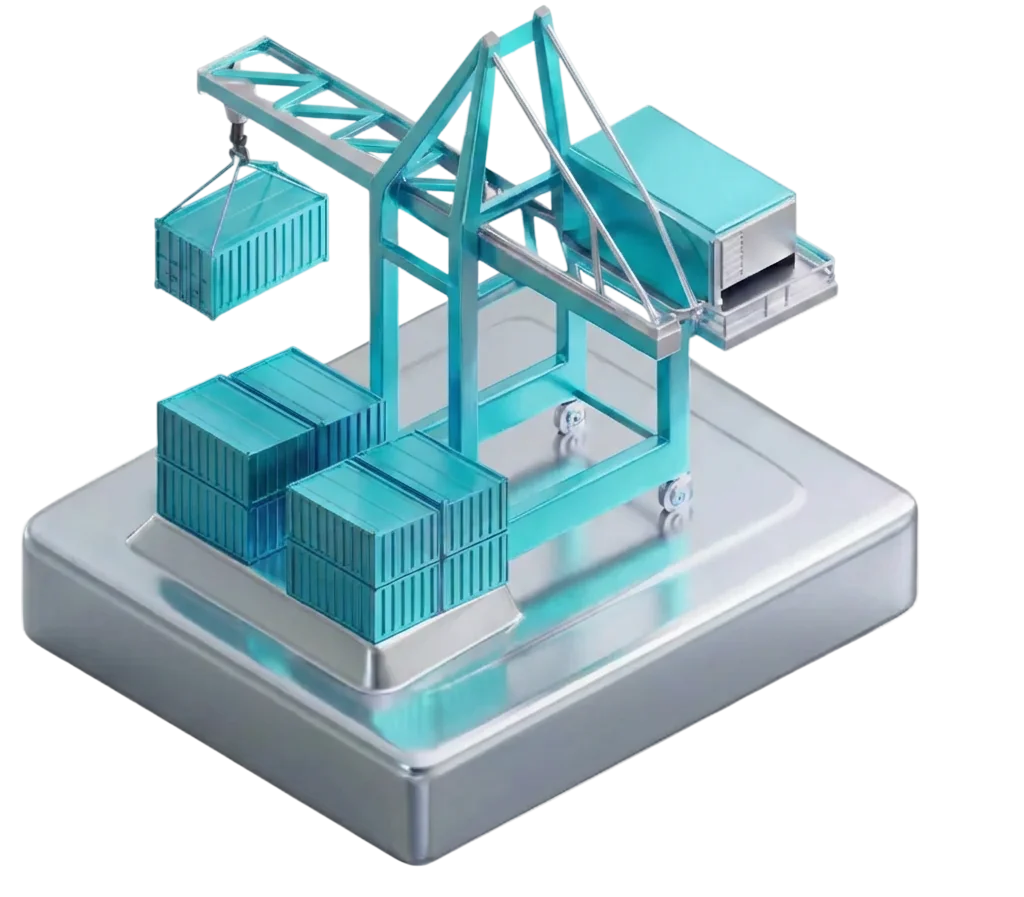
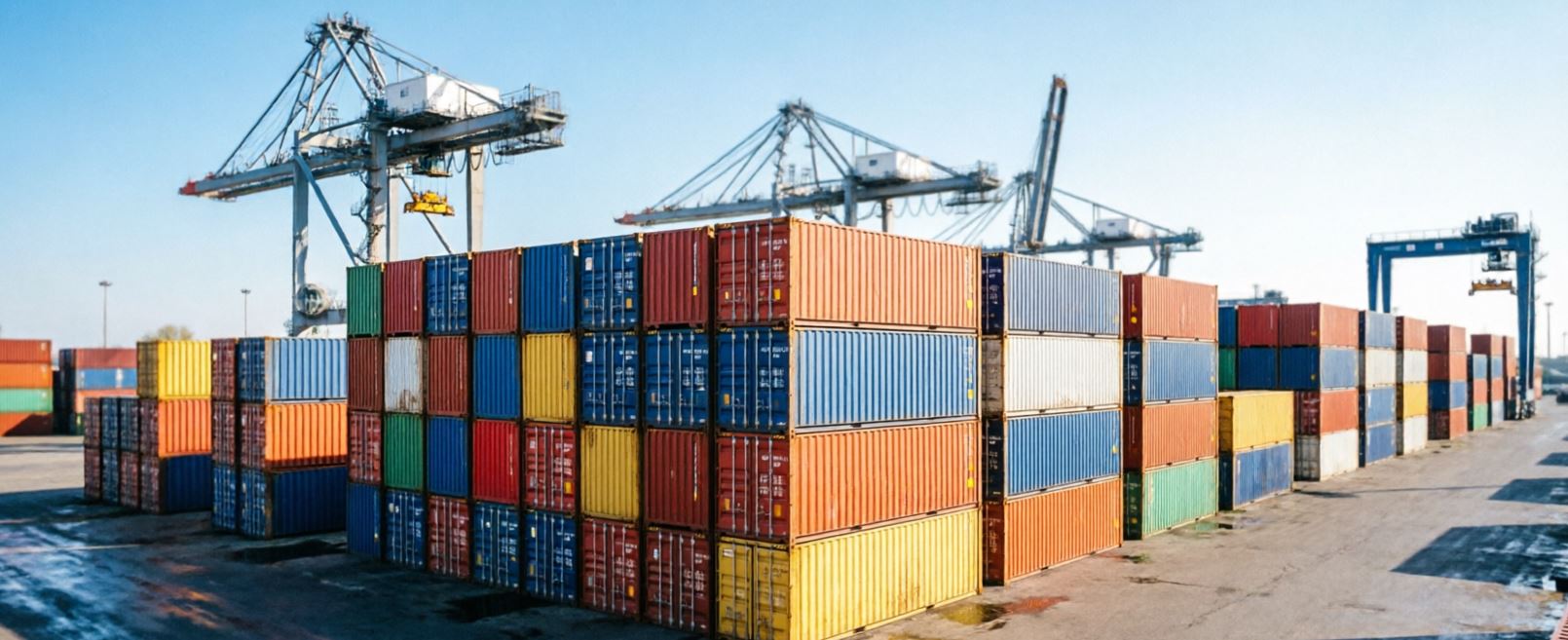
A container terminal is a high-tech transport hub (usually in a seaport or at a major railway station), whose main task is to ensure the maximum speed of container transshipment from one mode of transport to another (from ship to train/truck, and vice versa).
A terminal is an "assembly line." Its infrastructure (gantry cranes, reach stackers) is designed for rapid turnover, not for long-term storage.
3. Key Differences: Stock (Depot) vs. Terminal
To clearly illustrate the difference, we have summarized the main parameters in a comparison table:
Comparison Criterion | Container Terminal | Container Stock (Depot) |
Main Goal | High-speed cargo transshipment (flow) | Storage, maintenance, and equipment preparation |
Storage Cost | High. After the free period (3–7 days), rates grow exponentially | Low to medium. Rates are fixed and cost-effective for long-term storage |
Time Limits | Strict. Demurrage and detention fees apply | Flexible. Can be stored for months under contract without penalties |
Additional Services | Minimal (only crane movement) | Extensive: repair (M&R), washing, PTI inspection, hardware replacement |
Client Access | Restricted. Difficult to enter the territory for inspection | Open by prior arrangement (you can visit and inspect) |
Purchase/Lease | Terminals do not sell containers | Ideal place to buy or lease a container "here and now" |
4. Why Should Businesses Use a Depot Instead of a Terminal? (5 Main Benefits)
1. Savings on Demurrage and Storage
Shipping lines provide only a few days of free storage in port. If your cargo is delayed at customs or you fail to pick it up in time, the terminal starts charging huge penalties. Moving an empty or loaded container to a MyContainers partner depot allows you to lock in a low storage rate and avoid exorbitant port tariffs.
2. Opportunity for Pre-Purchase Inspection and Repair
Buying a container "blind" at a terminal is impossible. At MyContainers depots, you can personally visit, perform a light test for tightness, and check the floor and doors. If minor repairs are needed (seal replacement, painting), we will do it right at the depot before handing it over to you.
3. Instant Release Upon Purchase or Lease
Containers offered for sale or lease at our depots have already cleared customs (if imported) and are ready for release. You don't need to wait in line for port removal. We will arrange a container truck delivery from the depot straight to your gate within 1–3 days.
4. High-Quality PTI Inspection for Reefers
Before leasing or selling a reefer container, it must be tested under load. Depots have power connection points and qualified technicians who will conduct a Pre-Trip Inspection and issue a certificate. Getting such a service at an active terminal is practically impossible.
5. Convenient Drop-Off for One-Way Leases
If you leased a container one-way, returning it to an expensive port terminal means risking new fee assessments. We accept equipment at our depots, quickly process the return receipt (EIR), and release you from liability.
5. How MyContainers Utilizes Its Network of Partner Depots
We don't just sell "iron"; we manage the logistics around it. Our network of partner depots in Russia (Moscow, St. Petersburg, Novorossiysk, Vladivostok, Novosibirsk), China, and the CIS allows us to:
Maintain reserves: We proactively purchase and place popular types (20DC, 40HC) at depots to issue them to clients during peak season without delays.
Control quality: All incoming and outgoing equipment flows are inspected at our facilities.
Offer comprehensive solutions: You can buy a container from us, immediately leave it at our depot for secure storage until you need it, and we will deliver it to you on the required day.
*The information on this page does not constitute a public offer.
*MyContainers is a partner of MyWay.