


South Korea remains one of Russia's key trading partners, especially as foreign economic ties pivot toward the East. Container shipping between the two countries forms one of the shortest, most predictable, and technologically advanced logistics corridors in Eurasia.
In this article, we will break down the main sea and multimodal routes, the structure of cargo flows, and the specific challenges market participants face in 2025–2026.
Main Sea Routes
Sea freight is the fundamental, non-negotiable leg of container delivery between the two countries. The distance between the ports allows for record-breaking delivery times.
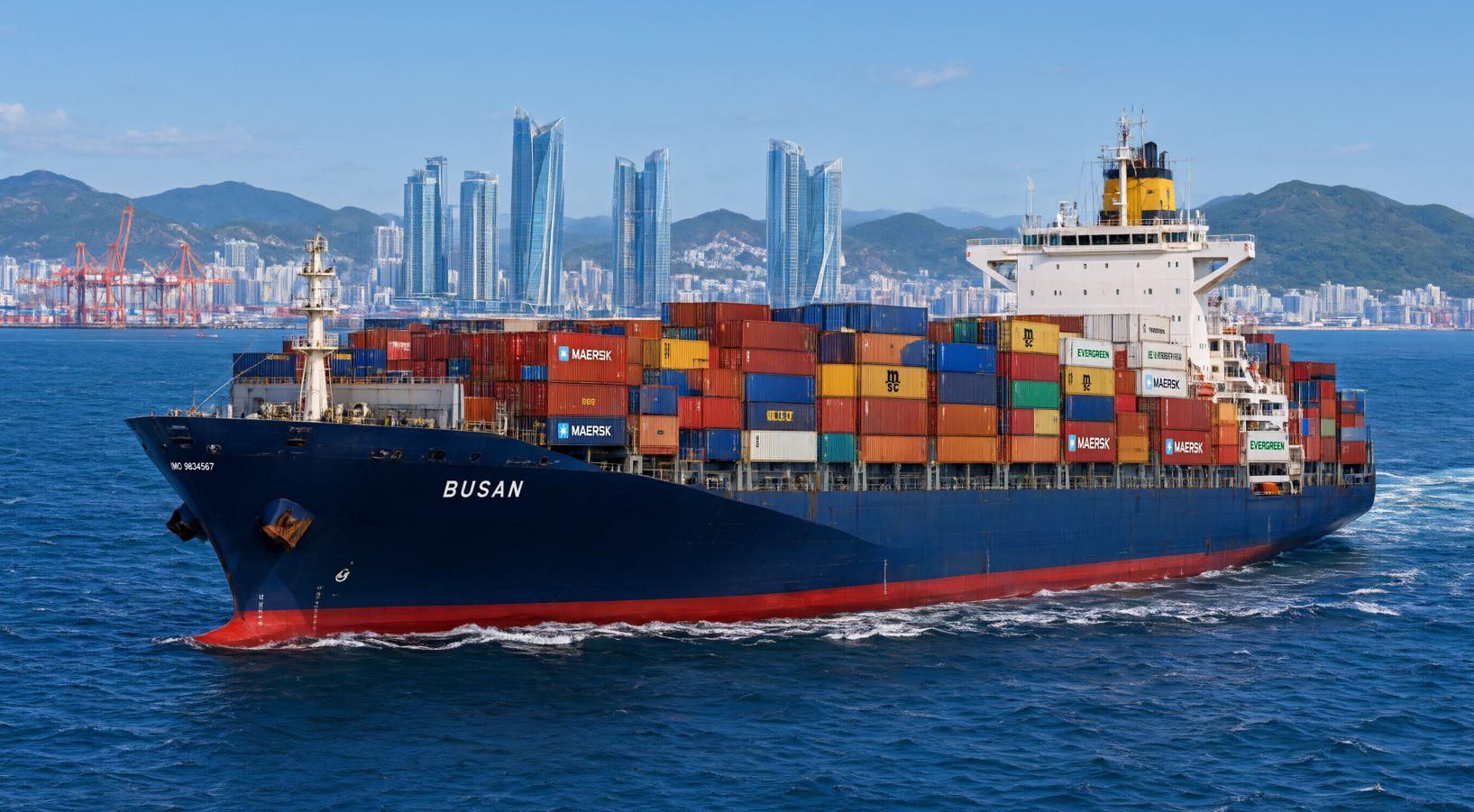
1. Busan ↔ Vladivostok / Vostochny
This is the "gold standard" and the busiest container corridor.
Port of Busan: South Korea's largest logistics hub, featuring deep-water berths and the highest frequency of vessel calls.
Russian ports: Vladivostok (Commercial Sea Port) and Vostochny (a specialized container terminal).
Transit time (sea leg): Just 2–4 days.
Features: Regular weekly (and sometimes multiple times a week) departures. The route is ideal for electronics, auto parts, industrial goods, and equipment.
2. Ulsan ↔ Vladivostok / Vostochny
Specialization: Ulsan is South Korea's largest industrial and petrochemical port. This route is frequently used for transporting chemical products, industrial equipment, rolled metal, and automotive components.
Transit time: 3–5 days.
3. Pyeongtaek ↔ Vladivostok
Role: The Port of Pyeongtaek is actively developing as an alternative to the congested Port of Busan, especially for cargo originating from South Korea's central industrial regions.
Advantage: Less terminal congestion and sometimes more flexible freight rates, although sailing frequency currently lags behind Busan.
Multimodal Chain: Sea + Trans-Siberian Railway
Once the container arrives at the port of Vladivostok or Vostochny, the second stage of logistics begins: rail delivery deep into Russia.
Russian Railways (RZD) Eastern Polygon: Containers are transferred to railway flatcars and travel along the Trans-Siberian Railway (Transsib) or the Baikal-Amur Mainline (BAM).
Key destinations: Yekaterinburg, Novosibirsk, Moscow, St. Petersburg.
Rail transit time: 10–14 days to Moscow or St. Petersburg, depending on train priority and the current capacity of the Eastern Polygon.
Total transit time: Door-to-door from South Korea to central Russia — typically 18–25 days.
Structure of Container Cargo Flow
The cargo flow between the two countries has distinct characteristics, though a trend toward balance has been observed in recent years.
Imports to Russia (from South Korea):
Consumer electronics and components.
Auto parts, tires, and special machinery.
Industrial equipment and machine tools.
Cosmetics, household chemicals, and FMCG (fast-moving consumer goods).
Chemical products and plastics.
Exports from Russia (to South Korea):
Seafood (frozen fish, crabs, shrimp) — the main driver, requiring a large fleet of refrigerated containers (reefers).
Timber and lumber.
Fertilizers and mineral raw materials (partially in containers, partially in bulk).
Metals and rolled metal products.
Current Challenges and Constraints (2025–2026)
Despite geographic proximity, the route has its "bottlenecks":
Container fleet imbalance: More loaded containers go to Russia than return. While seafood exports partially offset this, logistics operators still have to solve the problem of repositioning (returning) empty containers to Korea, which is factored into the freight cost.
Financial and compliance risks: Due to secondary sanction risks, some Korean banks and logistics companies apply enhanced compliance controls. This may require additional documentation or lead to payment delays, especially for dual-use goods.
Eastern Polygon capacity: During peak seasons (autumn-winter), shortages of railway flatcars and locomotive traction occur on the stretch from the port to the internal RZD network, requiring advance slot booking.
Temperature control: When exporting frozen fish from Russia, ensuring an uninterrupted power supply to refrigerated containers at terminals and on flatcars is critical, requiring meticulous oversight by the freight forwarder.
Future Prospects
Development of Zarubino Port: Projects are being discussed to expand container capacities at the Port of Zarubino to relieve Vladivostok and create a shorter delivery leg to China's Jilin and Heilongjiang provinces, which indirectly affects Korean routes as well.
Digitalization: Implementation of electronic bills of lading and advance customs notification systems in both countries to speed up clearance.
Northern Sea Route (NSR): Although currently a niche direction, the long-term perspective includes the possibility of delivering containers from Busan or Ulsan to Russian Arctic ports (Murmansk, Arkhangelsk) to supply northern regions, bypassing the Suez Canal.
The Bottom Line
The South Korea – Russia route remains one of the most reliable and fastest directions for container shipping. For successful logistics, the key factors are: choosing a proven Korean or Russian freight forwarder capable of handling compliance and payment issues, and booking slots on vessels and railway flatcars well in advance (2–3 weeks), especially during peak seasons.
*The information on this page does not constitute a public offer.
*MyContainers is a partner of MyWay.