



Introduction
Sea freight always puts cargo to the test with fluctuating temperatures and humidity levels. Even if a container appears perfectly sealed and structurally sound, it can experience its own internal "rain." Known in the logistics industry as "container rain," this phenomenon causes millions of dollars in losses annually due to damaged goods, corrosion, and mold.
In this article, we will break down the physics of the process, identify which cargoes are at the highest risk, and explore 5 proven protection methods to save your cargo.
What is "Container Rain" and the Physics Behind the Phenomenon
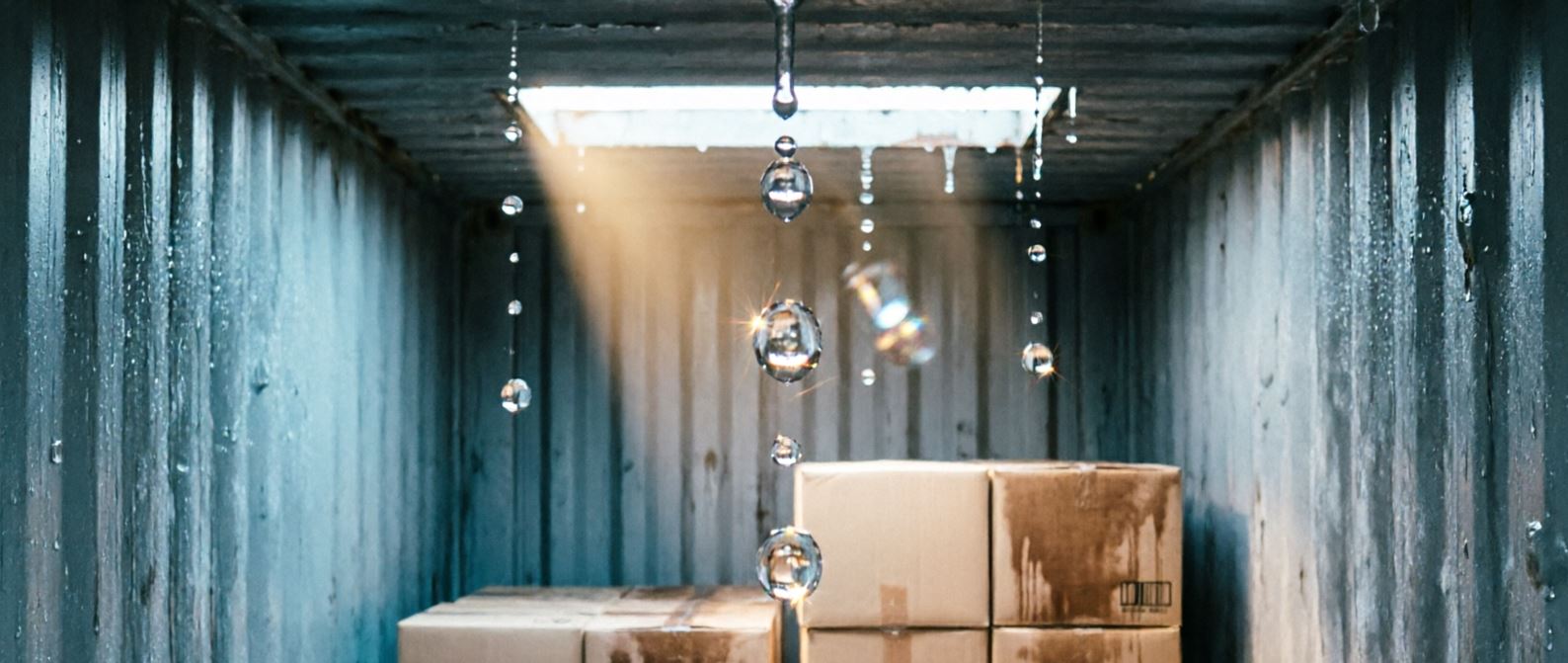
Container rain is the heavy condensation that forms on the ceiling and walls of a shipping container, subsequently dripping onto the cargo.
This is not a sign that the container is leaking. On the contrary, it is the result of it being too well-sealed combined with temperature fluctuations. The process works like this:
Evaporation: During the day (or in a warm loading port), the temperature inside the container rises. Moisture contained in wooden pallets, cardboard packaging, the cargo itself, or even the container's wooden floor evaporates, saturating the air with water vapor.
Cooling: When the vessel enters colder latitudes or night falls, the steel walls and roof of the container cool down rapidly.
Dew Point: The warm, humid air comes into contact with the cold roof surface. The surface temperature drops below the "dew point," and the vapor instantly condenses into water droplets.
"Rain": The droplets accumulate and fall, soaking the top layers of the cargo.
Important: During a single voyage through different climate zones, this heating and cooling cycle can repeat dozens of times, multiplying the volume of condensed water.
Which Cargoes are at Maximum Risk?
Some goods are critically sensitive to humidity changes. If you are shipping any of the following, combating condensation must be your #1 priority:
Rolled metal and machinery: Risk of instant rust and corrosion.
Electronics and home appliances: Oxidation of contacts, short circuits, and packaging damage.
Textiles, footwear, and leather goods: Development of mold, mildew, and a persistent musty odor.
Paper products and cardboard: Deformation, waterlogging, and loss of commercial appearance.
Food and agricultural products: Grain, coffee, cocoa, spices (risk of caking and mold).
Timber and furniture: Swelling, warping, and mold growth.
5 Proven Measures to Protect Against "Container Rain"
Combating condensation requires a comprehensive approach: at the packaging, container preparation, and loading stages.
1. Use Container Desiccants (Moisture Absorbers)
This is the most popular and effective method. The small silica gel packets you find in shoe boxes are useless here. For shipping containers, the following are used:
Hanging Desiccant Poles: Long strips (usually 1–1.5 meters) that attach to the hooks on the container's inner walls. A single pole can absorb 1 to 2 kg of moisture.
Floor Absorbers: Special mats or sheets laid on the container floor before loading to absorb moisture rising from the wooden floor.
Tip: Calculate the number of desiccants based on the voyage duration and the initial moisture content of the cargo (typically, 1–2 poles per 20-foot container are recommended).
2. Control the Moisture Content of Packaging Materials
Up to 60% of the moisture in a container doesn't come from the air, but from the materials themselves.
Wooden pallets and crates must be dry (wood moisture content should not exceed 18–20%).
Avoid using fresh, undried cardboard.
Whenever possible, use plastic stretch wrap for palletizing: it creates a barrier between the cargo and the humid air inside the container.
3. Proper Preparation of the Container Itself
Before loading, always conduct a visual inspection:
The container floor must not be wet or show signs of recent washing.
Ensure there are no holes in the roof or walls (perform a light test from the inside).
If the container was previously used to transport wet cargo, it is best to reject it.
4. Correct Cargo Stowage
Do not load wet pallets.
Leave air gaps between the cargo and the container's walls/ceiling (at least 5–10 cm). This ensures air circulation and prevents the cargo from directly touching the cold walls, where condensation forms first.
Do not block the ventilation holes (if using a ventilated container).
5. Choose the Right Container Type
For highly sensitive cargo, a standard Dry Van might not suffice. Consider alternatives:
Ventilated Containers: Equipped with special valves at the top and bottom that provide natural air circulation, equalizing temperature and humidity.
Reefer Containers: Can be used not just for cooling, but in dehumidification mode to maintain an ideal microclimate throughout the voyage.
Checklist: 5 Steps Before Closing the Container Doors
Wooden pallets and packaging are dry to the touch.
The container floor is clean, dry, and free of visible damage.
Desiccants are secured to the walls in the correct quantity.
Cargo is stowed with gaps from the walls and does not touch the ceiling.
The container doors close tightly, and the rubber seals are intact and elastic.
Conclusion
"Container rain" is a predictable physical phenomenon, not a stroke of bad luck. Ignoring humidity risks during sea freight almost guarantees financial losses, disputes with insurance companies, and dissatisfied end clients.
Investing in proper packaging and high-quality desiccants costs a fraction of a percent of the freight rate but saves 100% of your cargo's value.
Need a reliable shipping container for transport or storage?
We provide IICL and CW grade containers that have undergone strict technical inspections for watertightness and dryness. Contact us to find the optimal solution for your needs.
*The information on this page does not constitute a public offer.
*MyContainers is a partner of MyWay.