



Key Infrastructure: Dry Ports
Since Rwanda has no coastline, all container infrastructure is concentrated around inland terminals (Inland Container Depots, ICDs), which provide customs clearance, storage, and cargo consolidation services.
Kigali Dry Port (Kigali Dry Port Limited, KDPL)
This is the country's main logistics hub, located near the capital.
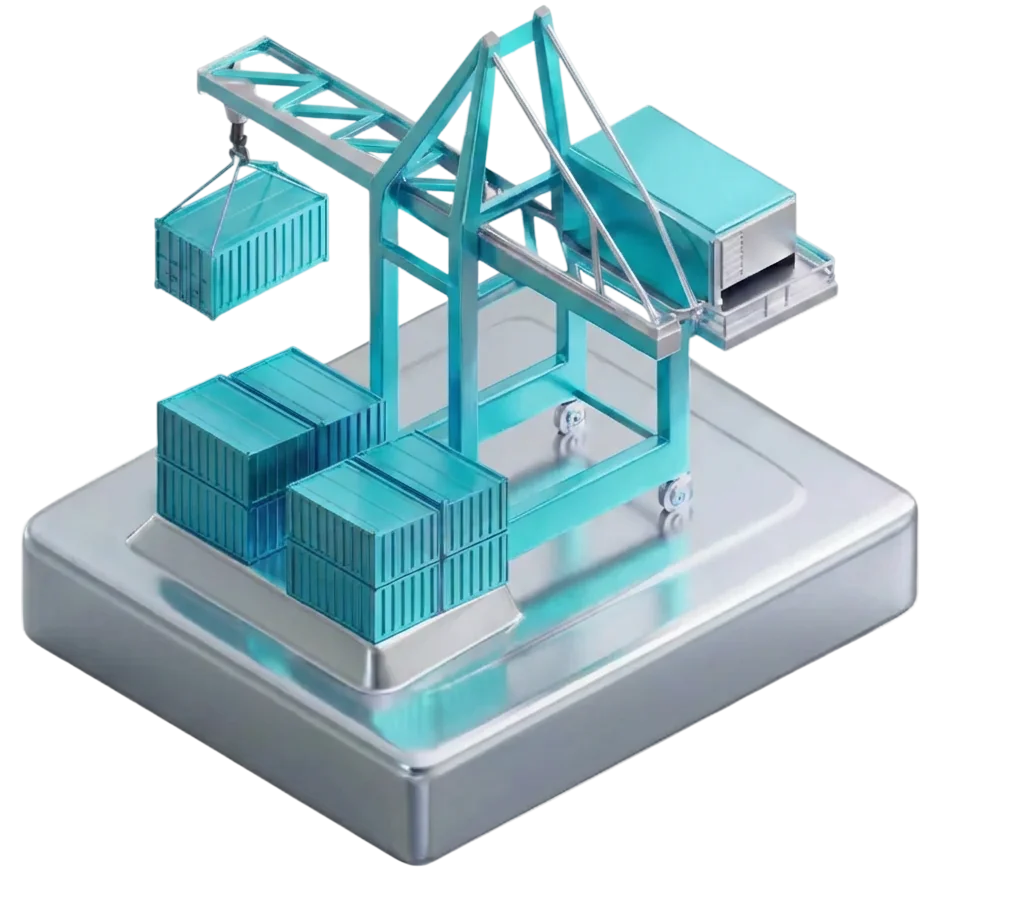
Functions: The terminal is equipped with modern cranes for handling 20- and 40-foot containers, temporary storage warehouses, and direct access to customs services.
Significance: It allows for customs clearance of cargo directly in Kigali, rather than in the ports of Tanzania or Kenya, significantly speeding up the process and reducing the risk of delays.
Rusumo Dry Port
Located on the eastern border with Tanzania.
Functions: Created to relieve the Kigali Dry Port. Cargo in transit to the DRC or Burundi, as well as a portion of Rwanda's imports, can be processed here.
Feature: It works in close coordination with the modern One-Stop Border Post (OSBP), where customs procedures for both countries are completed simultaneously, reducing truck downtime from several days to a few hours.
Kayonza Dry Port
A new, developing hub in the Eastern Province, designed to decentralize logistics and serve the growing industrial zones in this region, reducing the load on roads leading directly to Kigali.
Main Logistics Corridors
Container delivery to Rwanda is carried out by road (and in the future, by rail) from seaports in neighboring countries. There are two main routes:
1. Central Corridor – Primary
Route: Port of Dar es Salaam (Tanzania) → Tabora → Isaka → Rusumo border crossing → Kigali.
Status: This route accounts for about 75–80% of Rwanda's total container cargo turnover. It is considered shorter, more predictable, and less congested compared to the alternative.
2. Northern Corridor – Alternative
Route: Port of Mombasa (Kenya) → Nairobi → Kampala (Uganda) → Katuna/Mirama Hills border crossing → Kigali.
Status: Used as a backup or for specific cargo. It often faces severe congestion at the Kenyan-Ugandan border (Malaba) and has higher freight costs due to the longer haul distance.
Structure of Containerized Exports and Imports
Main Import Cargo
Fuel and petroleum products: (Often in tank containers or in bulk, but logistics are closely tied to container flows).
Construction materials: Cement, rebar, and finishing materials for large-scale infrastructure projects.
Industrial equipment: Machinery for agriculture, mining, and manufacturing.
Consumer goods and food products: Grain, automobiles, electronics, and everyday consumer goods.
Main Export Cargo
Agricultural products: Coffee and tea (the main export items, often shipped in containers, though premium grades are sent by air).
Minerals: Tin, tantalum, and tungsten (the so-called "3Ts"), which are packed in containers for safe transport.
Processed goods: Exports of ready-made garments and processed food products to regional countries are gradually growing.
The Future: Standard Gauge Railway (SGR)
The most significant project that will radically change Rwanda's container infrastructure is the construction of the Standard Gauge Railway (SGR).
Current status: Tanzania is actively building an electrified SGR from Dar es Salaam to the city of Isaka.
Plans: The next phase involves extending the branch to the Rusumo border crossing, and then to the Kigali Dry Port.
Expected effect: Upon completion (tentatively late 2020s to early 2030s), the delivery time for a container from the port to Kigali will be reduced from the current 5–7 days (by road) to 1–2 days, and logistics costs will drop by 30–40%. This will make Rwandan exports much more competitive.
Practical Takeaway
Logistics in Rwanda requires careful planning due to the country's landlocked status. However, thanks to efficient dry ports, the implementation of the "One-Stop" principle at borders, and a stable political environment, Rwanda is one of the most reliable and predictable markets in Central Africa. Choosing the Central Corridor via Tanzania is currently the optimal solution for most container shipments.
The information on this page does not constitute a public offer.
MyContainers is a partner of MyWay.