



Armenia, Azerbaijan, and Turkmenistan occupy a unique geopolitical position at the crossroads of Eurasia. Two of these countries are landlocked, and the third is bounded by the landlocked Caspian Sea. Nevertheless, thanks to massive investments in multimodal logistics, this region has transformed into a critically important node for alternative global trade routes, such as the Trans-Caspian International Transport Route (TITR, or the "Middle Corridor") and the International North-South Transport Corridor (INSTC).
In this article, we will examine the container infrastructure of each of these countries, their key hubs, and their role in regional logistics.
1. Azerbaijan: The Undisputed Logistics Leader of the Region
Azerbaijan is the primary transit hub on the Caspian Sea and a key link in the "Middle Corridor," connecting China and Central Asia to Europe while bypassing Russia.
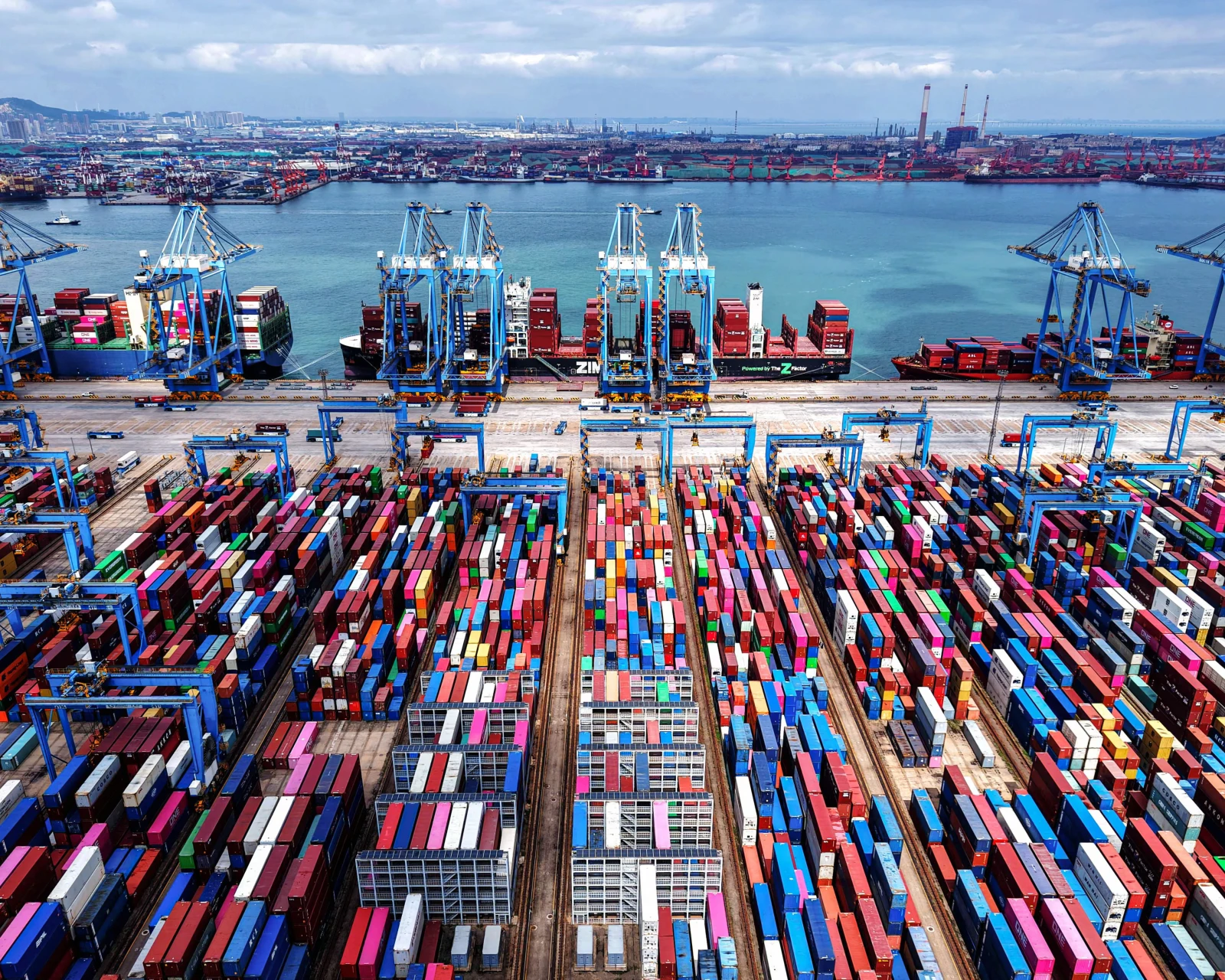
Baku International Sea Trade Port (Alat): Located 65 km from the capital, this is the country's flagship project. The port features deep-water berths and a specialized container terminal.
Capacity: Design capacity exceeds 15 million tons of cargo and 100,000 TEUs annually, with continuous expansion. The port is equipped with modern cranes and an integrated digital management system.
Role: The main transshipment point for containers from railcars originating in Kazakhstan and Turkmenistan onto Caspian ferries, and onward via rail.
Baku–Tbilisi–Kars (BTK) Railway: This strategic rail corridor (where the 1520 mm gauge transitions to the 1435 mm standard European gauge in Georgia/Turkey) allows container trains from Baku to travel directly to Georgia, Turkey, and onward to Europe, bypassing maritime straits.
Dry Ports: The country is actively developing logistics centers in Ganja and Nakhchivan, which serve to consolidate cargo and facilitate customs clearance.
2. Armenia: Logistics in a Landlocked Environment
Armenia relies entirely on the transit infrastructure of neighboring countries, making its logistics complex but highly flexible. The country's main cargo flow has historically passed through Georgian territory.
Dependence on Georgian Ports: Approximately 80–90% of Armenia's foreign trade cargo passes through the Black Sea ports of Poti and Batumi (Georgia). From there, containers are delivered by road or rail through mountain passes to the "Bagratashen" or "Gogavan" customs posts.
Yerevan Dry Port (Masis): Located near the capital, this terminal serves as the main hub for receiving, customs clearance, and consolidating containerized cargo arriving from Poti. It concentrates the primary warehousing capacities and customs facilities.
New Vectors (North-South Corridor): In recent years, Armenia has actively diversified its routes by developing cooperation with Iran. Projects to improve rail and road connectivity with the Iranian port of Bandar Abbas in the Persian Gulf are being discussed and partially implemented, theoretically creating an alternative, Georgia-independent ocean access.
3. Turkmenistan: Caspian Gateway with Growth Potential
Turkmenistan, possessing the longest coastline on the Caspian Sea among regional countries, is focusing on developing its own port facilities to integrate into Eurasian corridors.
Turkmenbashi International Seaport: Located in the Kara-Bogaz-Gol bay. This is a modern, greenfield complex comprising ferry and container terminals.
Capacity: Capable of handling up to 300,000 TEUs annually (with expansion prospects) and servicing up to 17 million tons of cargo. The port is equipped for transshipping containers, general cargo, and wheeled equipment (Ro-Ro).
Role: The connecting link between Central Asia (Kazakhstan, Port of Aktau) and the Caucasus (Azerbaijan, Port of Baku) via Caspian ferry crossings.
Railway Connection to Iran: The Turkmenistan–Kazakhstan–Iran railway (with the Incheh-Borun/Sarakhs border crossing) is a vital part of the INSTC. It allows containers to be delivered from Turkmenistan directly into the Iranian rail network, bypassing the Caspian Sea.
Key Regional Logistics Corridors
Trans-Caspian International Transport Route (TITR / "Middle Corridor"): China → Kazakhstan (Aktau) → Caspian Sea (ferry) → Azerbaijan (Baku) → Georgia → Turkey/Europe. Turkmenistan can act as an alternative departure point from the Caspian.
International North-South Transport Corridor (INSTC): Russia → Caspian Sea → Azerbaijan (Astara) or Turkmenistan (Turkmenbashi) → Iran → India/Persian Gulf. Armenia integrates into this corridor via the Iranian route.
Infrastructure Challenges and Limitations
Caspian Logistics: Ferry crossings across the Caspian Sea (Aktau–Baku, Turkmenbashi–Baku) are highly dependent on weather conditions. Winter storms and fog can delay ferries for several days, creating bottlenecks in the supply chain.
Gauge Change: On the route from Central Asia to Europe via Azerbaijan and Georgia/Turkey, a gauge change from 1520 mm to 1435 mm occurs. This requires transshipping containers onto different flatcars or changing bogies, increasing transit time.
Customs and Digital Harmonization: Despite progress, customs clearance procedures at the junction of multiple jurisdictions (e.g., Kazakhstan–Azerbaijan–Georgia) can still be bureaucratic, although the implementation of digital waybills is gradually improving the situation.
Practical Takeaway
For shippers, this region offers strategically important alternatives to traditional routes. Azerbaijan (Port of Baku) is the most streamlined and predictable hub for transit between China and Europe. Armenia demonstrates high adaptability by diversifying routes through Georgia and Iran. Turkmenistan, with its modern port infrastructure, is gradually increasing its role in Caspian logistics, especially in connection with Iran. When planning shipments through this region, it is critical to build in time buffers for Caspian ferry crossings and to choose experienced freight forwarders who understand the specifics of each country's customs procedures.
*The information on this page does not constitute a public offer.
*MyContainers is a partner of MyWay.