



The development of the North-South International Transport Corridor (ITC) and the Trans-Caspian route has led to the launch of new direct logistics solutions, reducing cargo delivery times between China and Central Asian countries. One of the most significant events of 2026 was the opening of a direct container rail service between Chengdu (Sichuan Province, China) and the border station of Serakhs in Turkmenistan.
In this article, we will take a detailed look at the history of the route's launch, its technical specifications, and the key requirements that shippers must consider.
Launch Date and Route History
The Chengdu – Turkmenistan route was developed in stages:
June 2026: The first direct freight route from Chengdu to the Agala station (Balkan Region, Turkmenistan) was launched, confirming the high demand for this direction.
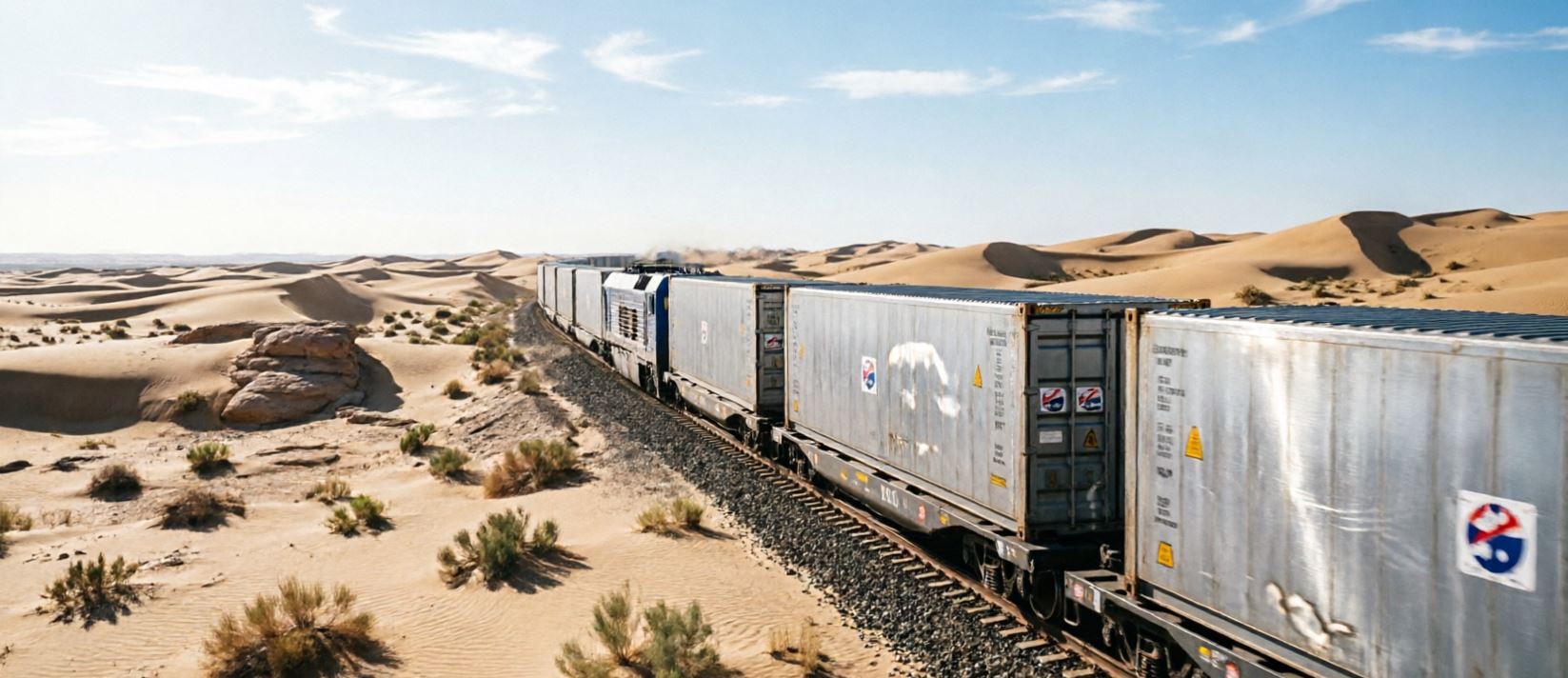
September 2026: The first fully rail-based container train departed on the direct Chengdu – Serakhs route. This shipment marked the second direct route to Turkmenistan and a significant step in deepening transport and logistics cooperation within the "Belt and Road" initiative.
The route transits through the territory of Kazakhstan, utilizing the Dostyk/Alashankou border crossings, and then proceeds through Turkmenistan to the Serakhs station, which serves as a key hub for further cargo distribution to Iran and other countries in the region.
Technical Specifications of the Train and Route
Distance: The total length of the route exceeds 10,500 km.
Train Capacity: A standard consist is formed of 55 containers (typically 40-foot or 20-foot units) loaded onto specialized railway flatcars.
Transit Time: The estimated delivery time from the departure station in Chengdu to the Serakhs border freight terminal is 14–16 days. This is significantly faster than traditional multimodal schemes involving sea freight, which can take 30 to 45 days.
Cargo Requirements
To ensure smooth transit through the territories of Kazakhstan and Turkmenistan, strict rules apply to the cargo:
Cargo Homogeneity: To simplify customs clearance, it is highly recommended to place only one type of goods with a single HS code in a container. Mixed (consolidated) cargoes require more complex documentation and may cause delays at border stations.
Weight Restrictions: The railway administrations of China, Kazakhstan, and Turkmenistan strictly control axle loads. The maximum gross weight for a 20-foot container is usually limited to 25–26 tons (despite the sea freight standard allowing up to 30.48 tons).
Prohibited and Restricted Goods: The transportation of dangerous goods (DG) is only possible with a special declaration, compliant packaging, and prior approval from the carrier. Perishable goods require the use of refrigerated containers with guaranteed access to power sources at transshipment stations.
Container Requirements
Since the route is entirely rail-based (with potential subsequent road or sea transshipment), heightened requirements apply to the condition of the equipment:
Valid CSC Certificate: Each container must have a legible and up-to-date International Convention for Safe Containers (CSC) plate, confirming its fitness for transport.
Even Weight Distribution: If two 20-foot containers are placed on a single railway flatcar, the weight difference between them must not exceed 3 tons. This is a critical safety requirement regulated by railway transport rules.
Technical Condition: The container must be watertight, with no through-corrosion, deformed corner fittings, or damaged door mechanisms. Dents on the side walls that do not affect watertightness are acceptable, but cracks in the structural frame are grounds for refusal of cargo acceptance.
Cleanliness and Absence of Odors: The container must be dry and clean, with no residues from previous cargo, to avoid cross-contamination and claims from sanitary control authorities.
Practical Conclusion
The launch of the direct Chengdu – Serakhs train provides importers and exporters with a reliable alternative to sea freight, offering predictable transit times (around 2 weeks) and independence from seaport congestion. However, the success of the shipment depends directly on strict adherence to weight restrictions and the proper preparation of the container for the journey.
*The information on this page does not constitute a public offer.
*MyContainers is a partner of MyWay.