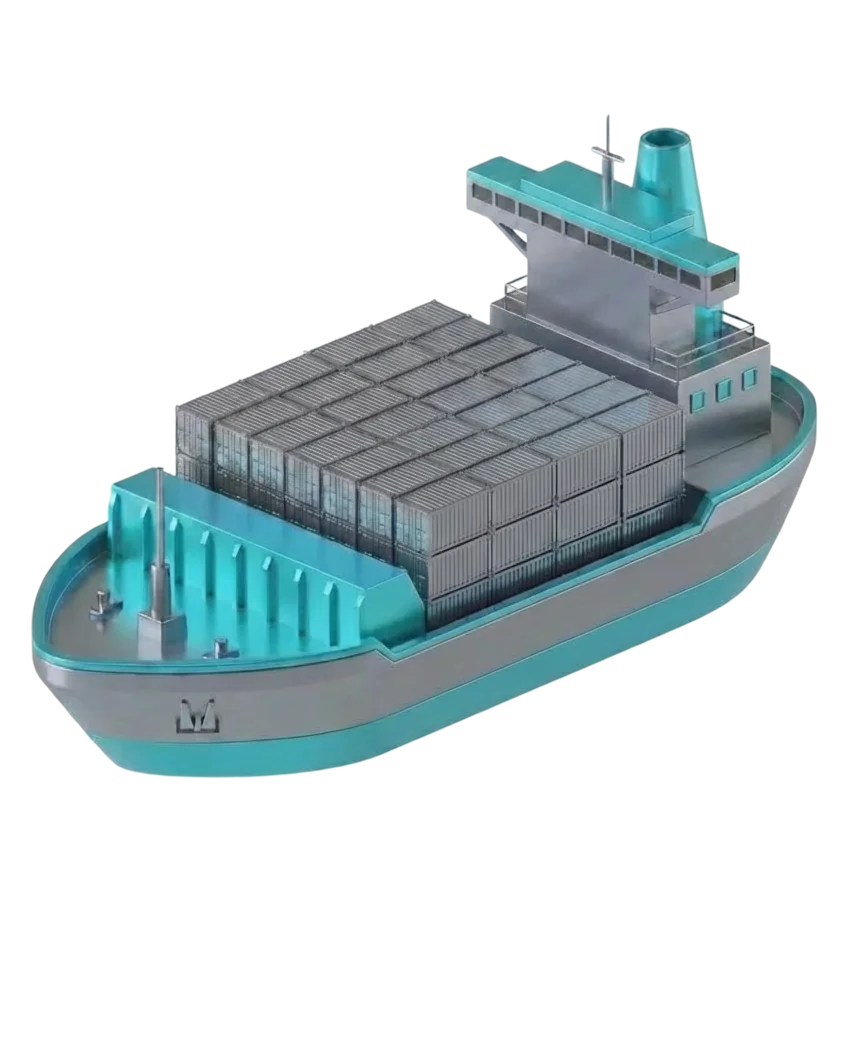


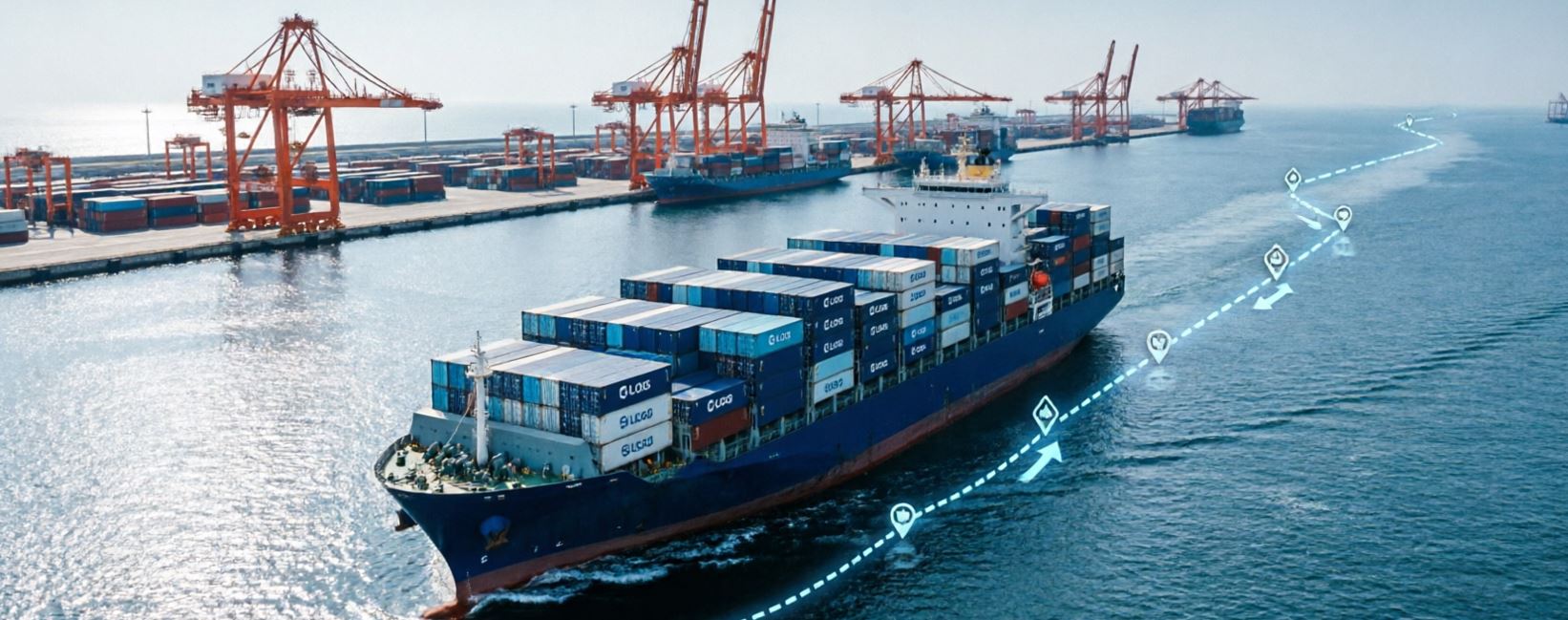
When overland routes are congested and direct rail freight rates hit record highs, logisticians turn to the water. In the realities of 2026, the "Blue Corridor" is a vital multimodal artery linking Asian markets (India, Iran, and transit China) with Russia and Europe via a network of maritime and inland waterway routes.
Primarily, this refers to the maritime leg of the International North–South Transport Corridor (INSTC) and the use of the Volga-Don Canal to access the Azov-Black Sea basin. This route requires specialized expertise, ranging from vessel draft restrictions to the critical importance of using Shipper-Owned Containers (SOC).
Let’s break down how this logistics chain works, which ports are operating at full capacity, and how MyContainers helps businesses navigate this route without financial losses.
Geography of the Blue Corridor: Key Hubs
The route is highly fragmented, and delivery success hinges on seamless port connections.
The Caspian Cluster (The Corridor's Core)
Russia: Olya and Astrakhan ports. They handle "river-sea" type vessels (Volgo-Balt) and small container ships. Key constraints: shallow waters and the need for icebreaker escort during the winter season.
Iran: Amirabad and Noshahr ports. These are the main consolidation points for Iranian exports (foodstuffs, building materials) and imports from Russia. Amirabad boasts the best container terminal with depths of up to 8.5 meters.
Kazakhstan and Azerbaijan: Aktau/Kuryk and Baku ports. They serve as critical transit hubs for cargo heading further to Europe or Central Asia.
The Volga-Don Canal and the Azov-Black Sea Basin
This waterway allows vessels from the Caspian "branch" to reach the ports of Taman, Novorossiysk, or Rostov-on-Don, as well as travel up the Volga to Russia's central regions. Constraints include lock dimensions and maximum draft (about 3.5–4 meters depending on the season), which dictates vessel selection and container loading plans.
Container Shipping Specifics on the Blue Corridor
Handling maritime containers on this route differs fundamentally from classic ocean liner operations.
Dominance of 20-foot containers (20’ DC). Due to deadweight and draft restrictions on Caspian and river vessels, as well as the nature of the cargo (bulk grain in liners, metal products, fertilizers), 20-foot boxes account for up to 80% of the flow. 40-foot High Cubes are used less frequently, primarily for light, bulky cargo (textiles, timber), and require careful stowage planning.
The Critical Importance of SOC (Shipper-Owned Containers). Carrier-Owned Containers (COC) are extremely reluctant to enter Caspian ports due to empty repositioning imbalances. If you bring cargo to Iran in a carrier's container, returning the empty box will cost more than the freight itself. Using your own containers or leasing them via MyContainers on a One-Way Lease basis eliminates detention issues and makes you independent of major liner schedules.
Reefer Shipments. A growing segment (Iranian nuts, dates, fish; Russian dairy products). This requires vessels with guaranteed reefer plug connections and strict temperature control monitoring during port-to-rail transshipment.
Comparison Parameter | COC (Carrier-Owned Container) | SOC (Owned or Leased via MyContainers) |
Availability in Iranian and Caspian ports | Critical shortage. Carriers are reluctant to reposition empty equipment to the region. | Guaranteed pool of 20’ DC and 40’ HC available at hubs (Amirabad, Aktau). |
Empty return cost | Abnormally high. Due to the imbalance, repositioning freight can exceed the actual transport cost. | Up to 40% savings. One-Way Lease scheme: drop-off at an agreed hub (Astrakhan, Moscow). |
Detention and demurrage risk | High. Fines for customs delays or Caspian storms "eat up" the margin. | None. You don't pay carriers for waiting while the cargo moves via multimodal transport. |
Multimodal connection flexibility | Low. Carriers require strict adherence to their schedules and terminals. | Maximum. The container is easily transferred to a rail flatcar or truck without being tied to a specific operator. |
Best suited for cargo | Only for standard flows with guaranteed backhaul freight. | Any cargo: grain, building materials, reefers, complex transits deep into Russia. |
Economics and Transit Times: What to Expect in 2026
The Blue Corridor beats pure rail transit on cost (averaging 20–30% cheaper) but loses on speed.
Amirabad (Iran) to Olya (Russia) sea leg: 4–6 days of pure sailing time.
Port handling and customs: 3–7 days (depending on the season and CB warehouse congestion).
Further rail or truck delivery: depends on the final destination in Russia.
The overall "port-to-port" transit time, including clearance, is 14–21 days. The main source of unexpected costs here is vessel or container downtime due to desynchronized connections.
How MyContainers Optimize the Blue Corridor
We address the main pain points of this route:
Local equipment availability. We don't need to ship an empty container from China to Iran for your export. We have a pool of containers (20’ DC, 40’ HC, reefers) directly at the ports of Amirabad and Aktau, ready for loading.
Guaranteed penalty-free returns. When using our SOC equipment, you drop off the container at an agreed hub (e.g., Astrakhan or Moscow). We take care of its further repositioning, and you pay no demurrage or detention fees.
*The information on this page does not constitute a public offer.
*MyContainers is a partner of MyWay.