



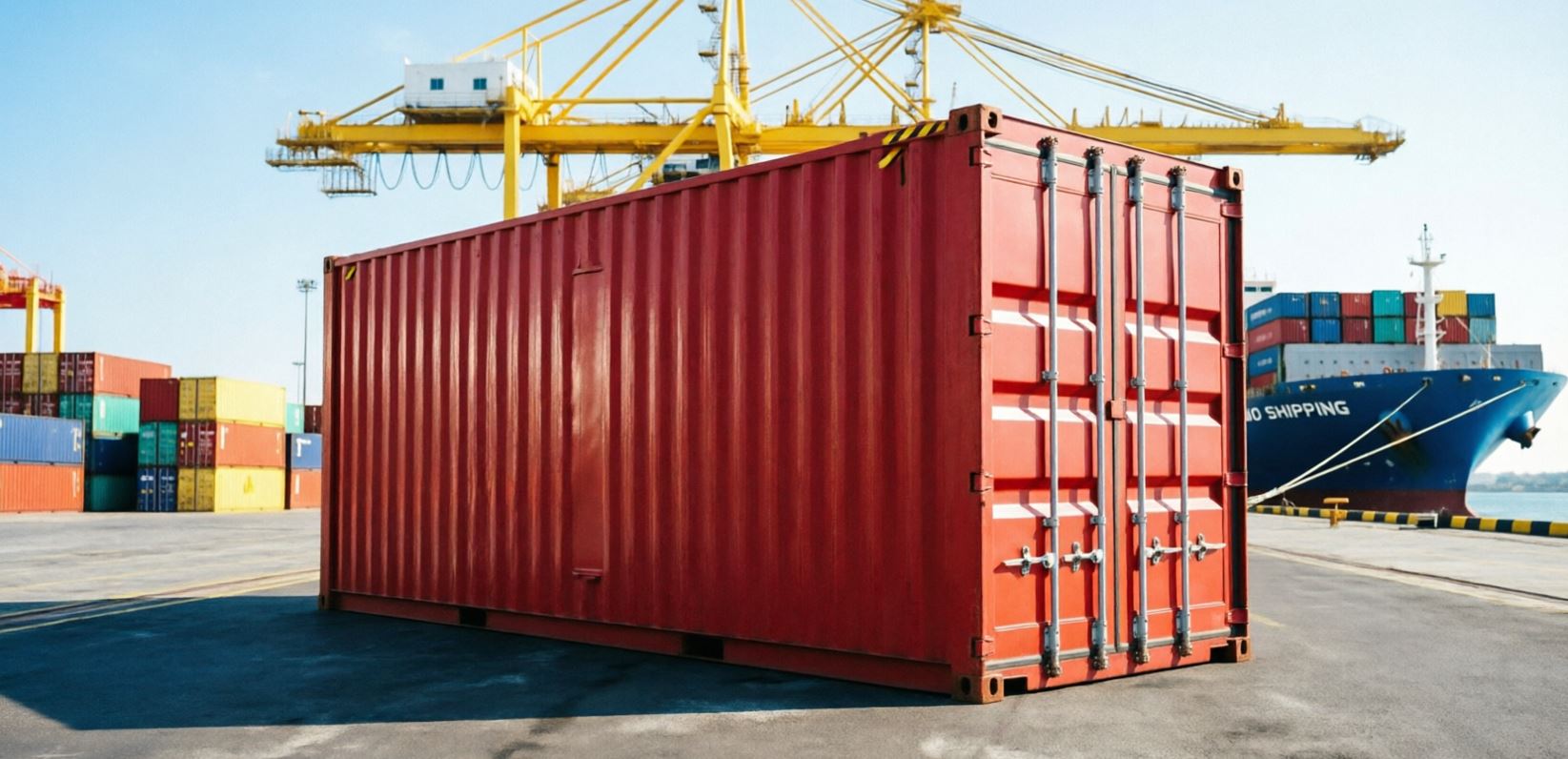
In the lineup of standard ISO containers, the 45-foot module holds a special place. Originally created primarily for the North American market, this container offers the maximum usable volume among all standard models, making it highly attractive for transporting light but bulky cargo.
In this article, we will break down the specifications of 45-foot containers, their key differences from the more common 40-foot models, and the operational features in various regions of the world.
Technical Specifications of a 45-Foot Container
A 45-foot container is an elongated version of the standard 40-foot High Cube container, maintaining the same height and width.
Length: 13.716 m (external), 13.556 m (internal)
Width: 2.438 m (external), 2.352 m (internal)
Height: 2.896 m (9 feet 6 inches) — High Cube standard
Usable volume: 86.0 m³ (compared to 76.0 m³ for a 40HC)
Tare weight: approx. 4,800 – 5,200 kg
Maximum payload capacity: 25,000 – 27,000 kg
Maximum gross weight: 30,480 kg (ISO standard)
Pallet capacity: 27 Euro pallets or 24 standard US pallets
Material: Corrugated Corten steel, floor made of marine plywood or bamboo.
Key Differences from a 40-Foot High Cube
Although a 45-foot container looks like simply a longer version of a 40HC, there are important differences:
Extra volume: A 45-foot container provides 10 m³ (or 13%) more usable space than a 40HC. This is critical for light but bulky cargo.
Extra floor length: The additional 5 feet (1.52 m) of length allows for more pallets or long-length goods to be accommodated.
Usage limitations: Unlike 40-foot containers, 45-foot containers are not universal and are subject to regional restrictions.
Features of Use in Different Regions
North America
In the US and Canada, 45-foot containers are widely used and are standard equipment for many logistics operators. American trucks and railways were originally designed with the capacity to transport such containers in mind.
Europe and Russia
In Europe and Russia, the use of 45-foot containers is significantly restricted:
Road transport: The length of a truck combination with a 45-foot container exceeds standard limits in most European countries (usually 16.5 m for a truck combination). Special permits are required.
Rail transport: Not all railway flatcars and clearance gauges are designed to accommodate 45-foot containers.
Port infrastructure: Not all port cranes and terminals are optimized for handling 45-foot containers.
Sea Freight
On ocean routes, 45-foot containers are accepted, but with caveats:
They occupy two slots (like a 40-foot container), but freight is calculated at special rates.
Not all ports have the equipment to handle them.
Some shipping lines restrict the acceptance of such containers on certain routes.
Main Areas of Application
Thanks to their increased volume, 45-foot containers are ideal for:
Light, bulky cargo: Textiles, clothing, footwear, plastic products, flat-pack furniture, polystyrene, and insulation materials.
Long-length goods: Pipes, profiles, long boards, and rolled materials that do not fit into a 40-foot container.
Automotive industry: Transportation of automotive components, seats, and dashboards.
Electronics and home appliances: Large appliances (refrigerators, washing machines) where volume matters more than weight.
Less than Container Load (LCL): Consolidators use 45-foot containers to increase capacity when gathering small batches from different shippers.
Advantages and Disadvantages
Advantages
Maximum volume: 86 m³ is 13% more than a 40HC, at virtually the same freight cost.
Cost savings per unit: For light, bulky cargo, the delivery cost per unit decreases.
Fewer shipments: The larger volume allows for consolidating more cargo into a single container, reducing the number of required shipments.
Disadvantages
Limited availability: Not all ports and shipping lines have these containers in sufficient quantities.
Regional restrictions: Difficulties with road and rail delivery in Europe and Russia.
Specific tariffs: Freight rates are calculated individually and may be higher than standard rates.
Limited secondary market: After their service life in international shipping ends, these containers are harder to sell or modify due to their non-standard dimensions.
Practical Conclusion
A 45-foot shipping container is a specialized tool for optimizing the logistics of light but bulky cargo. If your goods have low density (take up a lot of space but weigh little), and you operate on routes where the infrastructure allows the use of such containers, they can provide significant savings. However, before planning a shipment, be sure to check with your logistics operator about the possibility of accepting 45-foot containers at all points along the route, including ports of departure and destination, as well as any restrictions on overland delivery.
*The information on this page does not constitute a public offer.
*MyContainers is a partner of MyWay.