

This material is formatted as "Q&A" for quick information retrieval. It compiles the most frequent and important questions about shipping containers faced by logisticians, cargo owners, and those planning to use containers for their own operational needs.
Section 1: Standards and Dimensions
1. What is a TEU and how is it used?
TEU (Twenty-foot Equivalent Unit) is a standard unit of cargo capacity. One 20-foot container equals 1 TEU, while one 40-foot container equals 2 TEUs.
2. What are the exact internal dimensions of a standard 20-foot container (20DC)?
The internal length is approximately 5.89 m, width is 2.35 m, and height is 2.39 m. The usable volume is about 33 cubic meters.
3. What is the main difference between a standard 40-foot (DC) and a High Cube (HC) container?
The only difference is the height. A standard 40DC has an internal height of 2.39 m, while a 40HC (High Cube) is 2.69 m. This provides an extra 30 cm of height and increases the volume from 67 to 76 cubic meters, which is critical for light, bulky cargo.
4. What is the maximum weight that can be loaded into a container?
The maximum allowable gross weight (container tare weight + cargo weight) for most 20- and 40-foot models is 30,480 kg. The payload capacity is typically around 28 tons for a 20DC and 26.5 tons for a 40HC (due to the heavier tare weight of the high-cube model).
5. Do containers come in other sizes?
Yes, there are 10-foot (compact), 45-foot (extended, popular in North America), and even 53-foot models for domestic transport in the US and Canada. There are also non-standard widths (e.g., 8 feet 6 inches for specific European road transport).
Section 2: Design and Materials
6. What kind of steel are shipping containers made of?
They are made of Corten steel (weathering steel). Its unique property is that upon exposure to moisture, it forms a dense oxide layer (patina) on the surface, which protects the inner layers of metal from deep corrosion.
7. Why is the container floor wooden and not metal?
Marine plywood or hardwood (such as Apitong or bamboo) provides better shock absorption, is less slippery than metal, and allows cargo to be securely fastened with nails or straps without damaging the structure.
8. What are corner castings and why are they needed?
These are massive steel castings located at all 8 corners of the container. They are the only points where a container can be safely lifted by a crane and securely locked onto a vessel, railway flatcar, or truck chassis.
9. How is a container's watertightness checked?
The simplest and most reliable method is the "light test." An inspector goes inside a closed container in the dark. If light penetrates through gaps in the doors, roof, or walls, the container is not considered watertight.
10. Is rust on the container walls dangerous?
A superficial reddish patina on Corten steel is a normal and protective phenomenon. It is only considered dangerous if the corrosion becomes deep, flakes off, or forms through-holes, which compromise structural integrity and watertightness.
Section 3: Logistics and Operation
11. How exactly are containers loaded onto a vessel?
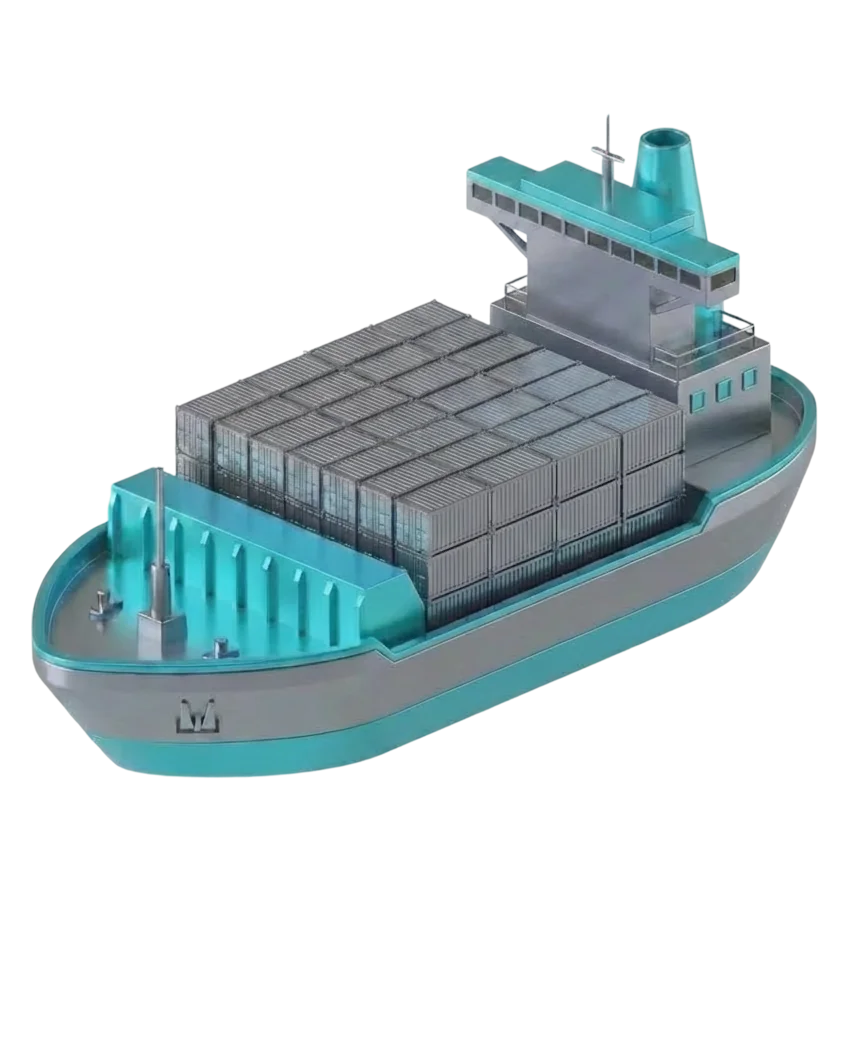
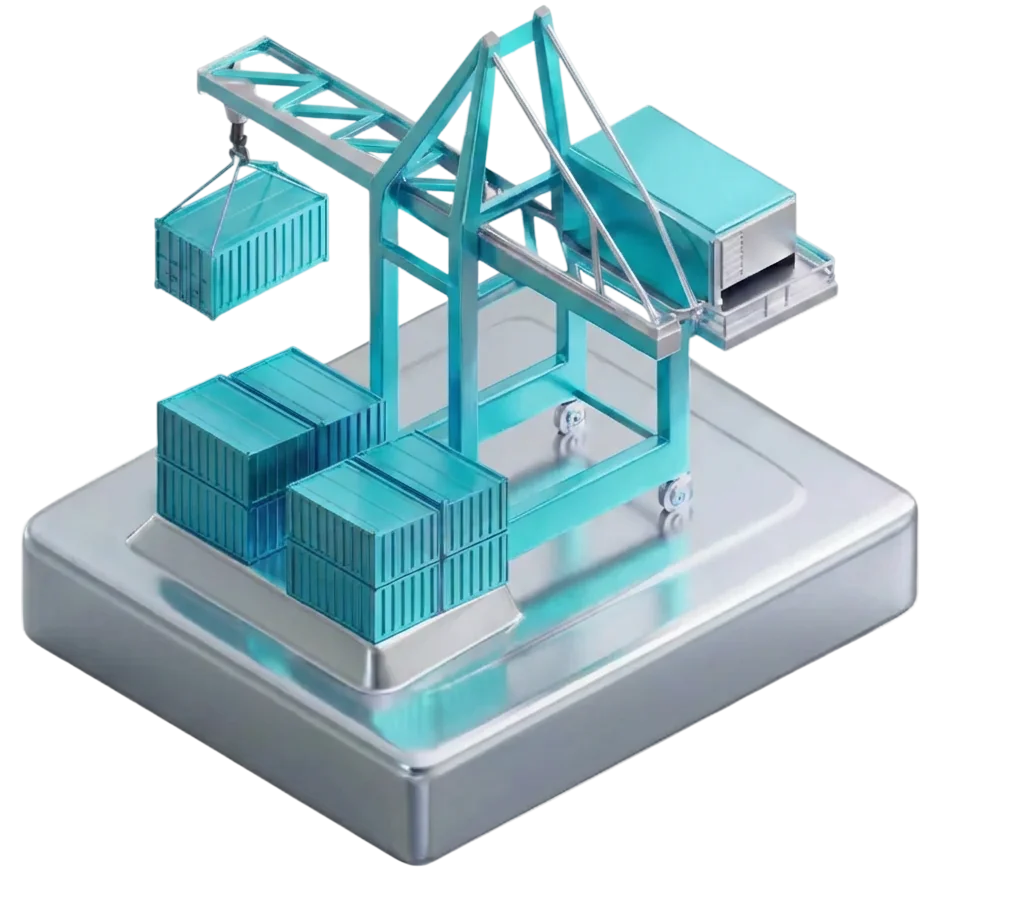
Specialized port cranes (STS cranes) are used, which grab the container by its top corner castings using a spreader. On the vessel, containers are secured with vertical cell guides and twistlocks.
12. How many tiers of containers can be stacked on top of each other?
On the deck of a modern container ship, it is safe to stack up to 9–10 tiers. In the ship's hold, the load is distributed differently, but multi-tier stacking is also possible there.
13. What is a reefer container and how does it work?
It is a container with a built-in refrigeration unit capable of maintaining a set temperature (from -30°C to +30°C). To operate, it requires an external power supply provided by the vessel, the terminal, or a diesel generator on a chassis.
14. What are Open Top and Flat Rack containers used for?
An Open Top (with a removable tarpaulin roof) is used for cargo that exceeds standard height limits and must be loaded by crane from above. A Flat Rack has no side walls or roof and is designed for out-of-gauge, heavy machinery, or over-length cargo.
15. How long does it take to unload a modern container ship?
Modern port terminals can handle 100 to 150 containers per hour. A vessel with a capacity of 10,000 TEUs can be fully unloaded and loaded in approximately 24–36 hours of continuous operation.
16. What happens to containers that fall overboard?
Most water-filled containers sink quickly. Empty ones or those loaded with lightweight goods (plastics, shoes) can drift for months or years, sometimes washing ashore and causing environmental issues. On average, about 1,500–2,000 containers are lost at sea annually.
Section 4: Purchase, Rental, and Condition
17. What does the "Cargo Worthy" (CW) condition mean?
It is a certification confirming that a used container is suitable for international sea freight. It is watertight, has no through-corrosion, its floors and load-bearing structures are intact, and it holds a valid CSC safety approval plate.
18. What is a "One-Way" or "Single Trip" container?
This is a brand-new container that has made only one trip from the manufacturer (usually in China) to the destination port. Shipping lines sell them at a discounted price to avoid the costs of repositioning empty equipment back to Asia.
19. Is it more profitable to buy or rent a container?
Purchasing is more cost-effective for long-term use (warehousing, permanent logistics). Renting is optimal for one-off projects, seasonal transport, or testing new routes, as it requires no large capital expenditure (CapEx).
20. How do you inspect a used container before buying?
You must check: the readability of the CSC plate, the absence of through-rust, the smooth operation of door mechanisms and the tightness of rubber seals, floor integrity (no sagging or rot), and the absence of persistent foreign odors.
21. Why are white containers often valued higher or priced more expensively?
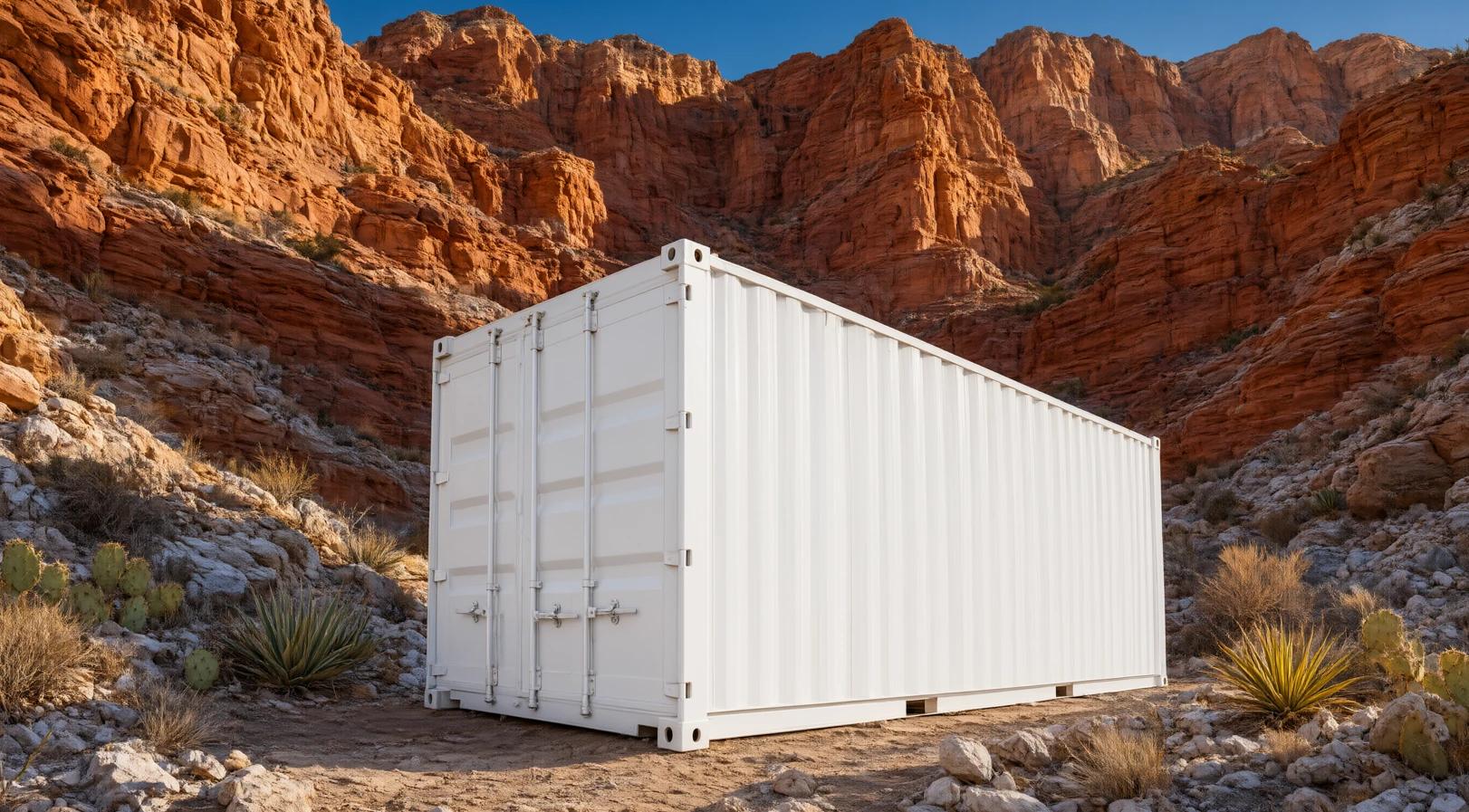
White reflects sunlight better, lowering the internal temperature by 5–10°C compared to dark-colored models. This is critical for storing temperature-sensitive cargo in hot climates.
Section 5: Modification and Second Life
22. Can a container be converted into a house or office?
Yes, this is a very popular application. However, it requires major modification: insulating walls and ceilings, replacing or reinforcing the floor, and installing windows, doors, ventilation, electrical, and plumbing systems.
23. Does cutting windows weaken the container's strength?
Yes, cutting into the corrugated wall compromises the integrity of the load-bearing frame. To compensate for this, a reinforcing metal frame (square tubing or channel iron) must be welded into the opening.
24. Can ventilation be installed in a standard container?
Yes, installing special ventilation louvers or grilles is permissible. However, drilling large holes without subsequent re-certification may void the CSC certificate for sea transport.
25. What is the lifespan of a container used on land?
If the container is placed on supports (so the bottom does not touch the ground), protected from direct water runoff, and periodically repainted, its service life as a stationary warehouse or module can be 30–50 years or more.
Section 6: Safety and Documentation
26. What is a CSC plate and why is it mandatory?
CSC (Convention for Safe Containers) is an international treaty for safe containers. The metal plate with this marking certifies that the container's structure has passed tests and is safe for crane lifting and stacking. Shipping lines will not accept a container without it.
27. How are containers protected against theft and unauthorized access?
High-security bolt seals compliant with ISO 17712 are used. They have unique serial numbers and break irreversibly upon tampering. Additionally, welded or bolted lockboxes can be installed on the doors to protect padlocks.
28. Can dangerous goods be transported in standard containers?
Yes, but under strict regulations. The cargo must be properly classified according to the IMDG Code, packed and marked with the appropriate hazard labels, and the shipping line must provide prior written consent for its carriage.
29. What is VGM and why is it required before loading?
VGM (Verified Gross Mass) is the confirmed total weight of a laden container. Under international regulations (SOLAS), the vessel's master must know the exact weight of each container to ensure proper load distribution and sailing safety. Without a VGM, the container will not be allowed on board.
30. Does the color of a container have any special technical meaning?
No. International standards do not regulate container color. Blue, yellow, red, or green are used exclusively for corporate branding and visual identification of a specific shipping line's or leasing company's fleet.
*The information on this page does not constitute a public offer.
*MyContainers is a partner of MyWay.