

Sale of 20ft and 40ft Shipping Containers in Manila (Philippines)

Reliable containers for outright purchase from the main economic and logistics hub of the Philippines.

About the Location: Manila – The Economic Heart and Main Maritime Gateway of the Philippines

Manila is the capital of the Philippines and the center of Southeast Asia's largest metropolis – the National Capital Region (Metro Manila). The city serves as the absolute center of financial, trade, and logistics activity in the archipelago, handling over 70% of the country's total container freight through hubs like the Manila International Container Terminal (MICT). The region's industrial profile is defined by electronics and semiconductor assembly, business process outsourcing (BPO), fast-moving consumer goods (FMCG) distribution, and agricultural exports.

Fun fact: Manila is one of the world's oldest cities, but due to high-density development and seasonal tropical downpours (along with typhoon risks), the use of shipping containers placed on concrete blocks as elevated, watertight warehouses has become the standard for reliable cargo storage, protecting assets from flooding and high humidity.

Important: We Strictly Do Not Deal with "As-Is" Condition Containers

In conditions of extreme tropical humidity, the salty air of Manila Bay, and the risk of severe storms, using worn-out equipment is unacceptable. Our fleet consists only of inspected, watertight, and reliable containers. You will never receive equipment with through-corrosion, deformed doors, or damaged flooring, which is critical for preserving the quality of sensitive cargo.

Always Available at Our Sites and Partner Terminals in Manila:

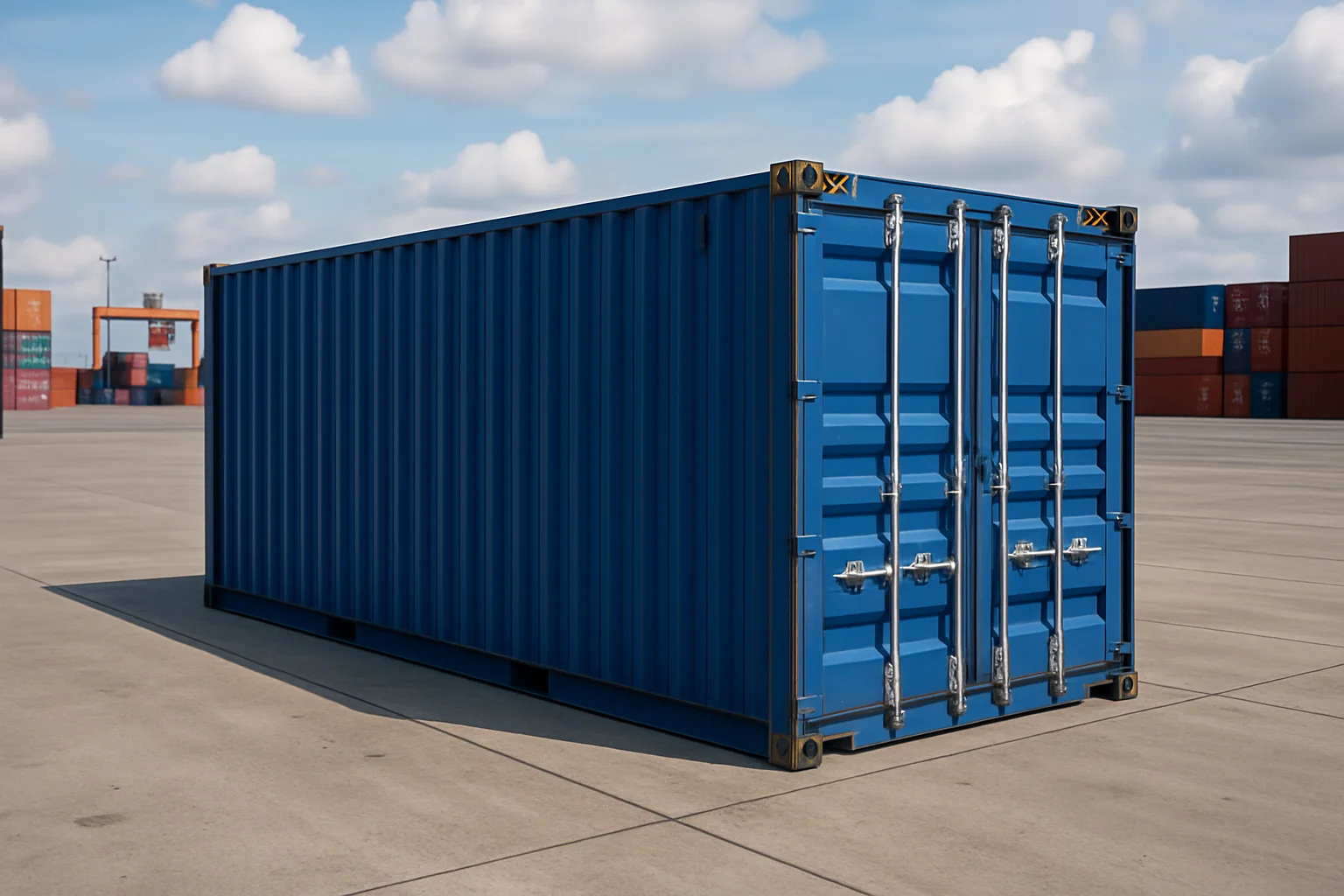
  • 20DC — Standard 20-foot containers (optimal for heavy equipment, auto components, and compact storage)

  • 40DC — Standard 40-foot containers

  • 20HC / 40HC — High Cube containers (ideal for electronics, furniture, and bulky cargo)

  • Refrigerated Containers (Reefers) — for the food industry, agricultural exports, and pharmaceuticals (available upon request)

We process transactions in 1 business day. Containers are sold in the following conditions: NEW, IICL, CW (Cargo Worthy).

Didn't find the right product or service?

Leave a request, our manager will advise you on existing questions

How to Buy a Container in Manila?

  1. Selection: Describe your task to the manager (local storage, export, buffer zone). We will select the appropriate type and condition.

  2. Contract: We sign a purchase agreement fixing the price, the container's BIC number, and the handover conditions.

  3. Payment: We accept payment exclusively via non-cash transfer in US Dollars (USD) through international bank transfer (SWIFT).

  4. Pickup: You collect the container from the agreed terminal in Manila on FCA (pickup) terms, or coordinate its handover directly to your logistics partner.

Local Expertise: Manila Terminals and Container Arrival Routes

Understanding the region's infrastructure allows us to guarantee transaction transparency and stable equipment availability:

1. Manila Container Terminals

We work directly with operators of key logistics hubs, ensuring convenient conditions for inspection and pickup:

  • Manila International Container Terminal (MICT): The country's largest and most modern container hub. We have established interaction protocols for the swift removal of customs-cleared equipment.

  • Manila South Harbour: A historic port actively used for cabotage and inter-island Roll-on/Roll-off (RORO) shipments.

  • Private Inland Depots in Caloocan and Valenzuela: Specialized sites in the Greater Manila industrial zones. Here, we conduct pre-sale inspections, allowing clients to pick up equipment without the multi-hour traffic jams and bureaucratic delays characteristic of entering the seaport.

2. Equipment Arrival Routes

The container fleet in Manila is formed through several logistics flows:

  • Direct deep-sea lines: Vessels from ports in China (Shanghai, Xiamen), Singapore, and the Middle East.

  • Inter-island cabotage lines: Regular connections with the ports of Cebu, Davao, and Cagayan de Oro to balance the fleet within the archipelago.

  • Domestic repositioning: Empty containers that have completed their import cycle in the ports of Subic Bay or Batangas are often redirected to Manila to meet high local demand.

Who Benefits from Buying a Container in Manila: Industry Scenarios

  1. Electronics and Semiconductor Manufacturers: The regions surrounding Manila (Laguna, Cavite) are major hubs for microchip assembly. For storing and exporting sensitive electronic components, we provide only IICL and NEW condition containers, which undergo strict watertightness testing to eliminate the risk of condensation and dust ingress.

  2. Agro-exporters (bananas, pineapples, coconuts, mangoes): The Philippines is a global leader in tropical fruit exports. Storing and consolidating these products before shipment requires food-grade standard containers. We supply only clean containers (IICL and NEW conditions) with no traces of previous chemical cargo, mold, or foreign odors, which is a mandatory requirement for phytosanitary control.

  3. FMCG Distributors and Retail Chains: Metro Manila represents a massive consumer market with a shortage of Class A warehouse space. Purchasing your own containers allows companies to create flexible buffer storage zones within their distribution centers, avoiding astronomical storage rates (demurrage) inside the MICT terminal.

  4. Inter-island Shipping and RORO Logistics Operators: Transporting cargo to the Visayas and Mindanao islands requires extremely robust structures. We provide containers in CW condition or higher, capable of withstanding the aggressive effects of saltwater and storm loads during sea crossings.

  5. Construction and Infrastructure Companies: Amid the active implementation of national infrastructure programs and high-density urban development, a container is a vandal-resistant, fire-safe, and mobile solution for storing expensive tools, generators, and materials on-site without the need for complex capital construction permits.

  6. Pharmaceutical Distribution: Manila serves as the main hub for distributing medicines throughout the archipelago. For storing temperature-sensitive cargo, we provide refrigerated containers with a valid Pre-Trip Inspection (PTI) report, guaranteeing cold chain compliance.

Estimated Container Costs in Manila

Prices are per unit, FCA (pickup) from a terminal in Manila. The Philippine market is characterized by stable demand for warehouse space, which drives competitive pricing for quality equipment.

Container Type

CW Condition (Watertight, Workable)

IICL Condition (Excellent, for sea/storage)

NEW Condition (New/Premium)

20DC

from $1,550

from $1,850

from $2,750

20HC

from $1,700

from $2,000

from $2,950

40DC

from $2,100

from $2,500

from $3,700

40HC

from $2,300

from $2,700

from $4,000

20 Reefer

from $5,500

from $7,500

upon request

40 Reefer

from $8,000

from $10,500

upon request

Terms and Conditions

  • A wholesale discount is provided when purchasing a batch of 3 or more units.

  • Pickup is available from MICT, Manila South Harbour terminals, or partner private depots in Caloocan/Valenzuela.

  • All containers are provided in CW, IICL, or NEW conditions ("As-Is" condition is not used).

  • Independent inspection by a third-party surveyor (e.g., SGS Philippines, Bureau Veritas, or Cotecna) can be arranged at the buyer's expense.

  • To receive an exact price list with current photos and BIC numbers of available containers, please submit a request — our manager will prepare a personalized proposal within 2 hours.

*The information on this page does not constitute a public offer.

*MyContainers is a partner of MyWay.

Frequently Asked Questions