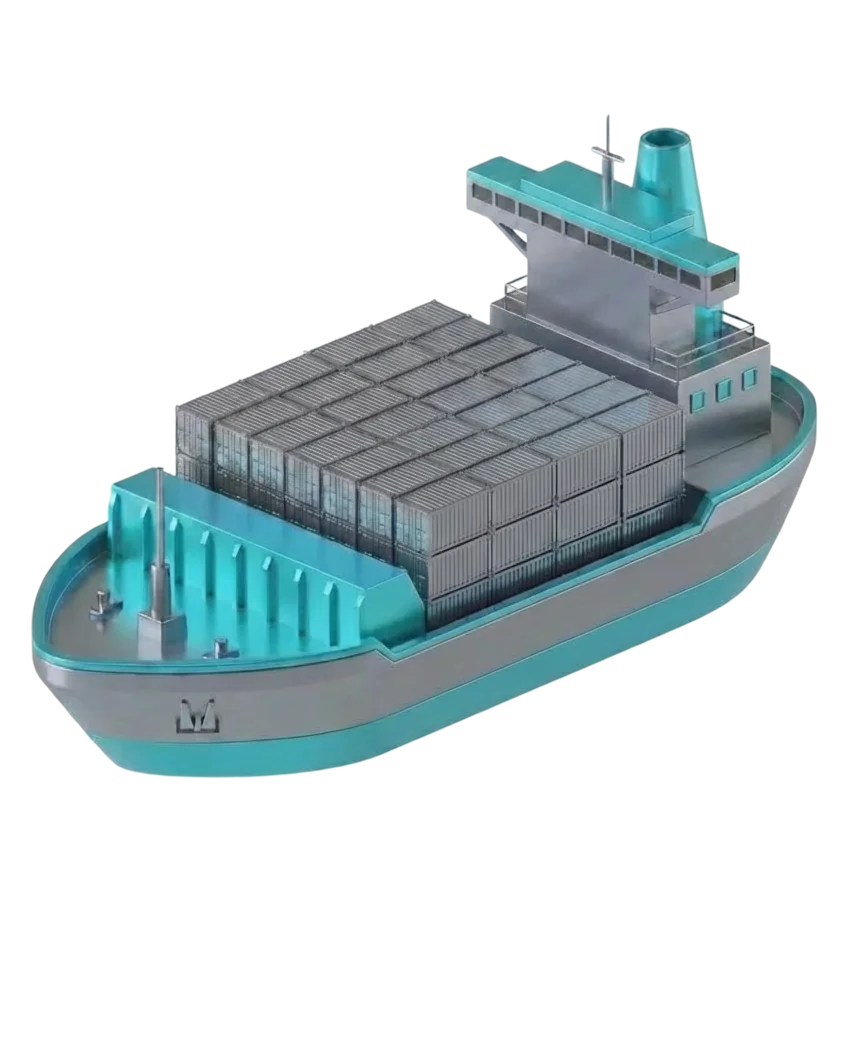
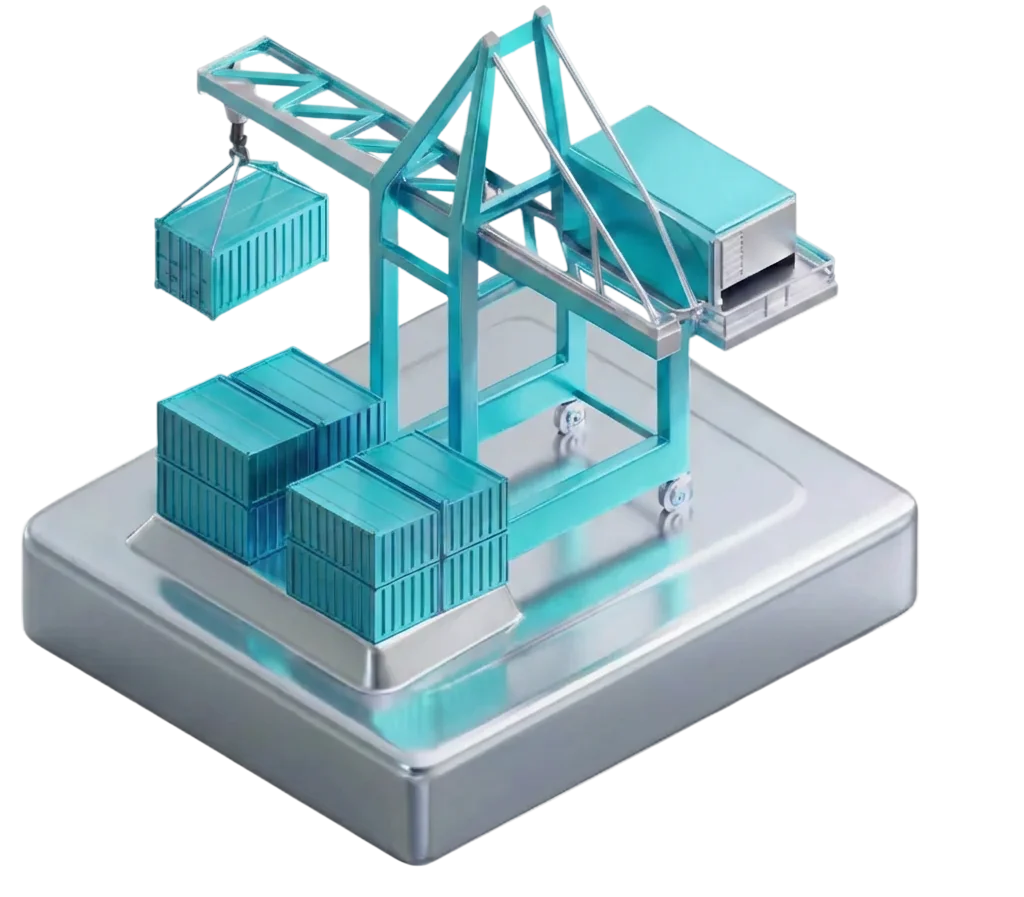
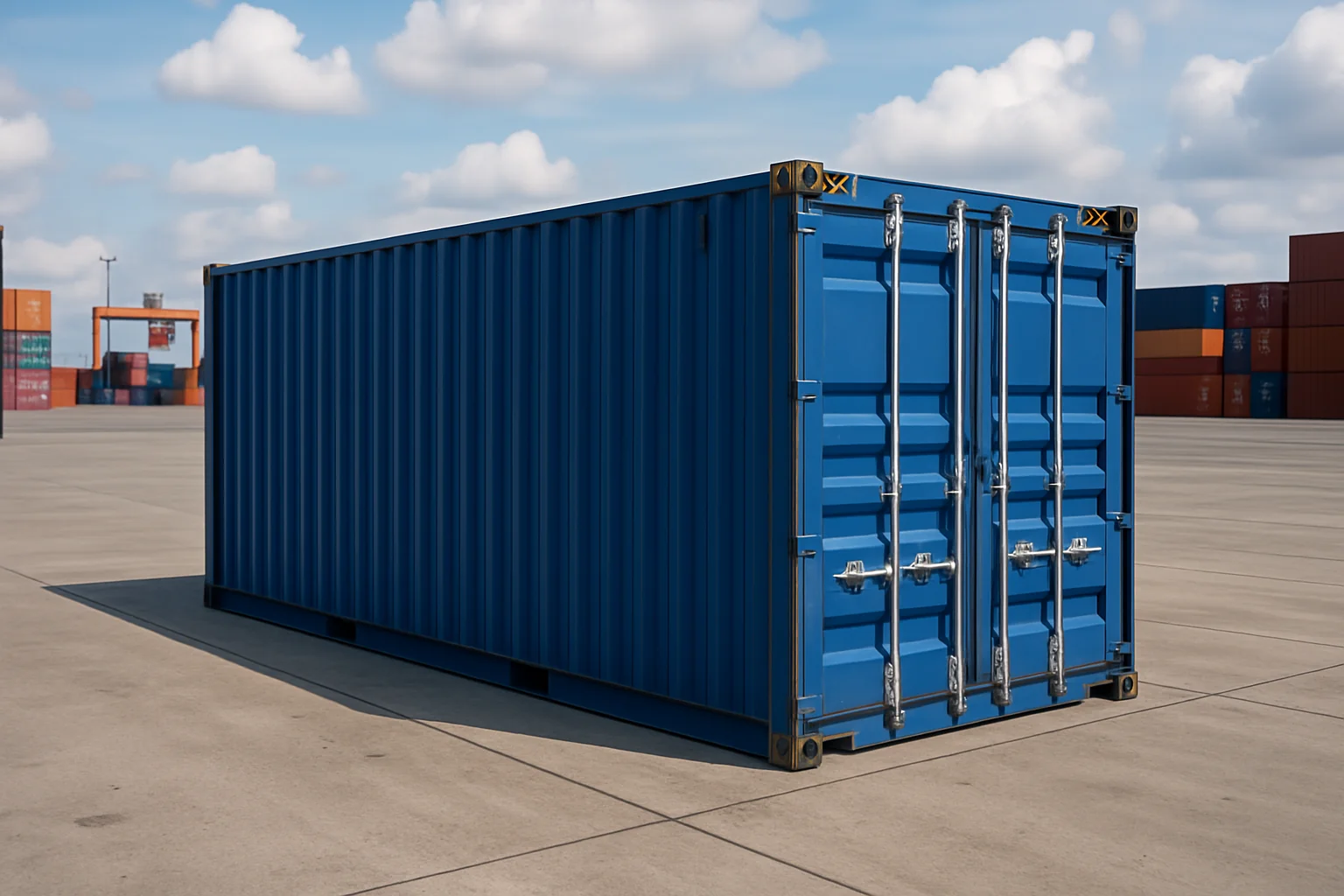
Port Jebel Ali — The Main Container Departure Point
Port Infrastructure
Operator: DP World.
Berths: Over 90 container berths.
Draft: Up to 18 meters (accommodates the world's largest container ships).
Throughput: Over 15 million TEU per year.
Shipping Lines: Maersk, MSC, CMA CGM, Hapag-Lloyd, Evergreen, ONE, ZIM, HMM, and others.
Container Terminals
CT1, CT2, CT3 — Main container terminals.
Terminal T1 — Specialized for mega-vessels.
JAFZA Free Zone — Located adjacent to the port, ideal for cargo consolidation.
Logistics Advantages
Fast processing: Average vessel turnaround time is under 24 hours.
24/7 operation: The port operates around the clock.
Modern equipment: Automated cranes and advanced tracking systems.
Free Zone integration: Direct connectivity with Jebel Ali Free Zone.
Which Containers are Suitable for Cargo Transportation from Dubai
20DC (Dry Container 20 ft)
Used for: Heavy cargo (metals, construction materials, equipment, machine tools); compact but heavy goods (auto parts, fittings, chemicals); small cargo batches.
Specs: Internal volume: 33.2 m³ | Payload: up to 28 tons | Dimensions: 6.06m (L) x 2.35m (W) x 2.39m (H).
Condition: CW or IICL, depending on the shipping line's requirements.
40DC (Dry Container 40 ft)
Used for: Large cargo batches, mixed loads, standard export shipments.
Specs: Internal volume: 67.7 m³ | Payload: up to 26 tons | Dimensions: 12.03m (L) x 2.35m (W) x 2.39m (H).
Condition: IICL is recommended for most international shipments.
40HC (High Cube 40 ft)
Used for: Bulky but light cargo (clothing, footwear, furniture, electronics, toys); goods where maximum volume is critical; exports to Africa and South Asia.
Specs: Internal volume: 76.3 m³ (13% more than 40DC) | Payload: up to 26 tons | Dimensions: 12.03m (L) x 2.35m (W) x 2.69m (H) (30 cm taller).
Condition: IICL or NEW to protect high-value goods.
Refrigerated Containers (Reefer) 20' and 40'
Used for: Perishable goods (meat, fish, dairy, fruits, vegetables), pharmaceuticals, flowers and plants, temperature-sensitive chemicals.
Specs: Temperature range: -25°C to +25°C | Requires 380V power connection (on vessel and at port) | Real-time temperature and humidity control.
Condition: Only IICL or NEW with valid PTI (Pre-Trip Inspection) certification.
Requirements for Containers in International Cargo Transportation
CSC Certification (International Convention for Safe Containers)
A mandatory requirement for all containers used in international sea freight:
Valid certificate: Confirms the container's safety.
Validity period: 5 years from the date of manufacture, followed by annual inspections.
Inspection covers: Structure, strength, airtightness, and hardware.
All our containers have valid CSC certification, guaranteeing their acceptance by any shipping line.
IICL Standard (Institute of International Container Lessors)
The highest quality standard for containers:
No dents or deformations exceeding allowable limits.
Floor integrity: no rot, mold, or critical damage.
Airtightness: mandatory "light test" passed.
Door operation: smooth opening and closing.
Absence of odors and contamination.
IICL containers are accepted by all shipping lines without additional inspections.
CW Standard (Cargo Worthy)
A working condition suitable for cargo transportation:
Airtightness: the container does not leak.
Structural integrity: no critical damage.
Door operation: doors close tightly.
Floor: no rot or critical damage.
CW containers are suitable for most shipments, though some shipping lines may strictly require IICL.
Pre-Sale Inspection
Every container undergoes a thorough inspection:
Visual check: no dents, cracks, or severe corrosion.
Airtightness check: internal light test.
Floor inspection: integrity of the plywood covering.
Door check: operation of locks, seals, and hinges.
Fitting check: integrity of corner fittings for vessel securing.
Marking check: legibility of the BIC number and CSC plate.
Logistics Routes from Dubai
We do not handle cargo transportation ourselves, but we provide equipment for purchase and rental for cargo shipments. The route information below is for reference.
Sea Freight (Primary Method)
Direct routes: Dubai → Mombasa (8–12 days) | Dubai → Lagos (18–25 days) | Dubai → Mumbai (3–5 days) | Dubai → Karachi (2–4 days) | Dubai → Dammam (1–2 days) | Dubai → Alexandria (7–10 days).
Transit routes: Dubai → Singapore → Southeast Asia (10–15 days) | Dubai → Suez Canal → Europe (12–18 days) | Dubai → China (15–20 days).
Road Freight
For GCC and neighboring countries:
Dubai → Saudi Arabia (1–2 days) | Dubai → Oman (1 day) | Dubai → Qatar (1 day via Saudi Arabia) | Dubai → Kuwait (1–2 days).
Multimodal Freight
For CIS and Central Asia:
Dubai → Bandar Abbas (Iran) → Rail → CIS (15–25 days) | Dubai → Aktau (Kazakhstan) → Rail → Uzbekistan/Kyrgyzstan (20–30 days) | Dubai → Turkey → Rail → Europe (15–20 days).
Shipping Lines Operating at Port Jebel Ali
Global Carriers: Maersk, MSC, CMA CGM, Hapag-Lloyd, Evergreen, ONE, ZIM, HMM.
Regional Lines: Unifeeder (feeder services in the Gulf), Simatech (local shipments), Gulf Pioneers (regional routes).
Container Compatibility: Our containers are compatible with all major shipping lines (standard ISO dimensions, valid CSC certification, BIC code for tracking, and booking system compatibility).
Export Documentation for Cargo Shipments from Dubai
Mandatory Documents
Commercial Invoice: Goods description, quantity, value, seller/buyer details, Incoterms.
Packing List: Detailed container contents, weight, volume, number of packages, markings.
Bill of Lading (B/L): Issued by the shipping line; confirms cargo receipt and acts as a document of title.
Certificate of Origin: Confirms the country of origin, issued by the Dubai Chamber of Commerce, required for tariff preferences.
CSC Certificate: Confirms the container's suitability for transport (valid for 5 years).
Additional Documents (if applicable)
Export Declaration (for customs clearance).
Fumigation Certificate (for wooden packaging).
Phytosanitary Certificate (for plant products).
Health Certificate (for food products).
Dangerous Goods Declaration (for hazardous cargo).
Estimated Container Costs in Dubai
Prices are in USD. Final cost depends on condition, year of manufacture, and urgency.
Container Type | CW Condition | IICL Condition | NEW Condition |
20DC | from $1,500 | from $1,800 | from $2,600 |
40DC | from $2,100 | from $2,500 | from $3,500 |
40HC | from $2,300 | from $2,700 | from $3,800 |
20 Reefer | from $4,300 | from $5,200 | on request |
40 Reefer | from $6,300 | from $7,800 | on request |
20 Open Top | from $2,500 | from $3,000 | on request |
40 Flat Rack | from $3,500 | from $4,200 | on request |
*Prices are estimates and do not constitute a public offer.
Estimated Sea Freight Costs from Dubai
Main directions (20DC / 40HC)
Destination Port | 20DC | 40HC | Transit Time |
Dammam (Saudi Arabia) | $300–500 | $500–800 | 1–2 days |
Mombasa (Kenya) | $800–1,200 | $1,200–1,800 | 8–12 days |
Lagos (Nigeria) | $1,500–2,200 | $2,200–3,200 | 18–25 days |
Mumbai (India) | $400–700 | $600–1,000 | 3–5 days |
Karachi (Pakistan) | $350–600 | $550–900 | 2–4 days |
Alexandria (Egypt) | $900–1,400 | $1,300–2,000 | 7–10 days |
Chittagong (Bangladesh) | $700–1,100 | $1,000–1,600 | 8–12 days |
*Prices exclude THC (Terminal Handling Charges), documentation, insurance, and other surcharges.
How to Buy a Container for Cargo Transportation from Dubai
Request: Contact the manager with the cargo type, destination, and batch volume.
Selection: We will suggest the optimal container type and condition based on shipping line and destination country requirements.
Inspection: We will arrange an on-site inspection or a video presentation verifying all parameters.
Contract: We sign a sales agreement fixing the price, container BIC number, and CSC certification details.
Payment: We accept bank transfers in USD or AED, and Letters of Credit (LC) for large transactions.
Handover: The container is handed over at the container yard in Jebel Ali.
*The information on this page does not constitute a public offer.
*MyContainers is a partner of MyWay.