








Sale and Lease of Containers in Malashevich: Logistics at the EU and EAEU Border
Malashevich and the Brest border zone are not a seaport, but a critically important "dry port" and customs-logistics hub at the junction of Europe and the Eurasian Economic Union (EAEU). This node handles massive transit flows between the EU, Belarus, Russia, and China.
For foreign trade participants, customs brokers, and logistics companies, purchasing or leasing a dedicated container in the Malashevich area solves specific border-related operational tasks:
TSW Storage: Using a container as a mobile Temporary Storage Warehouse for cargo batches awaiting customs clearance.
Cross-docking and transshipment: Transferring cargo from European trucks into containers for rail dispatch (due to the track gauge break-of-gauge).
Avoiding shipping line penalties: Owning a container eliminates demurrage and detention charges during customs delays at the "Bruzgi" crossing.
Mobile offices and posts: Purchasing modified containers to provide facilities, security, and operational space for personnel at logistics sites.
Transit operations: Utilizing an owned fleet for the "Brest – Moscow" or "Brest – China" leg.
The Brest railway hub and road corridors (M1 highway) ensure uninterrupted cargo flow. Here, a container is not just packaging, but a strategic tool for optimizing border logistics.
Main Transit and Logistics Directions from the Brest-Malashevich Hub
Railway routes (Silk Road and EU-EAEU transit)
China ↔ EU / EU ↔ China: Transit via border crossings. Containers are used for LCL (Less than Container Load) consolidation at Brest terminals.
Brest → Moscow / St. Petersburg: The primary leg for distributing European goods across Russia.
Brest → Central Asia: Transit through the territories of Russia and Kazakhstan.
Road transport (Europe – Belarus/Russia)
Operates via the "Bruzgi / Terespol" border crossing.
Containers are used to deliver cargo to Temporary Storage Warehouses (TSWs) in the border zone for subsequent customs clearance.
Local logistics (Brest and Brest region)
Delivery of construction materials, equipment, and consumer goods to local production facilities and distribution bases.
Using 20DC and 40DC containers as stationary warehouses within industrial zones.
Which Containers Are in Demand in the Border Zone
Unlike seaports, the focus here is not only on standard maritime shipping but also on rail transport and static storage.
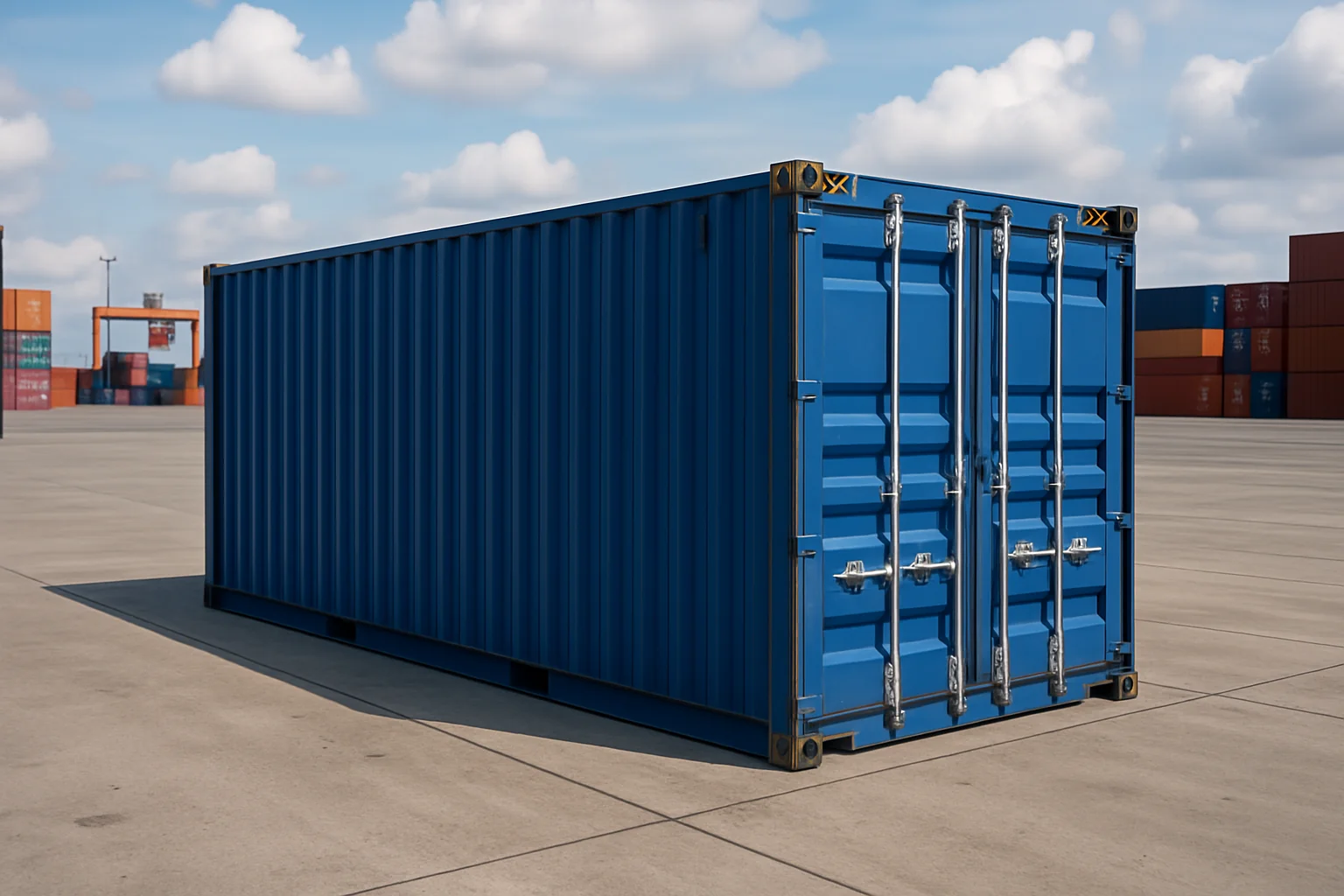
20DC and 40DC (Standard Dry Containers)
Purpose: Rail transit, TSW storage, transportation of construction materials, equipment, goods in FIBCs (big-bags), and on pallets.
Regional specifics: For rail transportation via RZD (Russian Railways), serviceable corner castings and a valid CSC safety approval plate are mandatory. For static storage at a base, WWT (Wind and Water Tight) or CW (Cargo Worthy) condition is sufficient.
40HC (High Cube)
Purpose: Transit of bulky European and Chinese goods (furniture, insulation materials, light industry products, plastics).
Features: Allows maximum volumetric loading of a rail flatcar, which is critical for transit profitability.
Reefer containers (20RF / 40RF)
Purpose: Transit and storage of perishable goods (fruits from China/Egypt, European cheeses and meat) requiring strict temperature control at TSWs.
Features: Requires connection to gensets (generator sets) at storage yards. A valid PTI (Pre-Trip Inspection) certificate is mandatory upon purchase.
Modified and non-standard containers (Regional specifics)
Highly popular in Malashevich and Brest for organizing ground-level business operations:
Insulated containers (Sandwich panels): For year-round storage of goods requiring positive temperatures.
Container offices and cabins: Equipped with windows, wiring, and heating for personnel at logistics terminals and truck parking lots.
Container warehouses with doors: Designed for convenient forklift loading and unloading.